


A cult-favorite Kindle strap maker has revealed its latest creation: a clever iPad mini case that incorporates the same silicone grips into the shell, guaranteeing less of a chance your device will slip from your fingers and onto your face while you’re in bed, as well as less hand fatigue when reading or taking notes.
What It Is and Why It Matters for iPad mini Users
The new Strapsicle case for iPad mini takes the brand’s simple idea — two soft, stretchy straps that wrap around two of a device’s corners — and bakes it into a protective case. A single strap fits snugly into your hand so you can read, hang or carry your tablet with one hand, leaving the other hand free. Unlike stick-on rings or grips, there’s no adhesive to fail and no extra bulk to juggle around in a bag when you throw the tablet inside.
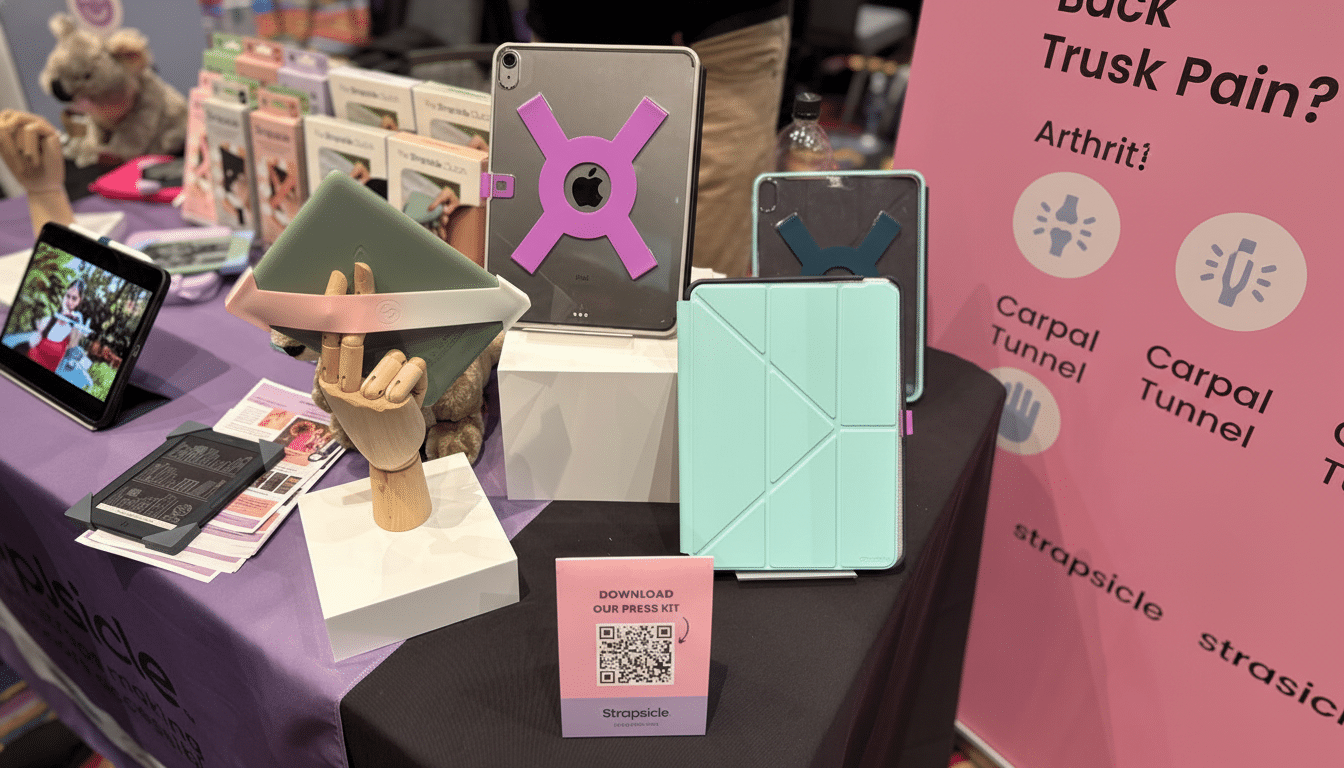
This is important, because the iPad mini occupies a sweet spot: light enough to hold like an e-reader and powerful enough for pro-grade apps. But in any case, at around 300 g every slab starts to get a bit wearying on the arm or in one’s hand without some leverage. The bands work as a soft exoskeleton for your fingers, distributing the weight and stabilizing the device from odd angles — at precisely the point when drops and awkward wrist positioning occur.
Ergonomics and Accessibility Claims for Tablet Use
Strapsicle markets the case as a convenience and accessibility accessory, particularly for those who handle hand pain or those having weaker grips. There is some reality to that pitch: The Centers for Disease Control and Prevention estimates that about 21 percent of adults in the United States live with doctor-diagnosed arthritis, and repetitive, unsupported grips can trigger symptoms.
Ergonomists and the American Occupational Therapy Association recommend neutral wrist positions and light pinch forces when using a device for an extended period of time. Allowing the straps to share some of the burden can enable users to maintain a more neutral wrist and lower forearm muscle activity. It’s a small design flourish that may have an outsized impact for longer reading sessions, distance learning marathons or clinical rounds where tablets double as clipboards.
There is also a mass appeal: Pew Research Center notes that approximately 53 percent of U.S. adults have a tablet. Now that tablets are transitioning to consumers’ primary personal devices, factors that cut down on fatigue and prevent drops aren’t merely “nice-to-haves” — they determine whether people really use the hardware the way they’d like.
How It Compares to Previous Cases and Grip Options
Case makers have attempted to address this before. Adherent grips eventually lose their stick and obstruct wireless charging pads or stands. The ring-style option creates a solid anchor point that may or may not match how you’re using the tablet. Enterprise-oriented cases, such as a few rugged models with hand straps, tack on reassuring grip but also considerable heft.
Strapsicle’s approach is to use minimal hardware: silicone bands that form around your hand and interchangeable straps, so you can mix it up between color or tension of the strap.
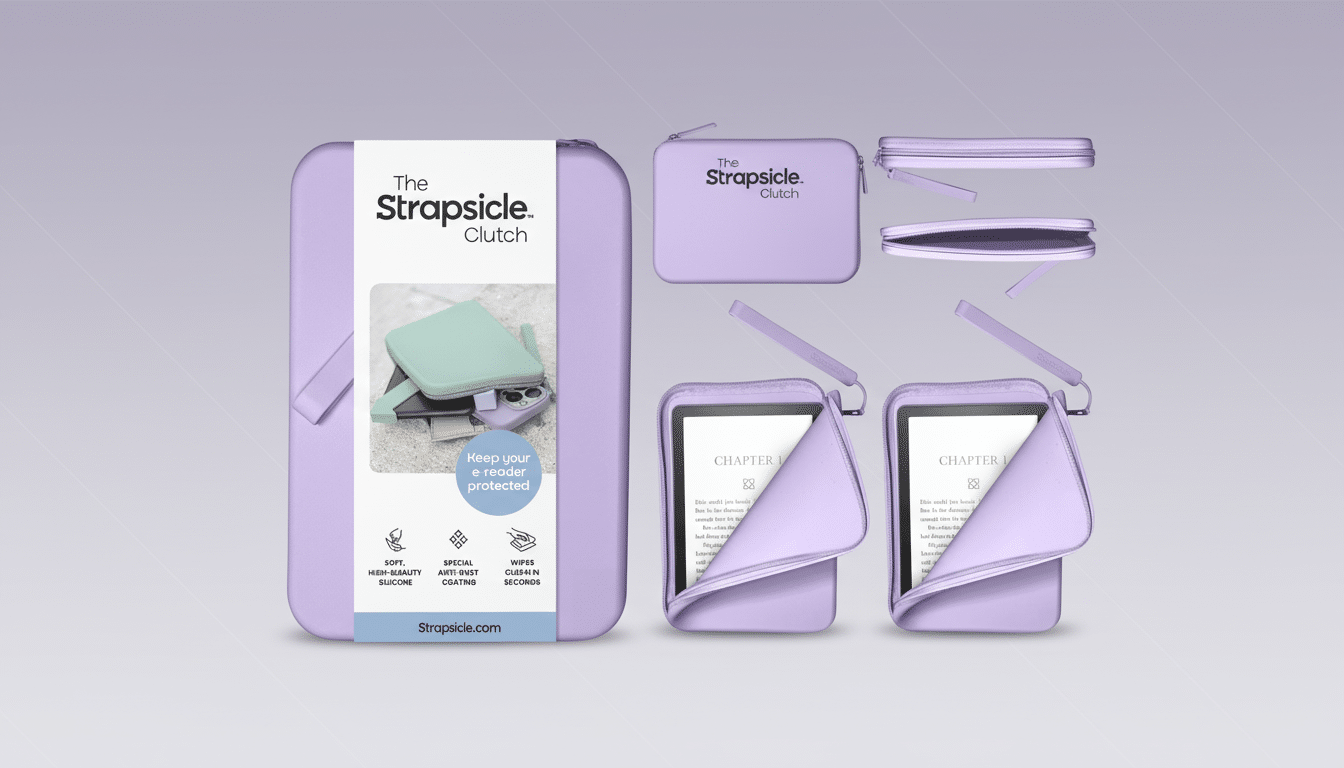
The case comes with enough tablet-friendly touches: A detachable front cover shields the screen; there’s a removable strap attachment for the Apple Pencil, and plenty of room for your fingers to fall into a comfortable, repeatable position regardless of whether you’re left- or right-handed.
Real World Scenarios Where It Makes Sense
If you’re reading in bed, you know the danger: let go and your tablet nose-dives into your face. Attaching it under a strap eliminates much of that drop path. If your bike lane is nonexistent or filled with traffic, a one-handed strap hold allows you to keep one hand on the rail without needing to use a death grip that causes cramps. If you’re a teacher, clinician or warehouse worker who’s running between assignments, the two-strap clutch secures the screen at hand for scanning, annotating or checking items off your list on the fly.
Parents might enjoy the small safety boost, as well. Small hands can grip the iPad mini with two straps instead of grasping its edges; that means potentially fewer slips onto hard floors. The straps also offer physical feedback to keep one’s hands in an appropriate position, particularly for those who depend upon muscle memory or otherwise find it beneficial to maintain a predictable device orientation.
Price, Availability, and What’s Next for Strapsicle
Rolling out via global retailers with a US$70 price tag, the Strapsicle iPad mini case proposes stripped-down silicone protection. The company says it also has an iPad Air 11 variant in the works, adding a built-in strap to a larger canvas favored by note-takers and creators.
Highlights include built-in silicone straps for one-handed or two-handed use, a detachable cover, a removable Apple Pencil strap, and swappable strap colors. That’s a simple offering, but the true value is in the biomechanical opportunity it offers: a firm, low-exertion grip that transitions how we touch and think about our iPads from being in love with a sheet of glass to owning a hand-bound book.
Bottom line: This is an unassuming, human-focused tweak to tablet ergonomics from a brand that has already shown the concept on e-readers. If your iPad mini is also a paperback, sketchpad or field notebook for you, a case that lifts it off the floor — and out of your face — is an upgrade with instant payoff.
