


KFF Health News reported that nearly 600 FDA-tracked postmarket studies involving almost 350 drugs or biologic products were listed as delayed in an August download of agency data. More than 250 of those studies had originally been due to submit final reports before July 31, 2026, according to the news organization’s analysis.
The finding draws attention to research that continues after a product has reached patients. FDA can require studies to assess a known serious risk, a signal of serious risk or an unexpected serious risk when available data indicate a potential risk. But a delayed entry in the agency’s database is not, by itself, proof that a medicine is unsafe, ineffective or improperly marketed. It means the work is behind its original schedule.

What the delayed-study count measures
FDA separates postmarketing requirements, which sponsors are legally required to complete, from postmarketing commitments, which sponsors agree to conduct but are not generally required by law. Both can appear in the agency’s public tracking system. The nearly 600-study figure therefore is not a count of unmet FDA orders alone.
Under the FDA’s postmarketing requirements and commitments framework, the agency may require follow-up research under several legal authorities, including studies addressing potential serious risks. Commitments are voluntary agreements, but their progress is also publicly tracked.
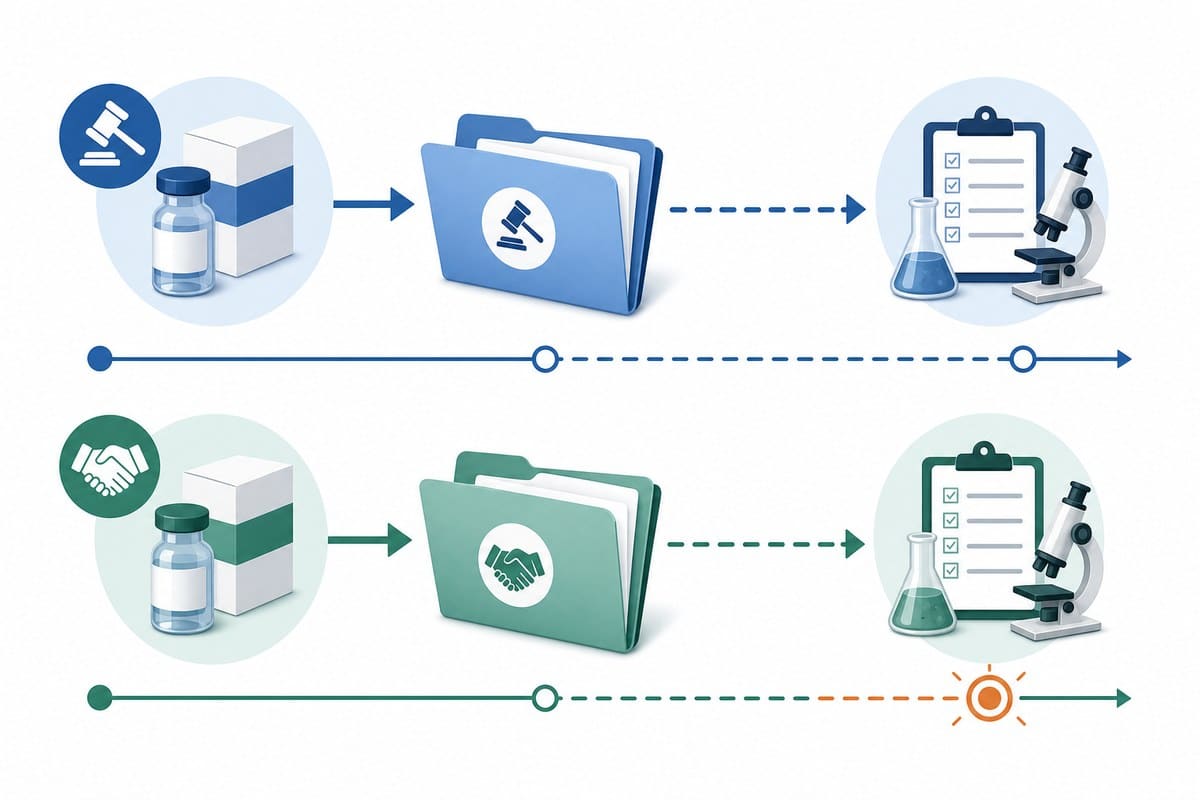
The FDA database uses several statuses: pending, ongoing, delayed, terminated, submitted, fulfilled and released. The agency’s frequently asked questions page defines a delayed study or trial as one that is behind its original schedule. That is a procedural measure, not a clinical conclusion, although a delay can postpone planned follow-up evidence.
FDA cautions on its Postmarketing Requirements and Commitments: Reports page that annual reports, backlog reviews and public-database searches may not be directly comparable because they can use different study populations, dates and methods. KFF’s nearly 600 total is a descriptive analysis of a database download, not an FDA-issued annual aggregate.
KFF reported that about one-third of the ongoing drug and biologic studies in its download were marked delayed. It also identified dozens of device studies that were overdue or behind schedule. The analysis does not establish that delays caused patient harm or evaluate clinical outcomes across all products involved. A database delay status alone should not prompt treatment changes; patients should discuss treatment decisions with a clinician.
Tavneos illustrates a separate, pending regulatory dispute
One example in the KFF report is Tavneos, known generically as avacopan. FDA approved the drug on Oct. 7, 2021, for adults with severe active ANCA-associated vasculitis, for use with glucocorticoids and other standard-of-care medicines. KFF reported that a required Tavneos safety study was listed as delayed.
The Tavneos case also involves a separate regulatory action. In an April 27, 2026, action described in a statement published July 13, the FDA’s drug center proposed withdrawing the drug’s approval. The agency said newly available information meant it could no longer conclude that Tavneos had been shown effective for its approved use. It also alleged that the approval application contained untrue statements of material fact.
FDA said personnel associated with Tavneos’ pivotal trial had manipulated results after an original analysis did not support effectiveness and had not disclosed that original analysis to the agency. KFF reported that Amgen denied the results were manipulated. The proposal is not a final withdrawal decision, and Tavneos remains on the market unless its applicant removes it or the FDA commissioner orders removal through the applicable process.
FDA has separately said it identified serious drug-induced liver injury cases associated with Tavneos, including cases of vanishing bile duct syndrome and fatal outcomes. The record does not establish that the delayed postmarket study caused or worsened those injuries.
KFF reported that FDA had said the required safety study was designed to enroll 300 patients. Amgen told KFF that 49 patients had enrolled as of July 24, 2026, and that each participant must be followed for five years. Amgen told KFF that enrollment was difficult in part because potential participants could face placebo assignment even though an approved treatment was available.
The Tavneos withdrawal proposal remains pending, while its required safety study is listed as delayed in the FDA-tracked records analyzed by KFF.

