


YouTuber Jon Prosser is back with precise renders and specs for a rumored foldable iPhone, even while he stares down a high-profile lawsuit over supposed iOS 26 leaks. On his Front Page Tech channel, Prosser has published what he says are the look Apple is currently targeting and the hardware it is aiming for, as well as possible pricing, for a device that he dubs iPhone Fold.
What the iPhone Fold renders and specs suggest
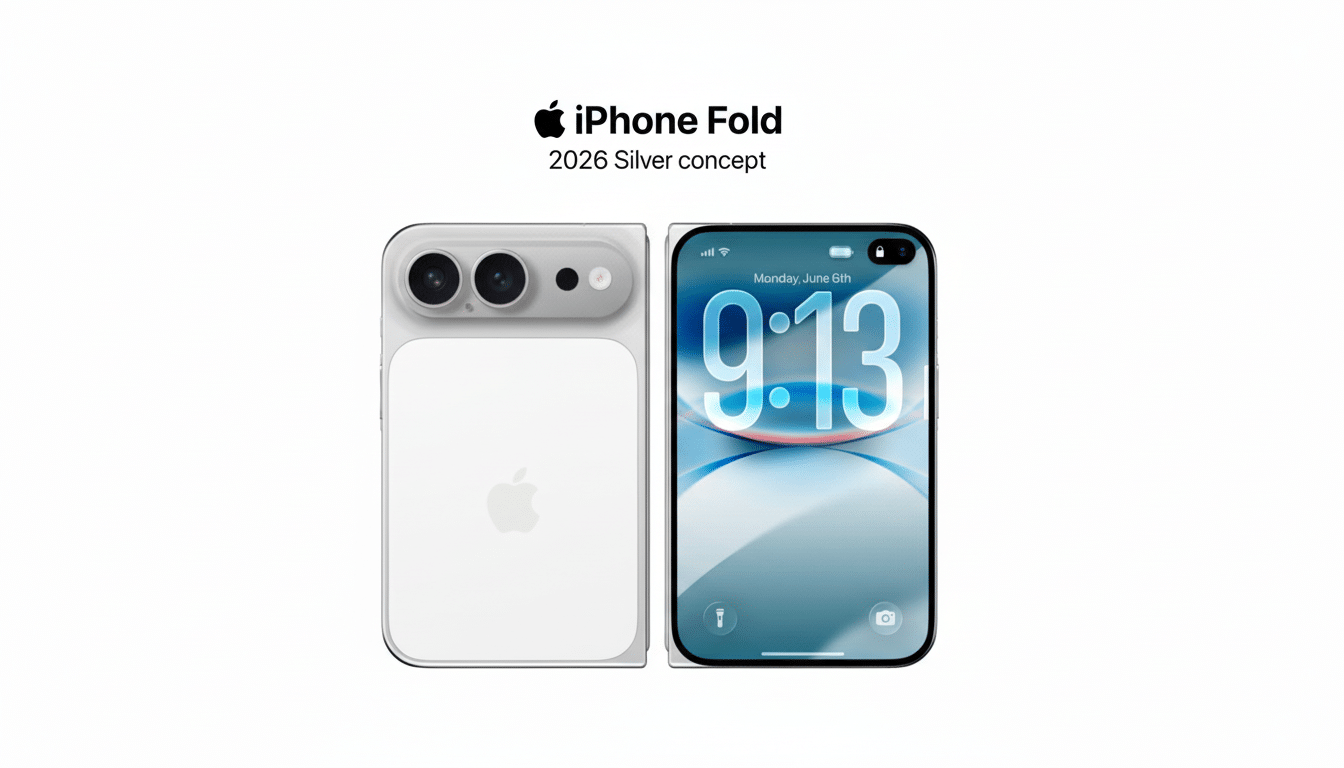
Prosser’s renders show a book-style clamshell with a 5.5-inch cover screen and a 7.8-inch main display that opens to an iPad-like canvas. He estimates the thickness at 9mm or so closed and about 4.5mm open — numbers that would make it one of the thinner large foldables if they bear out in real hardware.
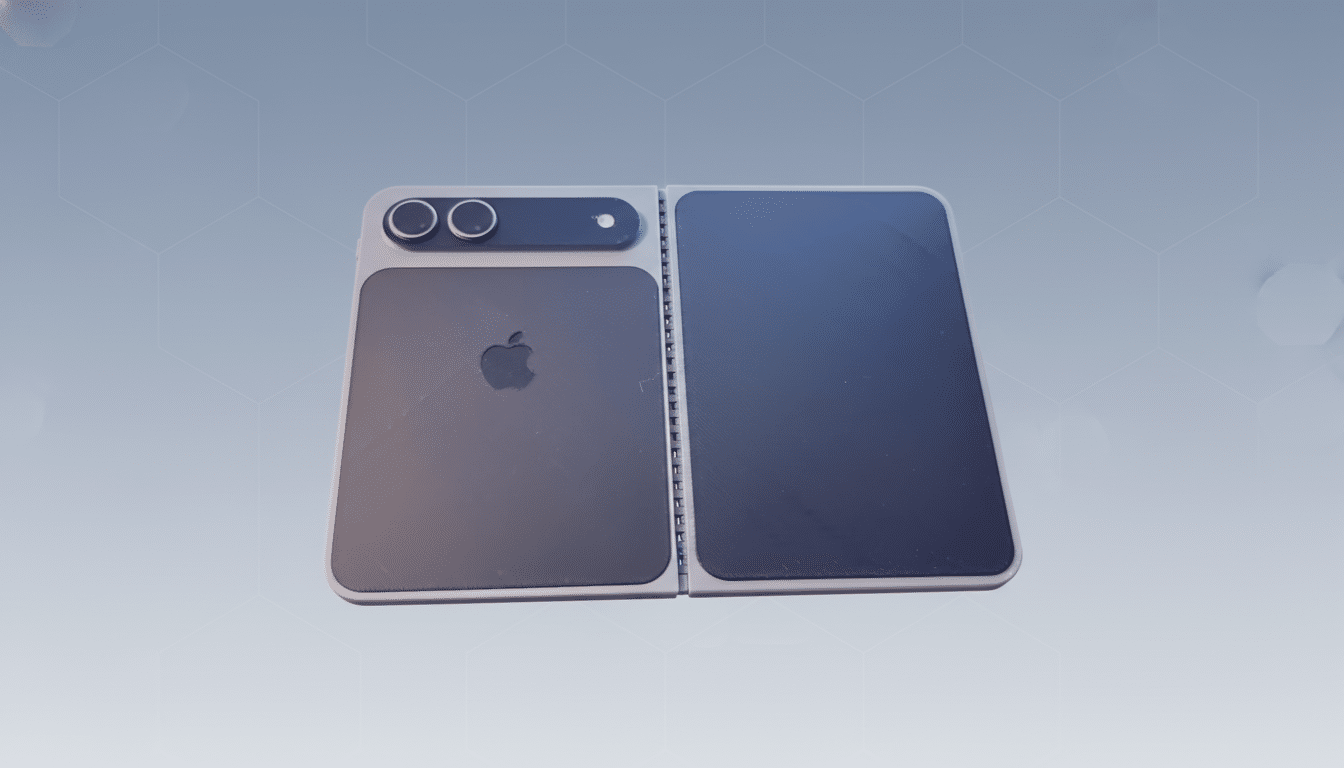
A standout claim is a creaseless inner display facilitated by a metal plate to manage stress and a hinge made from “liquid metal.” That wording is interesting: Apple has maintained shape-memory alloy patents for years and licensed Liquidmetal for small parts; using it on a large, high-cycle hinge would be a big engineering leap.
For cameras, Prosser is indicating four modules — two on the back, one in its cover screen, and another inside. The device would nix Face ID in favor of integrated Touch ID in the power button — echoing Apple’s recent approach on the iPad, he says. He also points to high-density battery cells, Apple’s C2 modem, two color options (black and white), as well as a price band between $2,000 and $2,500. He situates the debut next to an iPhone 18 Pro lineup.
Of course, as with any leak, none of it is confirmed by Apple. But that feature mix — book-style form factor, emphasis on tamping down creases, and a side-mounted biometric sensor — tracks with what industry watchers are anticipating from Apple’s initial foldable adventure.
How this design makes strategic sense for Apple’s foldable
Supply chain reporting from Korea and China in the past year has consolidated around a larger, book-sized device for Apple rather than a smaller clamshell one. An almost 8-inch panel would let Apple market the product as a phone–tablet hybrid — capable of handling iPhone apps while touching on iPad ground when it comes to reading, juggling tasks, and creativity tools.
Mitigating the crease is table stakes in 2026. Samsung, Honor, and OnePlus have each shaved the crease from sight in turn with redesigned hinges and ultra-thin glass; upstart national brand challenger Honor’s Magic V2 and OnePlus’ Open are current benchmarks. If Apple can manage to match a flatter panel with a sub-10mm closed thickness it would instantly shoot up the rankings in terms of ergonomics.
The modem detail is the giveaway. Such talks have fueled widespread speculation that Apple will continue to use Qualcomm 5G modems through at least 2026, after the company extended its deal to supply modem parts for future iPhones. A first-gen foldable with an Apple-designed C2 modem would be quite a slap in the face to the conventional wisdom.
Legal backdrop raises stakes as Apple sues Prosser
Prosser’s video is published at a time when he has faced a lawsuit from Apple claiming that information he spread about an internal design for iOS 26 called “Liquid Glass” was not approved. An insider retrieved information from a development iPhone associated with a now-former employee and shared it with Prosser; it was later featured in a video, according to Apple’s complaint. The filing has not been adjudicated, and the allegations are just that.
Apple has increasingly cracked down on leakers in recent years — from cut-it-out warning letters to civil suits — asserting that early peeks at its projects can hurt competitive edge and the safety of its workers. For creators, the legal risk increasingly is a factor in the publishing calculus — especially when leaks claim to be based on pilfered trade secrets rather than supplier chatter or public patents.
Market reality and the price issue for a foldable iPhone
Prosser’s proposed price point would put an iPhone Fold at the top of the market. To put this in context: Current flagships like Samsung’s Galaxy Z Fold 6 and Google’s Pixel Fold both debuted under $2,000. Apple has always been margin- and materials-driven, so a premium compared to Apple’s competitors is highly imaginable — especially if that extra you’re paying gets you a thinner chassis, better battery life, or a crease innovation.
Analysts from IDC and Counterpoint see double-digit growth potential for foldables, with annual shipments topping 20 million units. Even so, this continues to be a niche use case. An Apple entrant might broaden the category, as with smartwatches, but only if it can address durability and weight and allow for apps to be scaled down without losing functionality.
It would also create an inflection point with how the iPad mini gets used. Cannibalization is something Apple might also try to forestall, perhaps by leaning on continuity features or Pencil support, or by being followers-only and making exclusive multitasking modes, but this is an example of how carefully the product has to be positioned.
What to watch next from supply chain and software clues
Trust corroboration from panel supply trackers and analysts who follow orders at Samsung Display, LG Display, and BOE. Strong tells would be hinge component chatter, durability targets (fold cycles), and software clues in upcoming developer tools. Also, keep an eye on whether reports continue to connect Apple and Qualcomm modems over the next iPhone cycles; that one detail will put the story of a “C2 modem” claim to a test.
For now, Prosser’s renders provide an intriguing representation of what Apple potentially will ship. The technical story they suggest — a fold without a crease, a slim profile, and premium prices — is in line with Apple’s playbook. Whether those lines will be indicative of the final device remains to be seen with the next wave of solid supply chain signals, and not just the YouTube rumor mill.
