


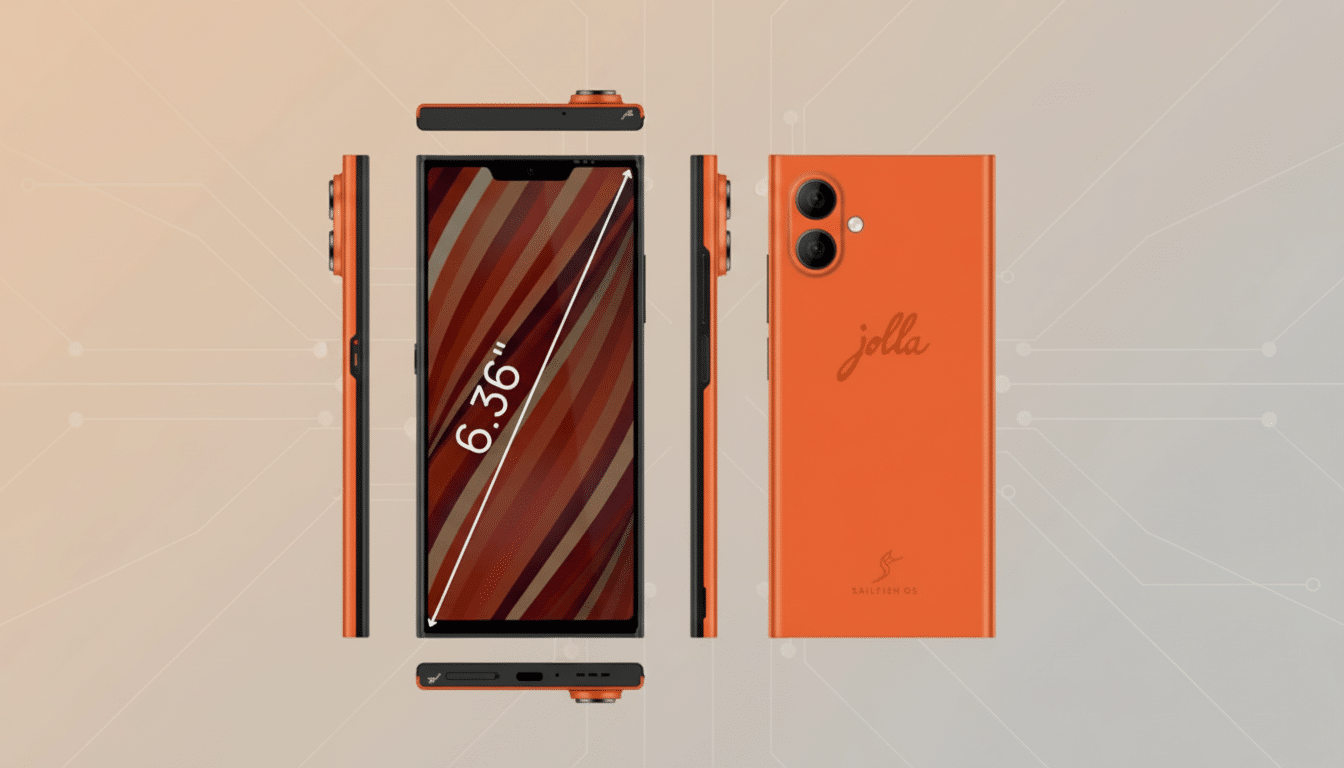
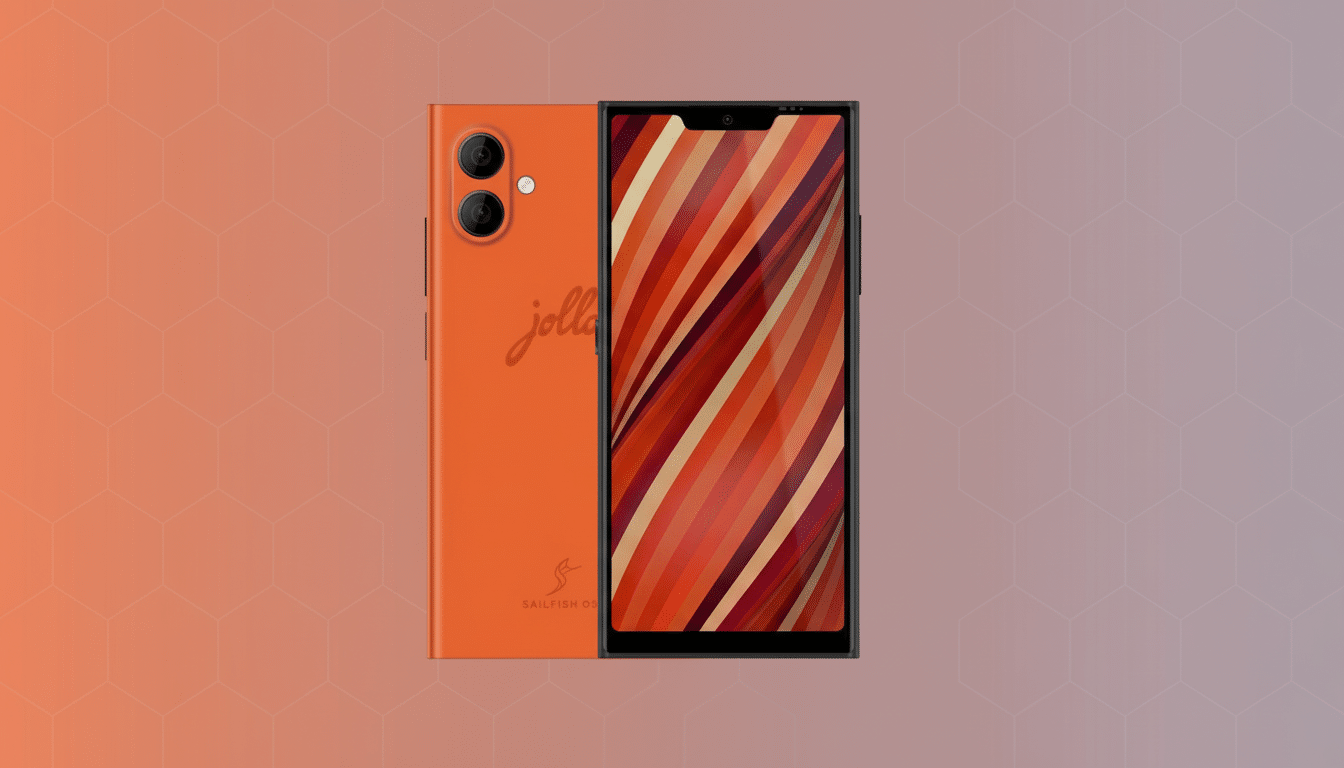
Jolla from Finland has introduced a new smartphone that goes against recent industry trends to add features many users long for: a removable 5,500mAh battery, a microSD slot, a notification LED, and even the return of the physical privacy switch.
The twist, however, is this: Instead of Android, it runs SailfishOS, a Linux-based OS designed to offer an experience sans Google but with support for Android apps.
SailfishOS fills in where Android does not
SailfishOS has its roots dating back to the 2013 MeeGo project from Nokia and is one of the only remaining maintained mobile alternatives. Android and iOS combined have 99%+ of global smartphone OS share, leaving oxygen for competitors at a level consumed by rounding errors, StatCounter notes. Jolla’s solution is to focus on people for whom privacy, ownership, and life cycle trump lock-in.
The phone comes with SailfishOS 5 by default and brings improved compatibility for Android apps up to Android 13, call blocking, improved landscape mode support, and an updated web engine. The company also highlights that SailfishOS doesn’t need a Google account, does not have hidden analytics, and keeps background data flows in check by default. For Android refugees, SailfishOS has long had support for an Android app layer that provides a stepping stone to avoid app shock and lock down the core OS.
Specs emphasize longevity and privacy features
On paper, it’s a pretty run-of-the-mill mid-ranger: an unnamed MediaTek 5G processor, a 6.36-inch FHD+ OLED display, and 12GB of RAM with up to 256GB of expandable space via microSD. The main attraction is the 5,500mAh removable battery — still a unicorn in 2025. Though Fairphone champions repairable phones and some tough models allow tool-free swaps, mainstream flagships have mostly sealed their batteries for water resistance and design reasons.
Jolla has added a hardware privacy switch that disconnects cameras, microphones, and other sensors from the device’s circuits, taking a page from Librem 5 and PinePhone for privacy-first features. A side-mounted fingerprint reader and a notification LED are among the suite of throwback conveniences that many Android makers have quietly let go in recent years.
The camera hardware is simple: a 50MP main shooter and a 13MP ultrawide. Jolla is not selling computational magic here; reliability matters more than extras in this elite class of camera devices, which ride atop high-end-only ISPs, heavy image processing, and large sensors.
Running Android apps without relying on Google services
That’s where running Android apps on something other than an Android OS comes in. Historically, SailfishOS has a compatibility layer that has been impressively loyal to most popular apps. Support goes up to Android 13-level APIs with SailfishOS 5, and microG (an open-source alternative to Google’s Play Services) compatibility is enhanced, Jolla claims. That’s critical for notifications, location, and sign-in flows that many apps rely on.
There are caveats: a few banking and streaming apps have extreme attestation requirements (e.g., require official Play Services or hardware-backed checks). Most everyday apps should be usable, but niche or security-sensitive titles may not. Give microG a fighting chance. Power users utilizing microG, such as on de-Googled Android builds, will be familiar with this tactic.
Removable batteries and microSD matter again
There’s also a regulatory wind at its back. The European Union’s Battery Regulation would require that portable devices sold there have batteries that can be replaced by users by 2027, forcing manufacturers to reconsider glued-down designs. The details of how that will work are still shaking out, but the Jolla folks seem to be way ahead on this with a fully swappable pack — something road warriors, field workers, and long-term users should love. The microSD slot also extends useful life by letting you offload photos, video, and maps for less without having to pay up every time for pricier internal storage tiers.
Price positioning, pre-orders, and early demand signals
With a €99 deposit that counts toward a final price of €549 (around $639), the phone will be available to pre-order, and shipments are expected in the first half of 2026. Jolla says it hit its first 2,000-unit order the weekend of launch and subsequently shot past 2,500 pre-orders shortly after, so there’s clearly a niche appetite here. That’s small by mass-market standards but significant for any independent platform competing in a mature market.
At this price, it’s competing with well-liked mid-range models including Google’s Pixel 8a and Samsung’s Galaxy A55. (iPhones have better camera pipelines and large app ecosystems, but no removable battery — and, in most cases, no microSD slot.) Jolla’s pitch is that you’re paying for control, longevity, and privacy-first software, not a showy set of benchmark results.
Who this phone is for, and who should look elsewhere
If you are looking for a major Android handset with the latest camera tricks, this isn’t it. If you value ownership — being able to swap out the battery in minutes, add storage on the fly, and run a Linux-based OS that keeps Google at bay — this phone should be on your shortlist. It’s best suited to developers, privacy advocates, and hackers but also remains approachable for the curious, with support for a wide variety of Sony Xperia handsets if you fancy giving it a whirl without splashing out on entirely new hardware.
In a world of sealed slabs and cloud servitude, Jolla’s new phone offers an alternative contract with its customers. It gives back the hardware freedoms that a lot of users miss on Android, and it eliminates the largest software assumption of them all (Android), without losing apps.
