


The AI boom has moved from proof-of-concept to production pressure. Boards want results, regulators want controls, and employees are already using generative tools whether IT is ready or not. Microsoft’s latest Work Trend Index reports that a large majority of knowledge workers now use AI on the job, with widespread “bring your own AI” behavior raising oversight questions for CIOs.
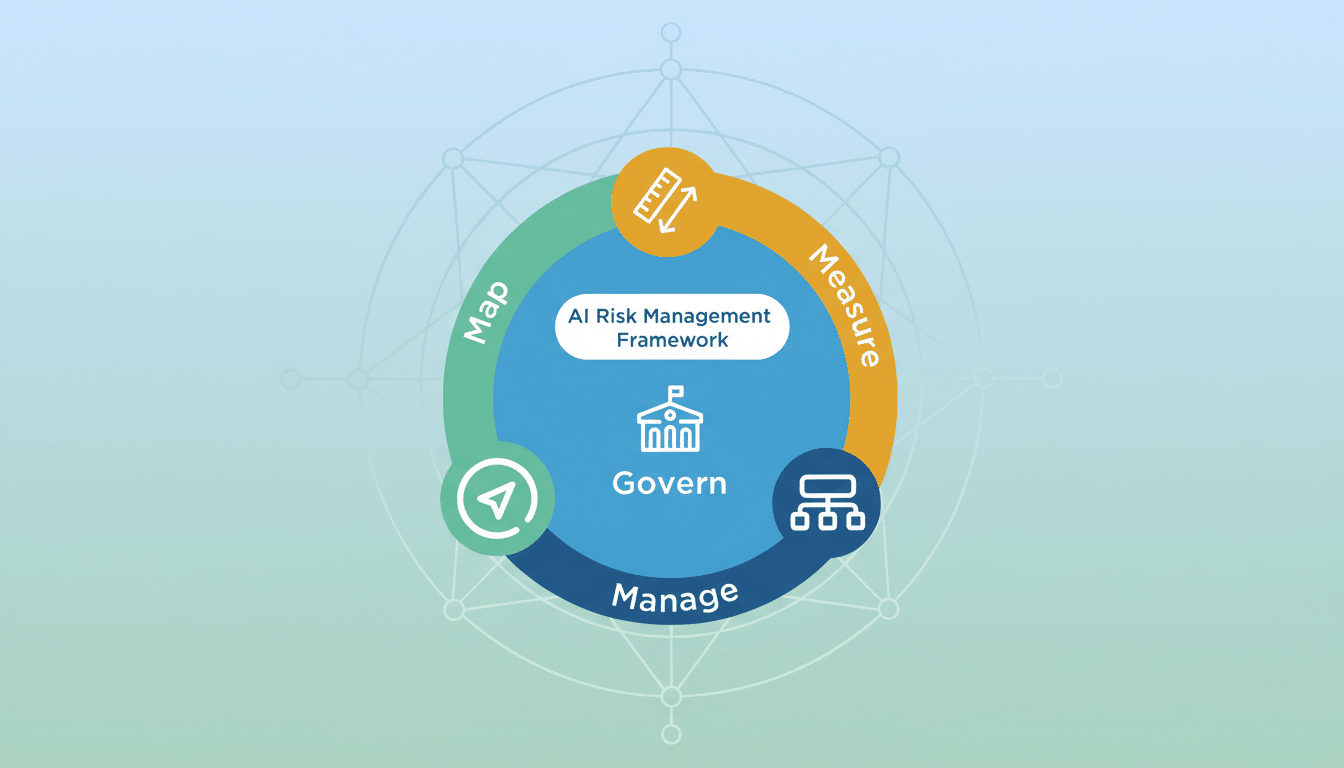
Against that backdrop, the classic IT playbook needs urgent revisions. The following eight updates align with guidance from NIST’s AI Risk Management Framework, lessons from MITRE’s ATLAS adversarial threat knowledge base, and early adopters who’ve learned what scales—and what breaks—when AI touches core workflows.
- 1. Put Data Governance Ahead Of Models For Trust
- 2. Build AI Threat Modeling Into Security
- 3. Evolve MLOps Into AI Platform Operations
- 4. Modernize Identity And Access For AI Workflows
- 5. Bring FinOps To AI Spend With Unit Economics
- 6. Treat AI Procurement As Model Supply Chain Risk
- 7. Upskill Teams And Formalize Change Management
- 8. Define Value And Accountability From Day One
1. Put Data Governance Ahead Of Models For Trust
Models are only as trustworthy as the data behind them. Inventory your data sources, record lineage, and enforce consent, retention, and residency rules before you tune a model or wire up retrieval-augmented generation. NIST’s AI RMF emphasizes that risk control starts with data quality and context; treat datasets like critical infrastructure with owners, SLAs, and audits.
Practical move: establish “golden” corpora and policies for masking sensitive fields. Bake in redaction at ingestion so developers can’t accidentally expose PII through prompts or logs.
2. Build AI Threat Modeling Into Security
AI expands the attack surface: prompt injection, data exfiltration via outputs, model theft, and poisoning are all live risks. Use patterns cataloged in MITRE ATLAS and the OWASP Top 10 for LLM Applications to design controls. Treat prompts and model outputs as untrusted input, enforce allowlists for external tools, and add content filtering on both ingress and egress.
Run red teams against your assistants the same way you pen test APIs. Include kill switches, abuse monitoring, and incident runbooks tailored to model behavior, not just servers.
3. Evolve MLOps Into AI Platform Operations
Pilots fail in production when there’s no lifecycle discipline. Expand CI/CD to CI/CD/CT: continuous training and testing. Maintain a model registry, version datasets, and use canary releases with offline and online evaluation. Track drift, hallucination rates, latency, and cost per task as first-class SLOs.
Leaders pair automated evaluations with human-in-the-loop checkpoints for high-stakes use cases. As McKinsey has noted, top performers operationalize AI like any other mission-critical service—observable, versioned, and reversible.
4. Modernize Identity And Access For AI Workflows
Least privilege must now cover prompts, tools, and datasets. Issue scoped tokens per application, restrict which documents RAG can reach, and apply policy-based access down to table, column, and vector-level context. Log prompt provenance and user identity to support audits and right-to-be-forgotten requests.
Address shadow AI with clear guardrails: approved providers, data handling standards, and a process to register new use cases. A light-touch intake form often reduces rogue deployments more effectively than bans.
5. Bring FinOps To AI Spend With Unit Economics
GPU hours and token usage can spike without warning. The FinOps Foundation recommends unit economics: track cost per query, per generated document, or per resolved ticket. Cache frequent prompts, tune context windows, and use retrieval to cut token counts. Quantization, batching, and right-sizing instances can drive double-digit savings.
IDC continues to project steep growth in AI investment, which means finance teams want predictability. Set budgets with enforceable quotas, alerts, and monthly business reviews that tie spend to outcomes.
6. Treat AI Procurement As Model Supply Chain Risk
Vendor diligence must go deeper than features. Ask for model cards, training data disclosure practices, third-party red-team results, and conformance with NIST AI RMF or ISO 23894. Define SLAs for latency, uptime, and measurable quality; require data retention and deletion terms; and secure IP indemnification for generated content where applicable.
With the EU AI Act setting a global compliance bar, build classification and documentation steps into intake. Benchmark vendors using transparent tests or MLPerf-style evaluations on your own domain data.
7. Upskill Teams And Formalize Change Management
Tools change weekly; skills can keep pace with structure. Create an AI center of excellence, publish reference patterns, and offer role-based training for developers, analysts, and business users. Cover secure prompt design, dataset curation, and evaluation techniques, not just tool tips.
The World Economic Forum estimates that nearly half of core skills will shift in the coming years. Budget for upskilling and set “AI champions” in each business unit to avoid one-off experiments that never scale.
8. Define Value And Accountability From Day One
Pick business KPIs before you pick a model. Tie AI to measurable outcomes like first-contact resolution, cycle time, or revenue per agent, and pair them with quality metrics such as precision, recall, and human satisfaction scores. Establish human oversight thresholds, ethics reviews for sensitive use cases, and clear ownership for model incidents.
Reporting shouldn’t end at deployment. Publish a monthly AI scorecard to executives that blends impact, risk posture, and spend. If a use case can’t show value or safety, pause it and redeploy resources to what works.
The AI era rewards organizations that combine speed with discipline. With these eight updates, your playbook can move fast, stay safe, and turn experimentation into durable advantage.
