


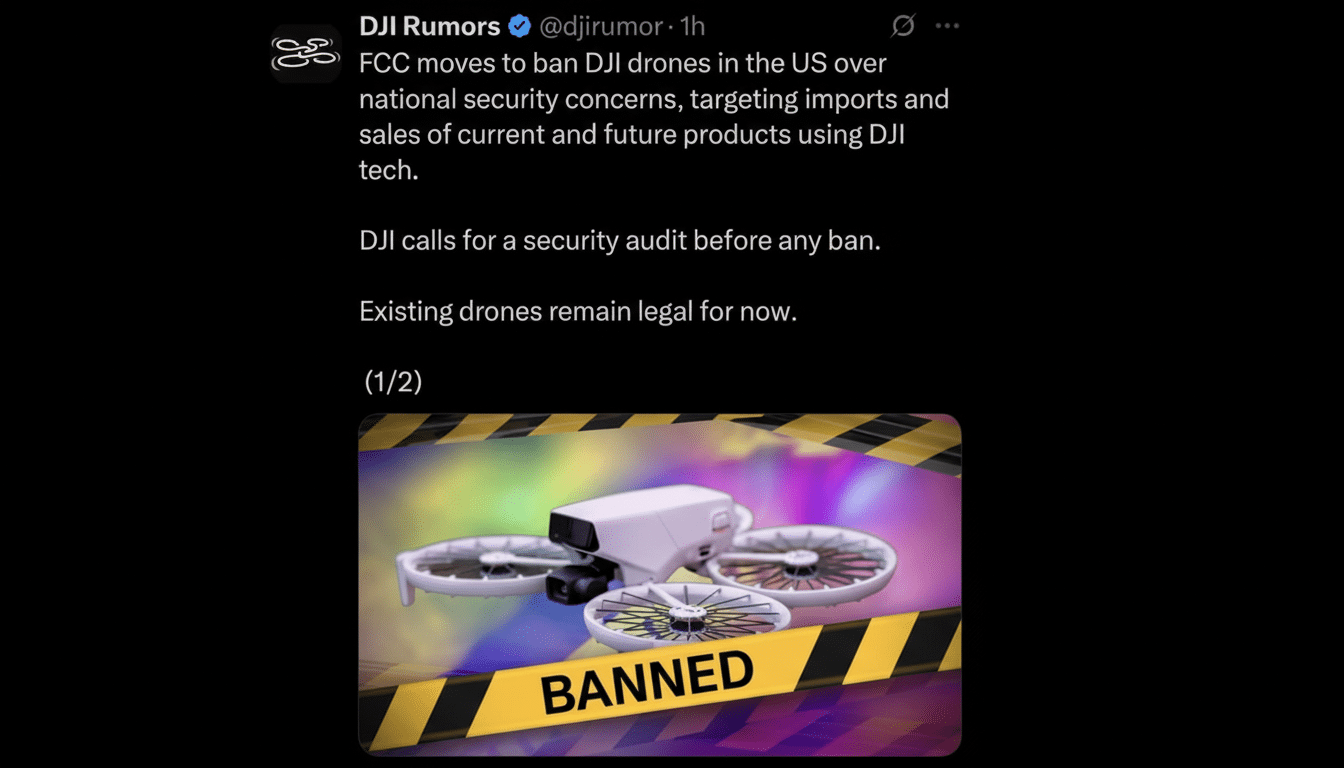
Unless there is a last-minute reprieve, DJI is close to being cut off from the US market for new products. It has nothing to do with flight safety or the FAA — it’s federal security policy. With no government agency taking the lead to fulfill the required security audit of DJI gear, the company is about to land on the Federal Communications Commission’s Covered List and then shut down future approvals for DJI drones, cameras, and gimbals sold in the US.
Why a federal security review is putting DJI at risk in the US
Congress connected the fate of new DJI gear to a national security review in the National Defense Authorization Act. The audit may be conducted by the Department of Defense, the Department of Homeland Security, the Director of National Intelligence, or the NSA. None has stepped forward to take responsibility, a bureaucratic black hole inside which is entwined the most valuable drone brand on earth.
- Why a federal security review is putting DJI at risk in the US
- What a Covered List listing signifies for DJI in the US market
- What a potential ban means if you’re already a DJI gear owner
- The economic shock a DJI ban could cause across US industries
- Alternatives and tradeoffs if a DJI ban limits new US sales
- What to do now if you rely on DJI gear for work or creativity
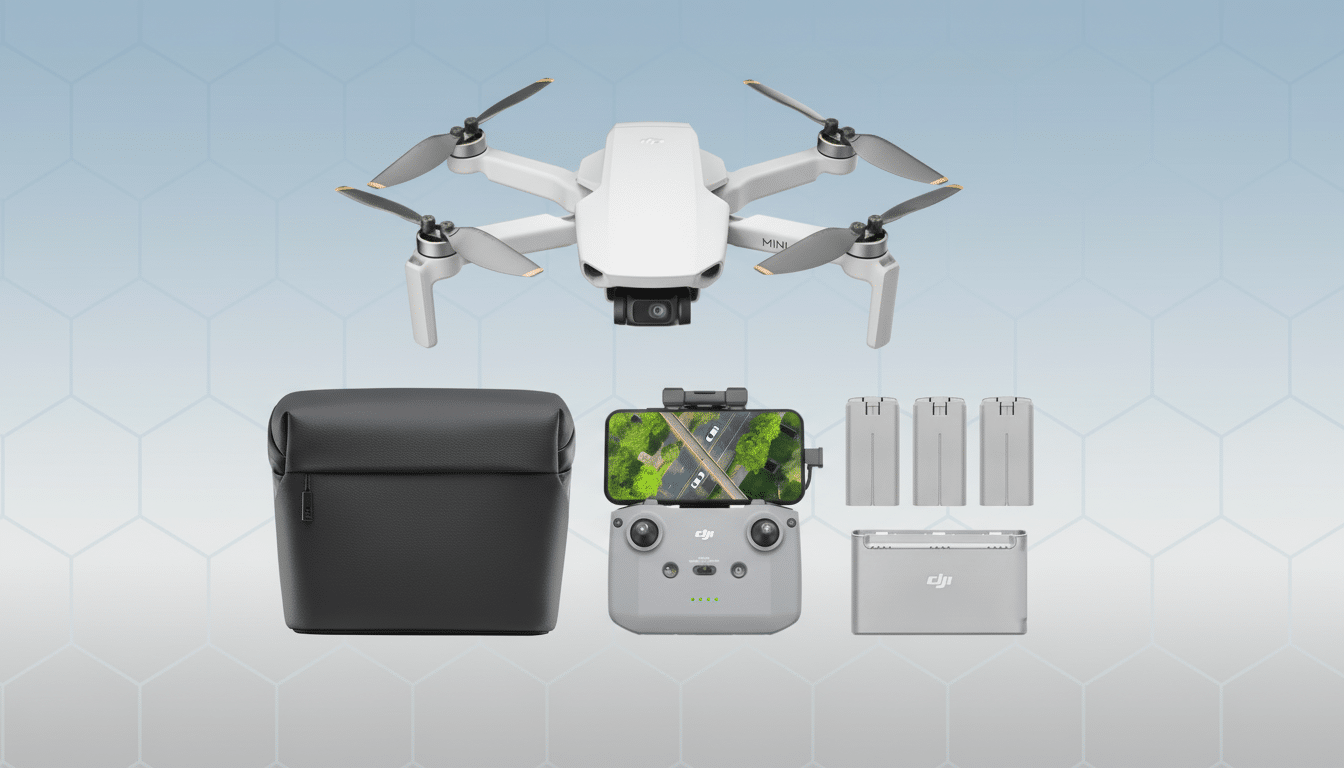
Scrutiny of DJI isn’t new. The Pentagon warned service members years ago against using off-the-shelf DJI drones. The Commerce Department then added DJI to the Entity List over unfounded concerns about human rights, the company has said in denying those allegations. US Customs and Border Protection has also held up shipments under the Uyghur Forced Labor Prevention Act more recently, leading to spot shortages and startup delays.
What a Covered List listing signifies for DJI in the US market
If DJI is included, the FCC will also move to stop granting new equipment authorizations for DJI’s radio-enabled products. In practical terms, that would mean no new DJI drones allowed into the US market. DJI’s lineup is full of wireless gear — from Mavic and Mini airframes to Osmo action cams and Ronin gimbals — so the potential for an impact would be wide.
There’s also a second shoe: the FCC has revised old rules, giving it authority to revoke existing authorizations in some cases. That doesn’t automatically erase existing DJI gear from shelves, but it does clear the process for products already approved to be reviewed and pulled on a case-by-case basis.
What a potential ban means if you’re already a DJI gear owner
Ownership and operation are not prohibited by the FCC. Your drone will keep flying, your Osmo will still record, and your Ronin will stabilize. FAA rules such as Remote ID compliance and Part 107 requirements have not been altered. Instead, the danger is in support: replacement parts, repairs, and warranty service all may get more expensive or be harder to come by if imports remain restricted.
Modest steps now can help:
- Stock up on batteries and propellers.
- Keep firmware updated and backed up.
- Document your aircraft’s serial numbers and maintenance logs.
- Have redundancies in place for mission-critical jobs.
- For professional operators, make sure deliverables to clients don’t depend on capabilities only DJI currently provides.
The economic shock a DJI ban could cause across US industries
DJI is the current market leader in consumer and prosumer drones, featuring best-in-class camera quality as well as flight stability and safety systems. Industry groups estimate that about 450,000 operators in the United States rely on DJI platforms to make money, ranging from media production to inspections, agriculture, and public safety. The broader drone services market in the United States is estimated in the tens of billions of dollars or more over the next decade, according to analysts.
Survey results provided to me by the Drone Service Providers Alliance show that about two-thirds of its members believe they may have to close up shop if some form of a DJI ban goes into effect. For police and search-and-rescue teams, the replacement cost and retraining represent an operational risk, not least where squads might have standardized their fleets on Mavic or Matrice airframes.
Alternatives and tradeoffs if a DJI ban limits new US sales
There are choices, but all come with weaknesses. Autel Robotics has some good EVO models with decent cameras, but availability and level of service can be dicey. The Potensic Atom 2 is a rare exception among cheaper sub-250g drones, but it doesn’t come close to the imaging and omnidirectional obstacle sensing of a Mini 4 Pro. Skydio pivoted from consumer sales and now caters to enterprise and public sector customers.
On the camera side, GoPro and Insta360 offer excellent action cams but don’t have a match for the pocket-sized, stabilized shooting experience of the Osmo Pocket 3. For bigger gimbals, Zhiyun is an acceptable alternative to Ronin, but many cinema teams still prefer DJI’s ecosystem integration, payload tuning, and accessory ecosystem.
What to do now if you rely on DJI gear for work or creativity
For those of you who were planning to buy a DJI for work, it might be smart to jump on the deal while there is still some stock available. Look for price spikes and scarcity if the ban lands and retailers can’t restock. That means professionals should now also be looking at a second airframe, cross-training on at least one non-DJI platform, and budgeting for higher operating costs during the transition.
If you want to get involved on a policy level, groups like the Drone Advocacy Alliance encourage operators to reach out to lawmakers and exercise their influence by discussing the economic and safety consequences that could come from sudden market constraints. Regardless of what you believe about DJI, the takeaway is unmistakable: If there’s no fast government audit that smooths the road to approval, a DJI ban on its new products is all but assured — and the result will ripple from hobby fields to Hollywood sets.
