


Apple’s new front camera on iPhone 17 isn’t a tweak; it’s a reset to how we take, frame, and share our selfies — and one that will quickly manifest in Android flagships next. The company revealed iPhone users snapped over 500 billion selfies in the past year on approximately 1.5 billion active devices, or around an average of 330 per person. Eat out too often, spend too much on a daily latte — when a behavior is that widespread, slight design alterations can reshape global habits.
The most obvious addition is a 24MP square sensor producing an 18MP image, regardless of the orientation of the camera. Combined with its smart framing tools, the iPhone 17 somehow makes orientation and composition almost automatic: no longer do you have to shuffle awkwardly as you flip the phone around or back off to make sure everyone fits.
- Why the iPhone 17’s new square selfie sensor matters
- AI framing alters the selfie process on iPhone 17
- Increase your selfie image quality with iPhone 17
- The Android ripple effect from Apple’s selfie redesign
- Why this matters for creators and everyday video
- What to watch next as selfie cameras evolve further
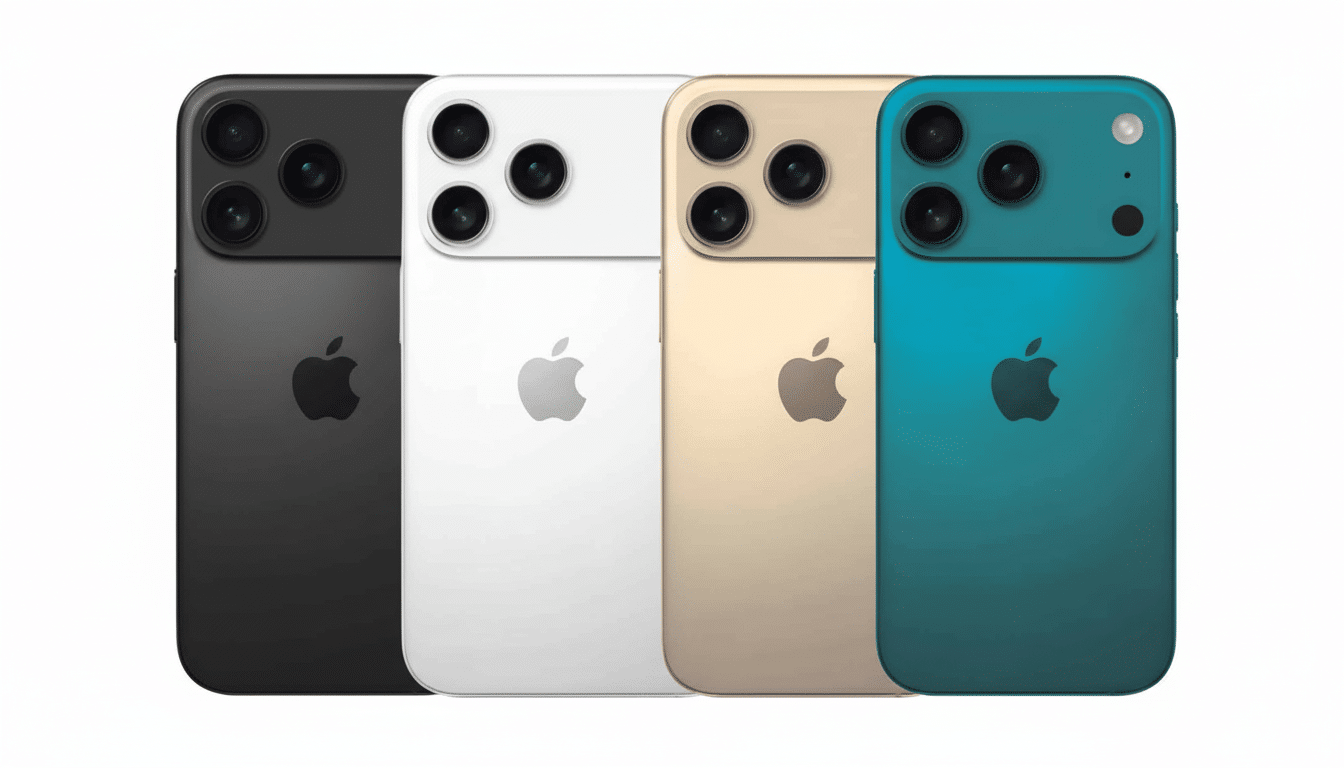
Why the iPhone 17’s new square selfie sensor matters
Selfie sensors usually have the form of rectangles, causing one direction to be inevitably sacrificed through cropping. Apple’s square design captures the same amount of detail in portrait and landscape modes, then chooses the best 18MP slice on-the-fly. The result: a consistent field of view with fewer clipped shoulders in group shots and less lens distortion along the edges.
This sensor also future-proofs creative formats a bit when 16:9 just won’t do. So whether you’re exporting 9:16 for Shorts and Reels, 1:1 for profile pics, or even 16:9 for YouTube, the camera has extra data to protect important details like skin texture and highlight information. Testing labs like DxOMark have long pounded front sensors for screwing up exposure and skin tone under tricky lighting; a square crop with smarter framing is the direct response to that pain point.
AI framing alters the selfie process on iPhone 17
Tap the new Center Stage button inside the Camera app and, like magic, the iPhone 17 will shift from vertical to horizontal, without you moving a thing.
Auto Zoom and Auto Rotate are turned on by default, and on-device machine learning recognizes faces (either to adjust framing or jump between wide and ultrawide lenses so that nobody is left out) — no arm contortion necessary.
Apple has used the name Center Stage before, on its iPad and Mac for video calls in which it centers a speaker. This is far more ambitious. It’s real-time camera framing for photos and video, guided by person detection, scene understanding, and intent prediction. The payoff is speed: fewer retakes, improved framing, and a far better keeper rate for those spur-of-the-moment gestures.
Increase your selfie image quality with iPhone 17
The iPhone’s front camera system has not been as advanced as the rear. Now that calculus changes if you go from 12MP to a 24MP square sensor. Look for cleaner micro-detail in hair and fabric, steadier skin tones across mixed light, and improved control of highlights within skies and neon signage. Screen flash adjustment and multi-frame HDR have the effect of even further smoothing out noise without plasticizing faces.
These improvements are important because the selfie camera is the go-to lens of modern life — video messages, check-ins, quick portraits, and live streams. Snap gets over 5 billion Snaps each day, and a significant portion of those are selfies. Social platforms feel it almost immediately when the pipeline for that lens improves.
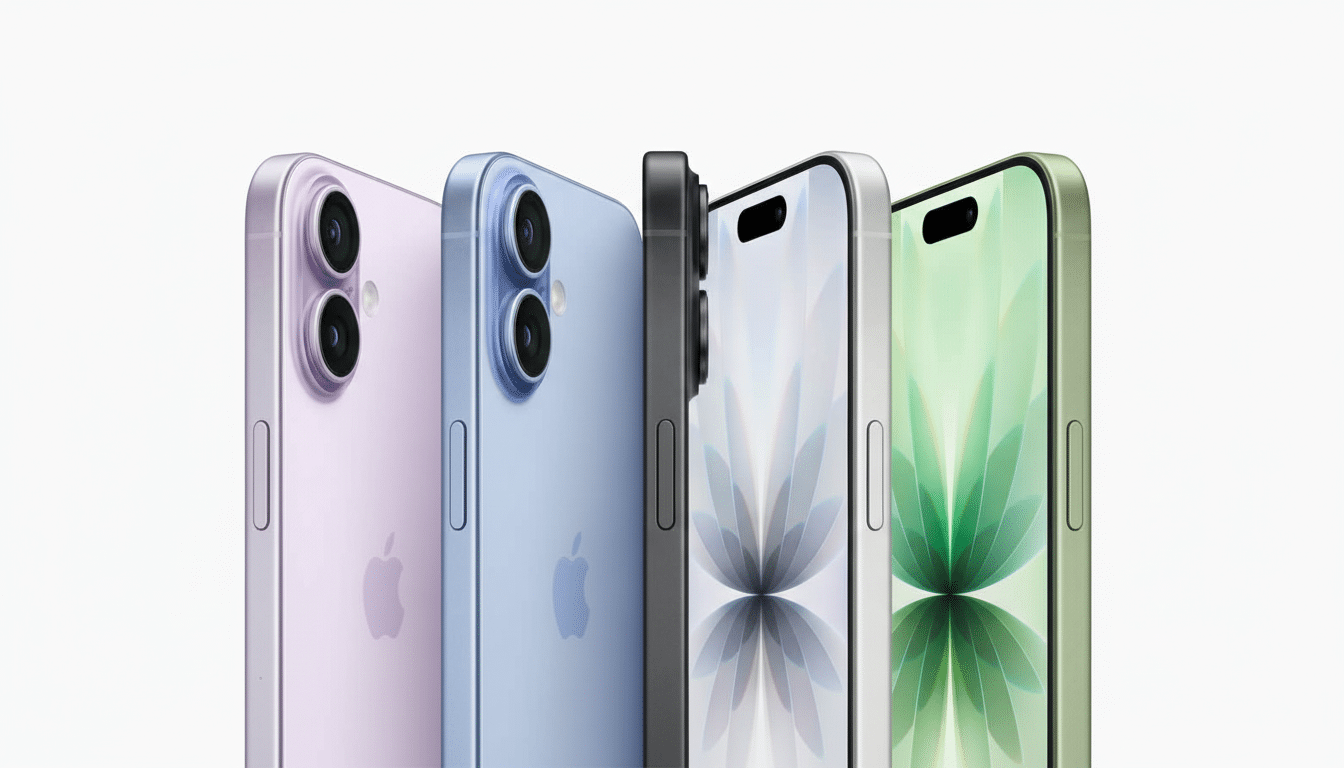
The Android ripple effect from Apple’s selfie redesign
For years, Samsung, Xiaomi, and Vivo have been shipping Android phones with 20–32MP front cameras already (and of course similar, if not greater, sensor sizes), but higher megapixels never meant better framing or consistency.
Apple’s square sensor with AI-oriented field-of-view switching is the playbook to follow — and I expect it to be followed promptly.
History is a guide. After Apple made Portrait Mode a phone must-have, Google, Samsung, and others honed their own, in a cycle that raised the whole market. Night modes followed a similar trajectory. Look for 2026 Android flagships to use square or near-square selfie sensors and rely on Qualcomm Spectra, Google Tensor, or MediaTek ISPs for subject segmentation and intent-based framing in both stills and video.
Software parity will come even more quickly. This “orientation intelligence” can be simulated in the camera apps by shooting with ultrawide front lenses and auto-cropping through face detection and pose estimation. But with no square sensor, they’ll be giving up pixels. The hardware–software marriage is the point of differentiation that will force component suppliers to move.
Why this matters for creators and everyday video
Even as horizontal keeps its currency, short-form platforms call for vertical. The iPhone 17 cuts down that format tax. You shoot one time and the camera saves resolution and frame position over both orientations. For creators, it results in less reframing in post, cleaner exports, and more time creating instead of dealing with files.
For average users, group selfies become less of a haggle. The phone figures out when to go wide, when to switch, and how to keep faces flattering — with no settings deep dive necessary. It is the sort of unseen assist that sticks around because it eliminates a universal annoyance.
What to watch next as selfie cameras evolve further
Expect Android rivals to test square front sensors, smarter auto-crop, and creator-first presets for ready-to-post versions tailored for Reels, Shorts, and Stories. We’ll also see testing houses update their selfie benchmarks to reflect multi-orientation capture and the reliability of AI framing. And keep your eyes peeled for third-party apps to leverage these more deeply with new APIs.
At bottom, it’s an easy call to make: the iPhone 17’s front camera takes better selfies — faster, smarter, and truer to how many of us shoot when we’re shooting from the front. When Apple corrects a pain point of this magnitude, the rest of the industry follows — and the way we take selfies shifts everywhere (not just on iPhones).
