


By Sayak Dey — 668.8K Pixels
Did you know that the world’s largest smartphone factory is not in China or South Korea but in India? And it isn’t run by Apple, Samsung or Huawei, either — perhaps the names most associated with smartphones. The company’s sprawling facility in Noida, India, has become a manufacturing landmark, but the claim depends on a key detail about how “largest” is defined in an industry dominated by long and complex supply chains.
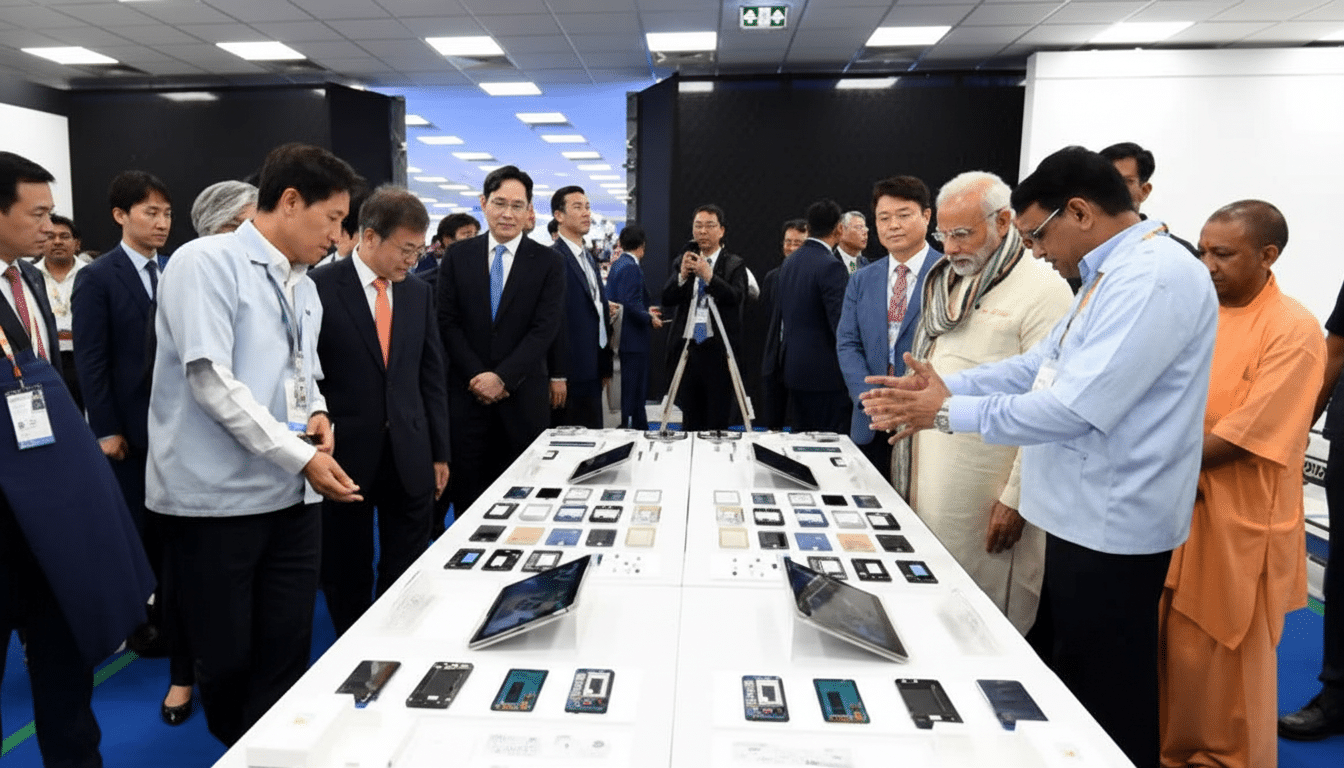
Inside Samsung’s Noida superplant and its 120M-unit capacity
Samsung established its Noida site in 1996 to produce TVs, then added phones in 2007. The biggest step arrived in 2017, when Samsung declared a significant expansion — with an investment reported by many outlets to be as much as $700 million. By mid-2018, after a high-profile inauguration attended by Indian and South Korean leaders, Samsung had doubled the plant’s annual smartphone capacity to roughly 120 million units, according to company statements and briefings from the Indian government.
The factory is a behemoth: about 1.4 million square feet of floor space on roughly 70 acres. That’s approximately two dozen American football fields under one roof. Capacity, however, is not output; as with any high-volume plant, production can be ramped up or down according to demand and model mix. Samsung runs large phone operations in Vietnam as well, which analysts at Counterpoint Research and others have said represent a significant share of the company’s global phone production.
Factory vs. campus: why definitions matter for size
Samsung’s assertion is based on a narrow definition: one unified factory building. On that reckoning, it is the largest in Noida. But zoom out to entire manufacturing campuses — and a different giant appears: Foxconn’s Zhengzhou complex, frequently known as “iPhone City.”
It is the shimmering showroom of a factory complex with dozens of low-slung, boxy, six-story buildings spread around 1.4 square miles that resemble midcentury American suburbia more than an industrial zone in central China.
The facility, known simply as “CQ” by hundreds of workers — mostly women — who have passed through its light-drenched workshops, has churned out as many as half a million iPhones a day.
The de facto campus is one of hundreds in Zhengzhou, a city of six million people on the banks of the Yellow River where factory jobs already populate much of the skyline.
Reuters first reported on CQ in April. Since then, The Wall Street Journal and industry researchers have provided details about its scale: dozens of buildings dedicated to production spread across some 557 football fields (roughly 1,400 acres), with an estimated daily capacity nearly that large for Apple’s most expensive smartphone.
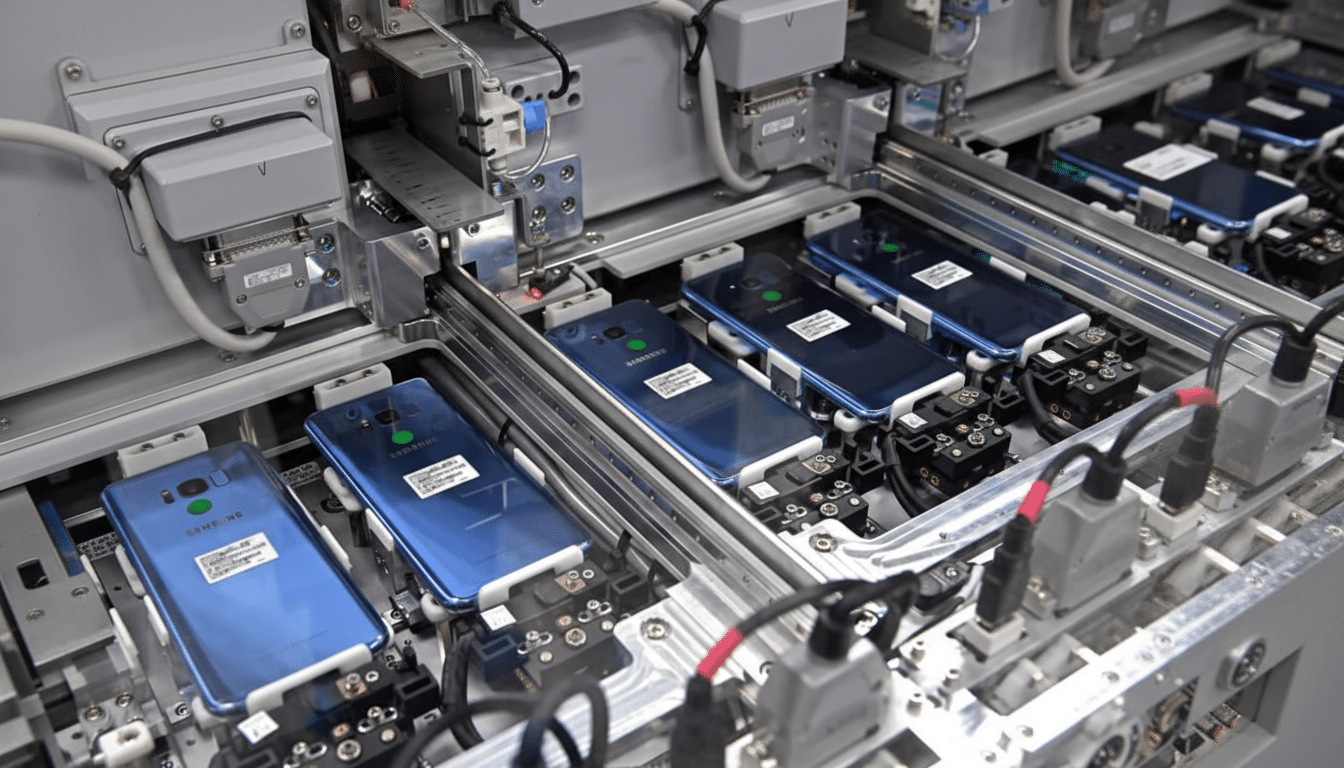
If that is a sustainable figure, it could exceed 180 million units a year — above the ceiling cited for Noida. The total floor space at Zhengzhou has been estimated at roughly 15 million square feet, an order of magnitude bigger than Samsung’s single-building facility.
So who “owns” the biggest phone factory might depend on whether you are counting a single building or an entire fenced, campus-like setting. By building, it’s Samsung. At campus-level output, that would be Foxconn, the world’s largest electronics manufacturing services provider and Apple’s primary iPhone builder.
Why India holds the record for a single-roof smartphone plant
India’s rise as a hub for smartphone production is no fluke. Policy incentives like the PLI scheme, an import duty structure that is favorable to local assembly, and an increasing component ecosystem have forced international brands to go local. Government briefings and independent analyses by organizations including ICEA and Counterpoint Research have reported a sharp increase in India’s smartphone manufacturing capacity and exports in recent years, with Apple and Samsung figuring among the leaders.
For Samsung, a giant single-roof factory on the outskirts of New Delhi represents scale not far from its largest markets, shorter lead times for local models and a home base to export “Made in India” products both regionally and globally. The plant in Noida complements Samsung’s base in Vietnam and other production facilities in Brazil, Indonesia and South Korea, providing the company with geographic redundancy even as it benefits from policy tailwinds and access to India’s massive labor pool.
One roof or many buildings: the operational trade-offs
It’s cheaper to concentrate operations in a single building, and even when you’re making only your own products there are internal logistics savings. That’s Samsung’s advantage in Noida. A campus model, by comparison, allows Foxconn, acting as a contract manufacturer, to compartmentalize clients, safeguard intellectual property and ring-fence risk. Stand-alone buildings make it simpler to customize, at a moment’s notice, production lines, equipment and security measures for different brands of chips — and are easier to isolate disruptions from spreading.
Recent supply chain shocks emphasized those choices. Pandemic-era lockdowns and labor disruptions at Zhengzhou, widely reported in global news outlets, brought to life the risks of concentration even within a sprawling campus. Apple has subsequently forced itself to diversify faster to India and Vietnam, according to reports from Bloomberg and Nikkei Asia, while Foxconn has duplicated modular campuses elsewhere to spread risk and better serve clients.
Bottom line: what ‘largest smartphone factory’ really means
For phone nuts, if you’re talking about a single integrated complex, Samsung’s Noida plant is the world’s largest smartphone factory — by capacity and build under one roof. If you broaden the frame to encompass multi-building campuses, Foxconn’s complex in Zhengzhou dwarfs it for sheer throughput and acreage.
Either way, the record is about more than one economist’s computer program meltdown: the manufacturing map of Asia is rebalancing, with India increasingly looking like a heavyweight to go along with China and Vietnam. The difference is academic for consumers. For companies gambling with billions of dollars on where and how to construct the next generation of phones, definition counts — and so does the address.
