


Fertility startup Inito has raised $29 million in Series B funding to kickstart an audacious expansion of its at-home diagnostics platform, betting that AI-designed antibodies will unlock a new class of highly sensitive home tests. The company, which built a fertility monitor to measure and analyze four major hormones from a single strip that uses machine learning to interpret the data, says it has already processed over 30 million fertility hormone data points — and now wants to reach well beyond “trying to conceive.”
The round was led by Bertelsmann India Investments and Fireside Ventures, bringing Inito’s total funding to about $45 million, including earlier support from Y Combinator; health care operators; and physicians. The money will be used to advance R&D on AI-generated antibodies, scale manufacturing, and aid U.S. and international expansion.
Why AI-designed antibodies matter for home diagnostics
Most rapid tests use antibodies that latch onto a target molecule and produce some sort of measurable signal. Conventional antibodies are developed in animals, and their screening is done in the lab — a process that can be slow, expensive, and subject to batch-to-batch inconsistency. Sensitivity is, however, a bottleneck to implementing accurate and quantitative home tests for more biomarkers.
Inito is leveraging computational protein engineering to design antibodies in silico before synthesizing them from scratch in the wet lab. By predicting 3D protein structure, simulating binding, and then virtually screening millions of candidates, the company could hope to create binders with higher affinity, specificity, and stability. That level of performance could possibly enable the detection of hormetic compounds in urine or saliva at low concentrations — perhaps progesterone metabolites for ovulation monitoring, or, ultimately, endocrine modulators like testosterone — on a cheap strip that can be read by an optical reader on your smartphone.
The approach mirrors advances that are sweeping through biotech, where AI-driven design is accelerating the discovery timelines for binders and enzymes. And yet, despite players like AbCellera, BigHat Biosciences, and Generate:Biomedicines using the same toolkit for therapeutics, repurposing them as diagnostics could quite literally raise the ceiling on how sensitive and reproducible at-home assays could be.
From fertility tracker to diagnostics platform
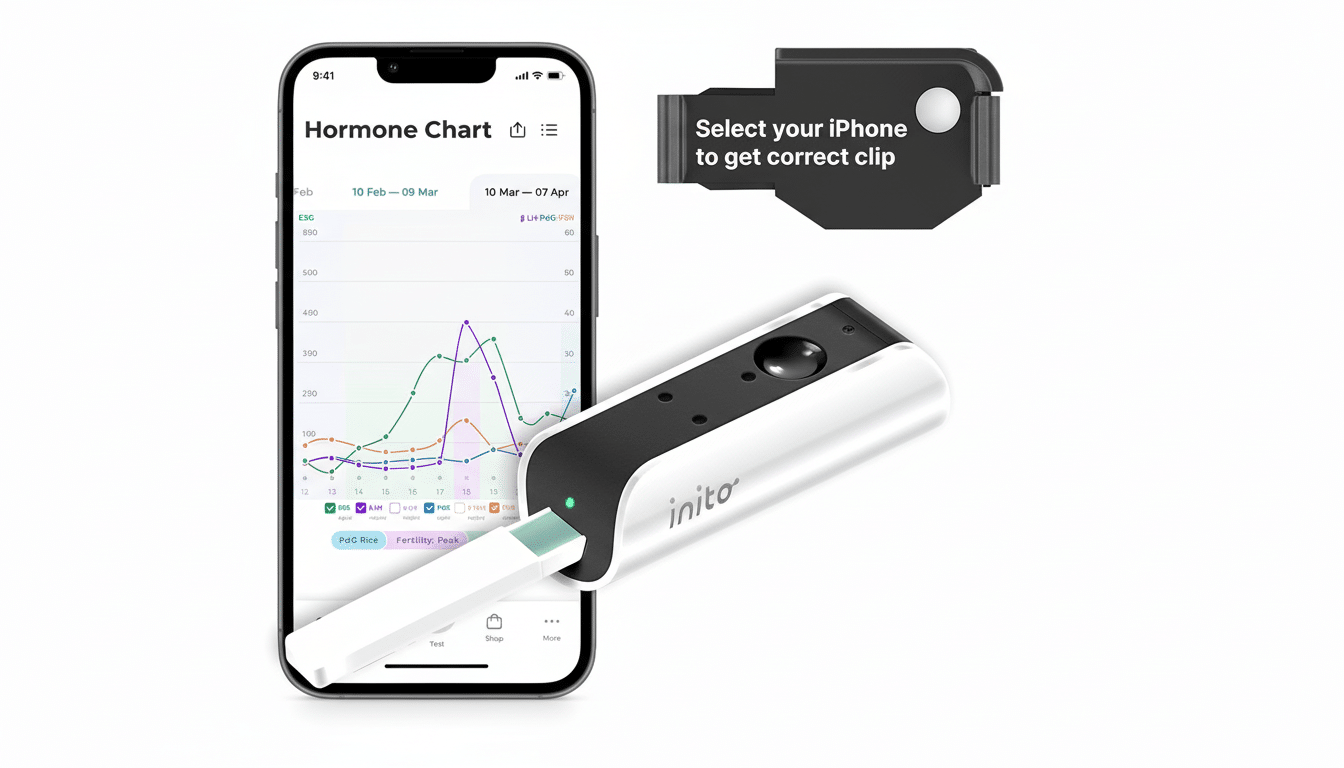
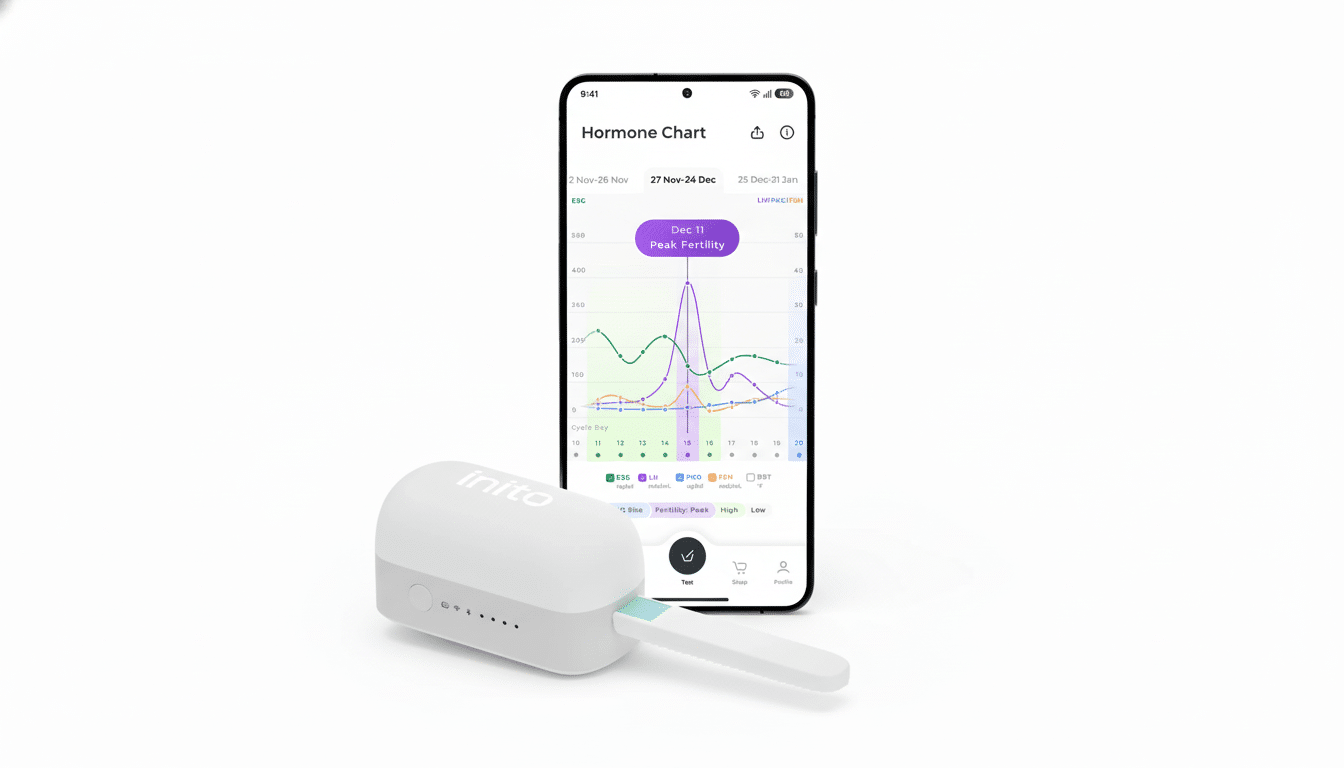
Inito’s first product tests for estrogen, LH, progesterone metabolite PdG, and FSH on one strip and applies AI models to measure the content levels of these hormones, figure out when a woman is fertile or not, and confirm ovulation. The reader and app have made quantitative hormone tracking possible at home, in which testing is no longer a one-off snapshot but instead reveals longitudinal trendlines that clinicians say are more meaningful.
Next, the company hopes to put out tests for pregnancy and menopause, and to branch into more hormone health. The long-term vision, executives say, is a modular platform that will be able to measure and interpret a range of endocrine and metabolic markers from the same few drops of blood, allowing people to track different life stages and health needs from home — with lab-like confidence.
The bet at its core is that AI antibodies combined with smartphone imaging and on-device analytics will advance lateral flow assays toward clinical land: higher dynamic range, lower limits of detection, increased resistance to cross-reactivity and environmental noise — without losing price or ease-of-use points.
Regulatory and manufacturing hurdles for home tests
To enable new biomarkers in the home setting, we need robust clinical validation and an appropriate regulatory pathway. For consumers in the United States, much of that testing comes down to FDA 510(k) clearance and CLIA-waived status as a means of demonstrating that users have mechanisms in place to make their product usable and safe beyond clinical labs. Claims of quantitative accuracy for low-abundance hormones in particular will require strong evidence across different users and settings.
AI-designed recombinant antibodies that are expressed in CHO or other RF-CW systems have been shown to minimize batch-to-batch variability; however, scaling production requires a robust quality system, including ISO 13485–compliant manufacturing, and requires rigid lot-release criteria. Environmental influences — lighting, urine chemistry, user technique — also complicate at-home quantitation, which makes integrated optical readers, calibration algorithms, and on-device QC as important as the antibody.
Market context and competitive landscape
Self-testing is now in high demand and has recast consumer expectations for rapidity and convenience. For fertility, at-home options have gone from cheap LH strips to quantitative systems like those made by companies such as Mira, Oova, and others that sell mail-in lab kits for broader hormone panels. Inito’s differentiation is based on the ability to multiplex different hormones in a single strip and use AI to analyze patterns rather than individual numbers.
The addressable need is large. The World Health Organization reports that the prevalence of infertility occurs in approximately 17.5% of adults during their lifetime, highlighting the need for affordable and data-rich testing. And over and above fertility, interest in menopause care (which comes with its own set of more sophisticated hormone assays), hormonal health, as well as preventive monitoring for other conditions, is growing — but many analytes still don’t have reliable, affordable, and truly quantitative home tests — which is again exactly the gap Inito’s AI antibody strategy targets.
What to watch next as Inito scales AI diagnostics
Inito says it has had early success with antibodies designed by AI in its R&D lab, noting that it will scale manufacturing and global distribution to meet demand. Key checkpoints to monitor are clinical validation data on new assays, regulatory filings in the U.S. and key international markets, as well as proven lot-to-lot consistency at commercial scale.
If the company can deliver lab-level performance in a living-room workflow, it could lift home diagnostics from single-use strips and into continuous, personalized health monitoring. That would be a welcome shift for users and clinicians alike — and a strong indication that AI-native biology is ready for prime-time in consumer health.
