


India is emerging as the next big test bed for age-based social media restrictions, with multiple states studying an Australia-style prohibition on platforms for users under 16 and signaling a new phase of the global child-safety debate online.
Goa and Andhra Pradesh have taken the lead. Goa’s IT minister Rohan Khaunte said the state is reviewing Australia’s under-16 rules to assess whether a similar prohibition can be implemented. Andhra Pradesh’s IT and education minister Nara Lokesh has set up a group of ministers to evaluate legal and practical options after flagging the idea during meetings with global policymakers.
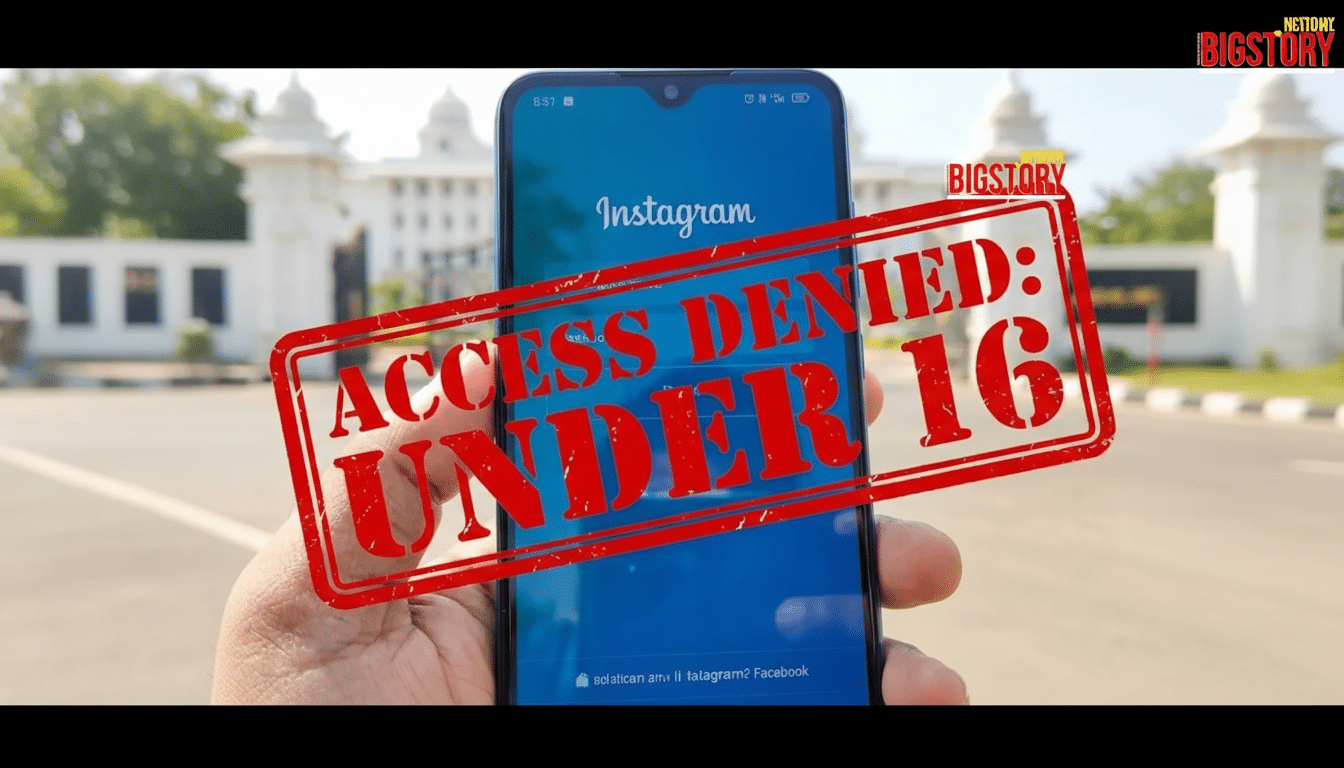
The judiciary has waded in as well. The Madras High Court urged the Union government to consider Australia-inspired restrictions, underscoring how concerns about child safety online are increasingly shaping policy through courts, cabinets, and committees alike.
What Indian States Are Proposing on Youth Social Media
At its core, the concept mirrors Australia’s model: block account creation and use of social apps by those under 16, and build enforcement through platform policies and possibly network-level checks. State officials are also weighing school and public Wi-Fi safeguards, device-level controls, and tighter age gates for app downloads.
But India’s federal structure complicates a blanket state ban. Regulation of online intermediaries and telecom networks is largely a Union subject, governed by the IT Act and associated rules. States, however, can move on education, public order, and consumer protection. Corporate law experts, including partners at major firms such as AZB & Partners, say a durable solution may require coordination with the Centre or a nationally harmonized framework, warning that outright bans risk pushing teens into less regulated corners of the internet.
Lessons From Australia’s Under-16 Social Media Law
Australia’s under-16 restriction, enacted through the Online Safety Amendment (Social Media Minimum Age) Act in late 2024 and effective since December 2025, is already revealing friction points. Platforms confronted the thorny task of determining user age at scale, with some notifying teens that accounts would be removed. The carve-ins and carve-outs across services also reignited debate about where social networks end and communities, gaming hubs, or developer platforms begin.
The biggest flashpoint is verification. Age assurance can involve government IDs, facial age estimation, or third-party checks—each carrying privacy, security, and accuracy trade-offs. Australia’s eSafety Commissioner has pushed for protections that minimize data collection, while privacy advocates warn that new verification rails could become high-value targets for misuse. India would face the same questions, magnified by scale.
Industry and Safety Perspectives on Teen Online Use
Social media companies say they share the goal of safer online experiences but caution against bans that could drive teens toward unmoderated sites or “logged-out” use that dodges safeguards. Meta points to default protections in Instagram’s Teen Accounts as an example of a platform-first approach. Google, Snap, and X have not publicly detailed positions specific to the state proposals.
Child-safety advocates counter that guardrails must be multilayered: stricter defaults, friction for unsolicited messages, better reporting tools, and data minimization. India already has a significant lever in the Digital Personal Data Protection Act of 2023, which requires verifiable parental consent for processing data of those under 18 and restricts tracking and targeted ads directed at minors. Implementation rules are being phased in through 2027, giving platforms time to upgrade protections even if bans are not adopted.
Civil society groups, including the Internet Freedom Foundation, urge policymakers to weigh unintended consequences—such as exclusion of older teens from digital learning or over-collection of identity documents—against intended benefits. They advocate transparency on error rates for age-assurance tools and strict limits on how verification data is stored and shared.
A Global Turn Toward Stricter Age Rules Online
India’s exploration comes as regulators from Denmark, France, and Spain to Indonesia and Malaysia study minimum-age rules and platform duties. In the United States, several state laws tying access to age verification or parental consent have hit constitutional roadblocks, highlighting free speech and privacy tensions. India’s standards differ, but any broad restriction would still face heavy judicial scrutiny under the country’s reasonable-restrictions framework.
What To Watch Next in India’s Social Media Debate
Key signals will include whether Goa and Andhra Pradesh publish draft bills, how closely any text aligns with Australia’s statute, and whether the Union government moves through rules under the IT Act or leans on the DPDP Act to set national age-assurance norms. Three unresolved issues loom large: who verifies a user’s age, what data is retained and for how long, and how appeals or false positives are handled.
For platforms with massive Indian user bases—government estimates put the country’s internet population above 1B—the stakes are high. Stricter gating could dent growth funnels and ad exposure in the short term, but it may also accelerate investment in privacy-preserving age assurance and India-first safety features. The question is no longer whether the rules will tighten for minors, but how—and how fast—India chooses to do it.
