


WhatsApp’s most vital market is now its toughest challenge. India’s new app-based communications rules, which compel constant SIM-device pairing and frequent reauthentication, could upend how hundreds of millions of people — and the millions of small businesses they engage with — use Meta’s messaging service every day.
What the New Rules Require for SIM-Device Pairing
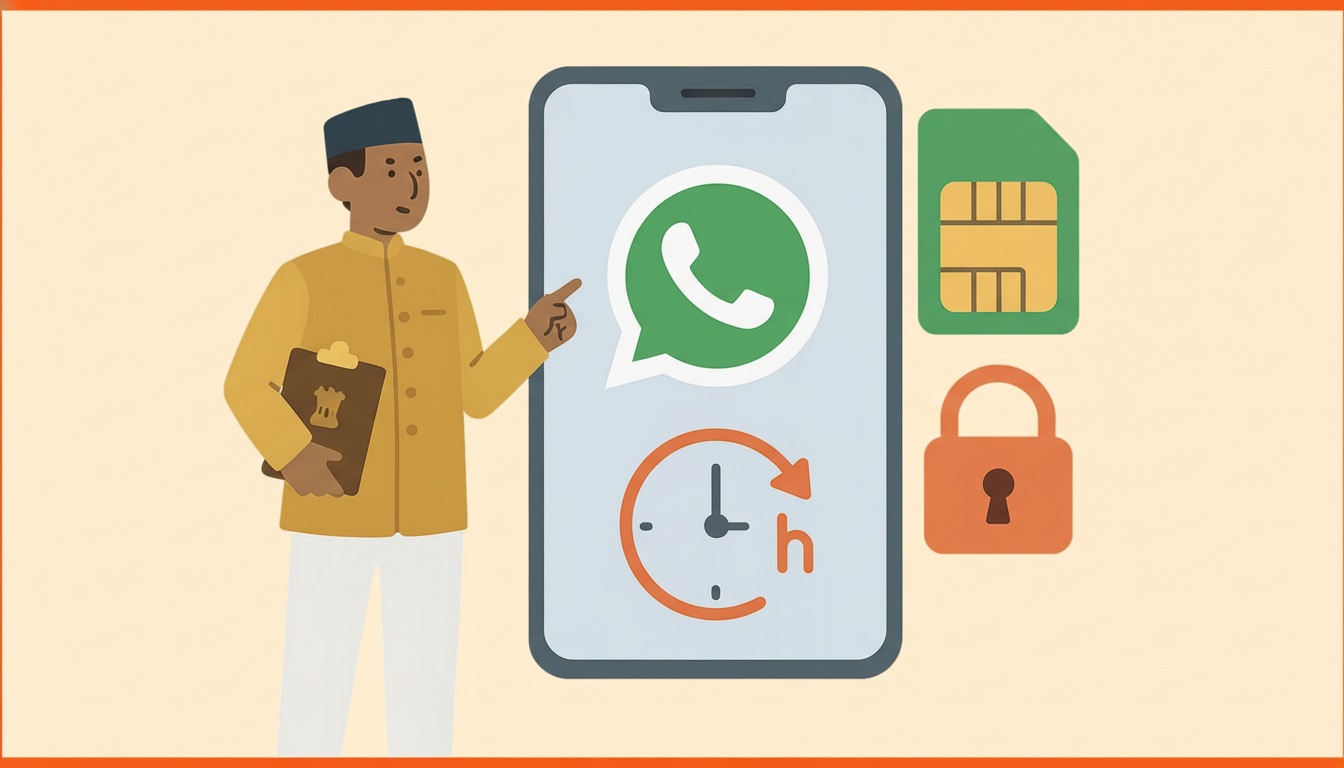
In accordance with orders sent down late last month, messaging apps are required to retain each account that’s associated with a live, KYC-verified SIM. Web and desktop sessions should automatically sign out after approximately six hours, requiring users to scan a phone QR code to get back in. The government says the changes would return traceability to fraudulently used numbers.
Officials cite a growing threat from cybercrime. The government’s telecom ministry says the fraud losses totalled over ₹228 billion in 2024. The allowances free users — unless you keep the original SIM in your device and are roaming — but they still apply rare friction to using multiple devices, a central plank of WhatsApp’s expansion in recent years.
The directives also centre upon a new classification, Telecommunication Identifier User Entities (TIUEs), which has the potential to bring messaging apps under more stringent telecom cybersecurity oversight rather than the IT regime. Policy experts say that such a move expands compliance requirements without new legislation and represents a new front in India’s long-running battle over platform responsibility and user privacy.
Small Businesses in the Crosshairs of New Mandate
Merchants who run WhatsApp Business on a SIM-linked phone, but process orders and support through accounts on their laptop via WhatsApp Web will feel the most operational shock. Forced logouts every few hours disrupt that rhythm: Staff need to stop, find the phone with the active SIM and re-link sessions — a nonstarter for busy shops with customers coming in all day.
Market data makes clear why all this matters. According to an estimate by Appfigures, WhatsApp Business has been responsible for more first-time installs than the consumer app in India almost every quarter since early 2024, a sign of its profound integration into commerce. Estimates vary, but Sensor Tower data indicates growth of WhatsApp Business monthly active users in India has more than doubled since 2021 so far, compared to roughly a third for the standard messenger.
Engagement continues to be strong: Indian consumers spent an average of 38 minutes daily on WhatsApp in November, compared with 27 minutes on WhatsApp Business, according to Sensor Tower. In the U.S., that pattern flips — 23 minutes on WhatsApp and 27 minutes on Business — underscoring India’s distinct, commercial use case. Disrupt this, and you’re disrupting actual revenue.
A Run-In With WhatsApp’s Product Roadmap in India
Over the last two years, WhatsApp has introduced both multi-device and companion modes that let people remain logged in on phones, browsers and desktops without an individual “master” device online. India’s new rules fly in the face of that design, re-centralizing the SIM and adding back sustained friction.
That tension spills over into commerce and payments. In India, WhatsApp is linked to UPI for payments and hosts storefronts, catalogs and end-to-end encrypted customer support. When agents can’t remain logged in at all times, response times lag, abandoned carts pile up and small businesses — which frequently run on dual-SIM phones and shared shop PCs — suffer a measurable productivity hit.
There’s also a competitive angle. Add hurdles to how WhatsApp works in a multi-device world, and alternatives like Telegram’s desktop client get that much more appealing — as does SMS itself (with rich business messaging layered on top). The challenge for Meta is to comply without making India’s most popular messenger feel less reliable than the incumbents that it displaced.
Privacy, Feasibility, and the Legal Tightrope
Industry groups are sounding alarms. The Broadband India Forum cautioned that the requirements would produce “significant inconvenience and service disruption” while posing “serious questions of technical feasibility.” The TIUE designation under the categories of “other service providers” moves messaging apps within a telecom framework via executive action, and not by statute — a powerful regulatory leap, according to The Dialogue, a New Delhi policy think tank.
Challenges to the guidance will be hard. Legal experts note that in order to prevail, platforms would have to demonstrate that the rules either go beyond legal authority or run afoul of constitutional protections — a high hurdle. WhatsApp currently challenges 2021 traceability rules in a pending case, claiming that circumventing end-to-end encryption affects safety and privacy. It’s a new layer of compliance that the SIM-binding push introduces, one that does not directly shatter encryption per se, but diminishes the practical privacy level by yoking identities more closely to usage, critics argue.
What to Watch in the Next 90 Days for WhatsApp
Count on a rush of behind-the-scenes backroom deals, which would find carve-outs to allow rich companies or firms to wriggle out of the rules. Possible asks could include extending the window of sessions for verified business accounts, device-health affidavits instead of full resets, and carve-outs for enterprise API users who route messages through whitelisted providers. Another option: standardized SIM “liveness” checks that don’t continuously interrupt desktop sessions.
Merchants should start contingency planning now:
- Ensure your primary phone isn’t remote.
- Pre-assign session relinking to specific members of staff.
- If scale dictates, consider upgrading to the Business API counterpart.
For Meta, the stakes are existential in India. The company needs to show that it can combat fraud alongside the government and also preserve its low-friction reliability, which is what made WhatsApp indispensable in daily life and commerce.
If India is WhatsApp’s hardest test, it’s also its greatest prize: a template for other countries to follow in its largest market. How Meta’s engineers work around the friction — and how regulators calibrate enforcement — will determine whether WhatsApp remains India’s dominant communications infrastructure or can merely be added to the list of apps that became more difficult to use.
