


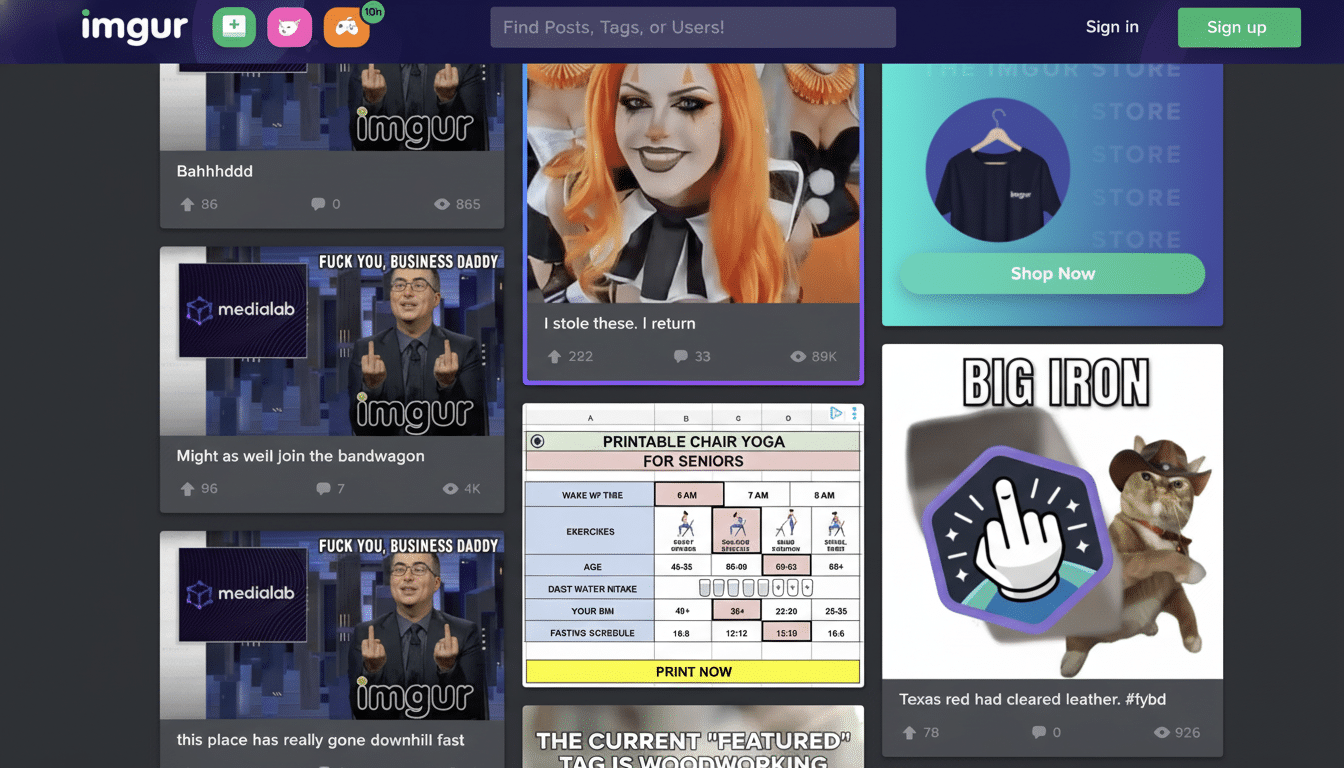
Imgur has blocked access to its image-sharing service in the United Kingdom after a British regulator threatened it with a fine over failure to comply with children’s privacy. Visitors from UK IP addresses currently see a notice reading “Content not available in your region” — the bluntest form of geoblock, and one that takes what has been one of the web’s oldest hosting hubs right out of a major market.
The decision comes after the Information Commissioner’s Office (ICO) released provisional findings that Imgur, owned by MediaLab AI, had potentially violated UK data protection regulations. The commission previously said that the company’s decision to limit access is a commercial one, and it emphasized that discontinuing service does not extinguish responsibility for past violations.
What prompted the regulator’s action against Imgur
The ICO has been examining how social platforms use children’s data, including age assurance, terms and conditions, profiling and the default privacy settings. Key to it is the Children’s Code (formerly the Age Appropriate Design Code), a UK framework that obliges services expected to be used by children to limit collection of data, default in stopping targeted profiling and build under-18 products for their best interests.
Regulators announced that they have levied Imgur’s parent with a so-called notice of intent to fine, which in practice tends to open up a window for the company to respond before any penalty is completed.
Under the UK GDPR and the Data Protection Act 2018, sanctions of up to £17.5 million or 4% global annual turnover can be imposed.
The ICO has been increasingly active in enforcing children’s privacy across the sector. In one high-profile case, TikTok was fined £12.7 million for allowing children to use the app and wrongfully collecting their data. Other platforms have introduced redesigned settings for teenagers, toned down personalized ads targeting minors and imposed stronger age verification measures to remain on the right side of the Code.
How the block impacts users and the wider web in the UK
For users in the UK, however, the change is already taking effect: they are now blocked from directly visiting the site or its apps. Inline Imgur links on forums, blogs and wikis can fail to load for UK readers too, cutting holes in years of posts, tutorials and meme culture that has leaned so heavily on the ephemeral host that is Imgur’s free blasphemy.
Imgur still has a large footprint, after many communities migrated to native uploads. Traffic analytics from Semrush suggest that the service attracted some 195 million visits in a single month, underscoring how a country-level cutoff can ricochet around the open web, from hobbyist forums to news sites that still link to legacy Imgur URLs.

This geoblock may require site owners and moderators to rehost key images, or provide mirrors for their British readers. It’s a reminder of just how reliant long-running online communities remain on third-party infrastructure, and of how policies can ripple into technical debt for publishers.
Compliance vs. exit for social platforms
The Children’s Code has pushed platforms to adopt stricter defaults for children, clearer notices of data use, and fewer pressuring features. For a legacy social image host, this can mean age-gating, content sensitivity controls, data minimization and risk assessment — expensive to retrofit and hard to operate at scale.
MediaLab AI runs a bevy of consumer communities and a consistent, privacy-by-design playbook among its holdings could cut down on future friction. But some companies still have to balance the cost of constructing compliance tooling with pulling out of certain markets. Geoblocking may limit regulatory risk in the future, but as the ICO has confirmed, it does not avoid potential liability for historic breaches of law.
Competitors have shown an alternative route: big platforms have defaulted the setting for under-18s’ accounts to private, minimised targeted ads for those under 18 and rolled out in-product nudges that cohere with the Code of Practice. Those are steps that illustrate the regulator’s preferred path — service continuation with stronger companies than when he started, not exits from markets.
What comes next for Imgur and the ICO’s case
The notice of intent stage gives Imgur’s owner the opportunity to challenge the observations, offer party-to-party undertakings or changes. Consequences could include a fine or changes required within the specified amount of time. If the service adopts guidance to meet the Code and other UK data protection safeguards, then a return to the UK could be considered.
For the users, the immediate future is one of uncertainty. Communities that rely on Imgur archive links will need to find a new plan B, while creators who depend on UK traffic may notice engagement drops. This episode highlights the tensions that exist for regulators who want to make apps safer and the reality of what it costs midsize companies to comply.
One thing is clear: the ICO’s stance means that enforcement under the Children’s Code is becoming a reality. Companies with any sort of tangential appeal to younger audiences should anticipate greater scrutiny, tougher design standards and less tolerance for data practices treating children like adults.
