


Your next headset may do more than cancel noise — it could read your brain. Neurotech startup Neurable has teamed up with HyperX on a prototype gaming headset that uses electroencephalography (EEG) and AI to translate brain activity into real-time insights about focus, stress, and cognitive fatigue. The pitch is simple and surprisingly practical: help players “lock in” before a match, sustain attention during play, and know exactly when to rest.
How EEG Slips Into Everyday Headphones
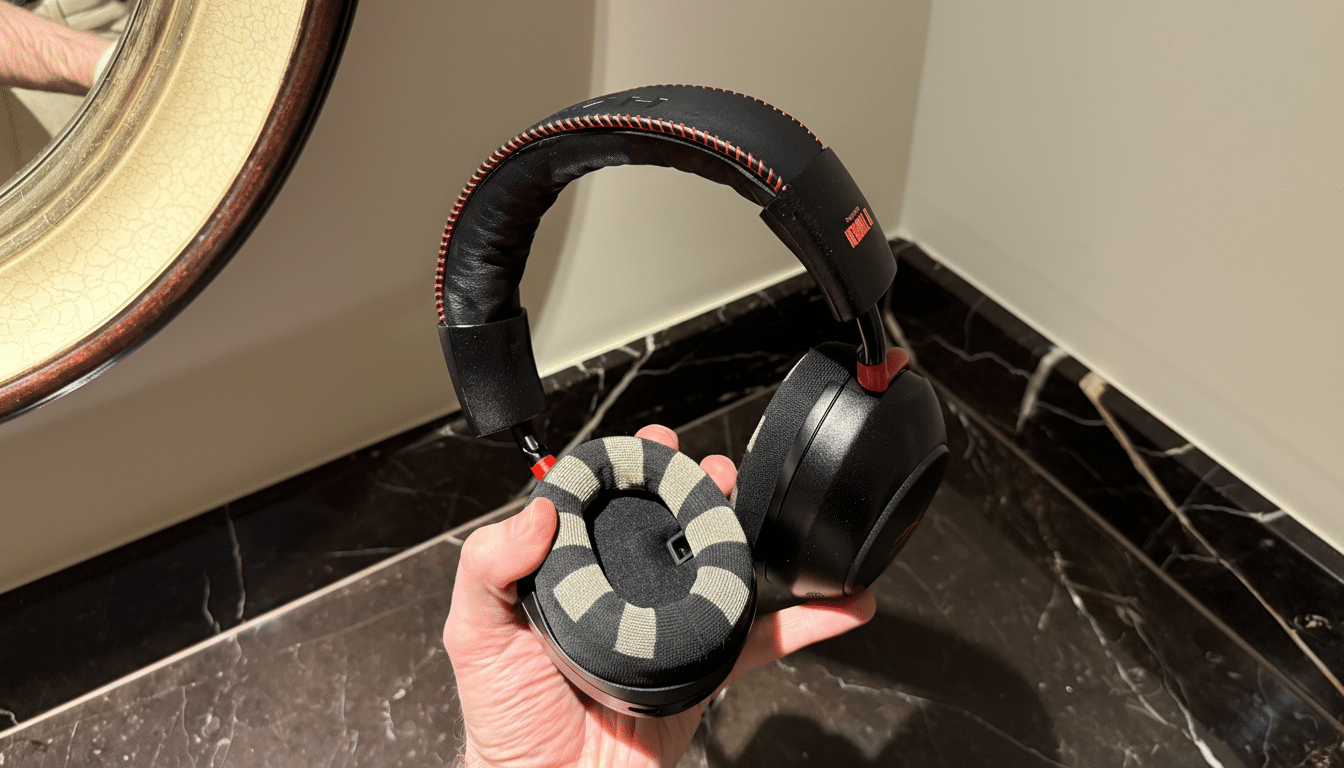
Neurable’s approach embeds dry EEG sensors inside the earcups, quietly monitoring electrical brain signals while you wear the headphones as usual. Machine-learning models trained on diverse EEG patterns transform those signals into readable metrics such as attentional state and recovery. Unlike the forehead bands of yesteryear, the sensors are hidden in a familiar form factor, an important step for mainstream adoption.
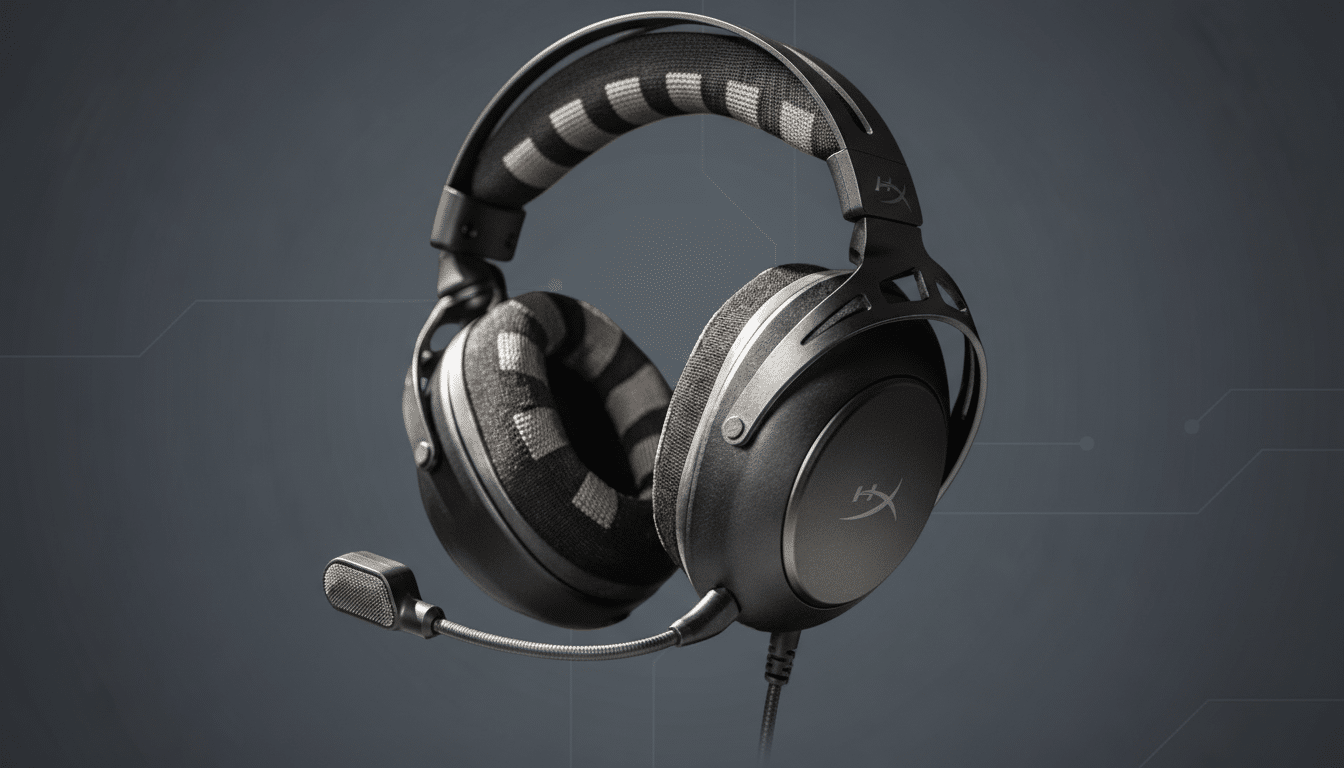
This isn’t Neurable’s first consumer foray. The company previously integrated its brain-computer interface (BCI) into Master & Dynamic’s MW75 Neuro, showing that luxury headphones can double as cognitive trackers. The HyperX prototype extends that concept to competitive gaming, where milliseconds matter and mental consistency can swing outcomes as much as mechanical skill.
From Prototype to Real-World Performance Gains
In a live demo using the Aim Lab training environment, a tester first ran a one-minute target drill with no preparation. He posted 33,333 points with 75.5% accuracy, a 478 ms reaction time, and 126 targets hit. After a brief “Prime” exercise guided by the headset — a focus-centering routine visualized on-screen as scattered dots coalescing when attention stabilizes — he repeated the drill.
The second run jumped to 39,405 points, 83.3% accuracy, a 437 ms reaction time, and 138 targets. It’s one example, not a clinical trial, but it illustrates the product’s intent: quantify mental readiness and give players a reliable warm-up protocol, similar to how athletes use breathwork or visualization. Statespace’s Aim Lab is already used by esports teams to build precision and speed; adding validated brain-state feedback could tighten that loop.
Why Gamers And Workers Might Welcome This
Beyond pre-match rituals, the headset and companion app aim to flag cognitive drift, stress spikes, and when recovery is needed. That can inform training schedules, scrim intensity, and timing for breaks, not unlike HRV dashboards for endurance athletes. For streamers, tournament staff, and anyone who spends hours in high-stimulus environments, knowing when the mind is slipping can be the difference between clutch and collapse.
The concept resonates outside esports, too. Knowledge workers, creators, and students cycle through deep work and distraction all day. A lightweight read on focus and mental strain — without changing devices or wearing a headband — could become as routine as checking steps. Market analysts at Grand View Research estimate the BCI sector will grow at a double-digit CAGR through 2030, and consumer-grade EEG from firms like Emotiv, Muse, and OpenBCI’s Galea has been steadily moving from labs to living rooms.
Privacy and Ethics Are Not Optional for Brain Data
Brain data is intimate. Even if this system tracks high-level states rather than thoughts, the stakes are higher than with mouse telemetry or keystrokes. Groups like the Electronic Frontier Foundation have urged strong safeguards for neural signals, and Chile’s pioneering “neurorights” law highlights how quickly policy is evolving. Any shipping product will need clear, readable data policies, local processing where possible, strict opt-ins, and export controls for coaches or third parties.
Bias and reliability matter, too. EEG performance can vary with hair type, skin properties, and fit. To serve diverse gamers, sensor placement, algorithms, and comfort need rigorous testing. Expect scrutiny from academic communities such as IEEE Brain and human factors researchers, who will look for replicable gains and transparent validation beyond marketing demos.
What Comes Next for Consumer Brain-Computer Interfaces
HyperX and Neurable are not naming the model or launch timing yet; battery life, cost, and software polish remain open questions. But the direction is clear: headphones are becoming cognitive interfaces. If a headset can reliably tell you when you’re primed to perform — and when you’re not — it’s not science fiction, it’s a competitive edge.
The broader industry is converging on similar ideas. OpenBCI has shipped developer kits for mixed reality, Valve has explored neuro-adaptive game design with researchers, and consumer wellness devices now routinely surface focus and recovery scores. The difference here is packaging: put it in a beloved gaming brand, prove the gains in real play, and BCI stops being a lab novelty and starts to feel like standard gear.
If this prototype’s trajectory holds, your next headset won’t just sound good — it will know when you do, too. And in a world saturated with pings, feeds, and pressure, that quiet nudge to breathe, reset, and re-engage could be the smartest feature in your loadout.
