


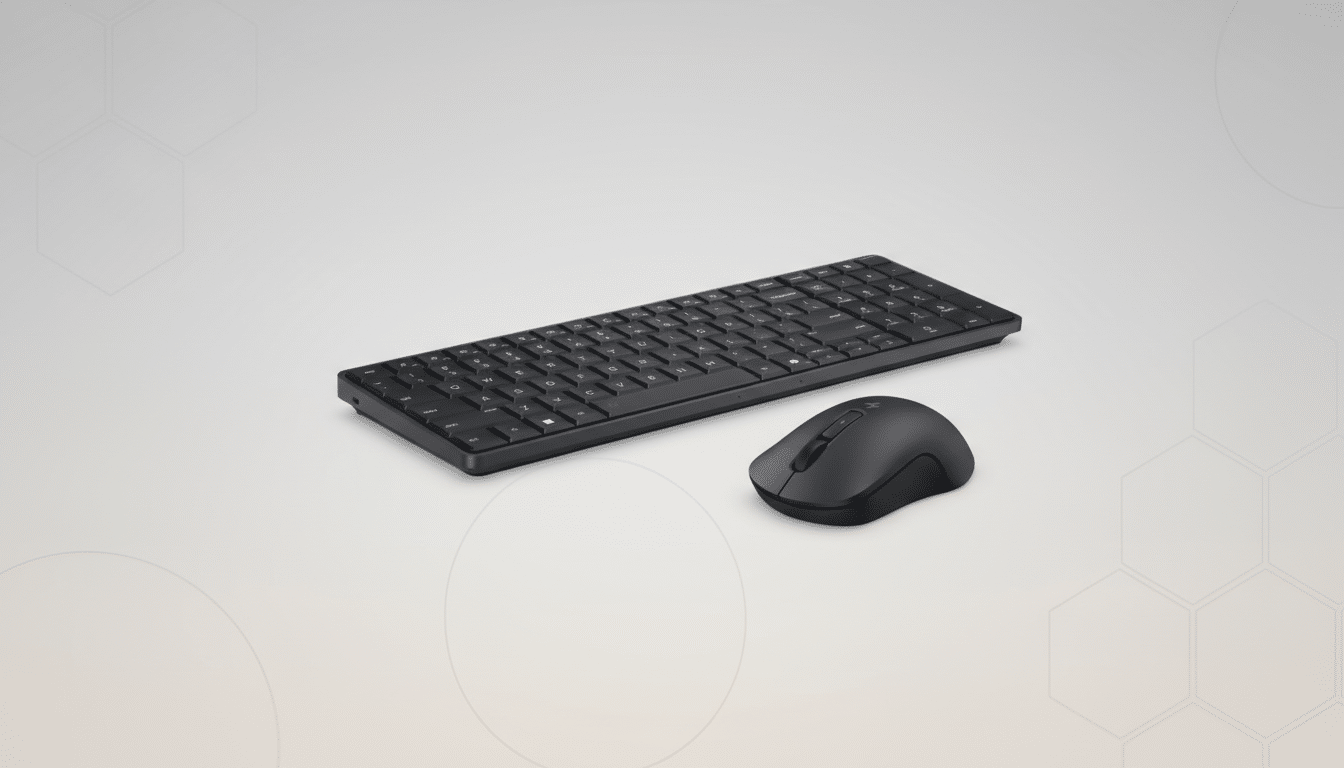
HP’s EliteBoard G1a is the rare product that makes you rethink what a desktop can be. It’s a complete Windows PC built into a slim keyboard—evoking the Commodore 64 and VIC-20—only far thinner, quieter, and genuinely capable. After hands-on time, the punchline is simple: my keyboard is my whole computer, and that’s by design.
A Keyboard That Replaces the Tower PC Entirely
The EliteBoard’s two-layer chassis puts a serviceable PC under a swappable, low-profile keyboard deck. The 1.5-pound body (about 1.6 with the optional battery) opens to standard parts: DDR5 memory slots, an M.2 SSD, a WLAN card, speakers, and a single fan. If a key fails, IT can replace the top deck without touching the internals—a small but smart nod to fleet longevity.
- A Keyboard That Replaces the Tower PC Entirely
- Built for Hybrid Work and Modern Hot Desks
- Ports Power and a Clever Single-Cable Dock
- Typing Feel, Thermals, and Overall Acoustics
- AI PC Silicon in a Slim, Serviceable Chassis
- A Battery That Works Like a Mini UPS for Continuity
- How It Fits in Offices and What It Might Cost
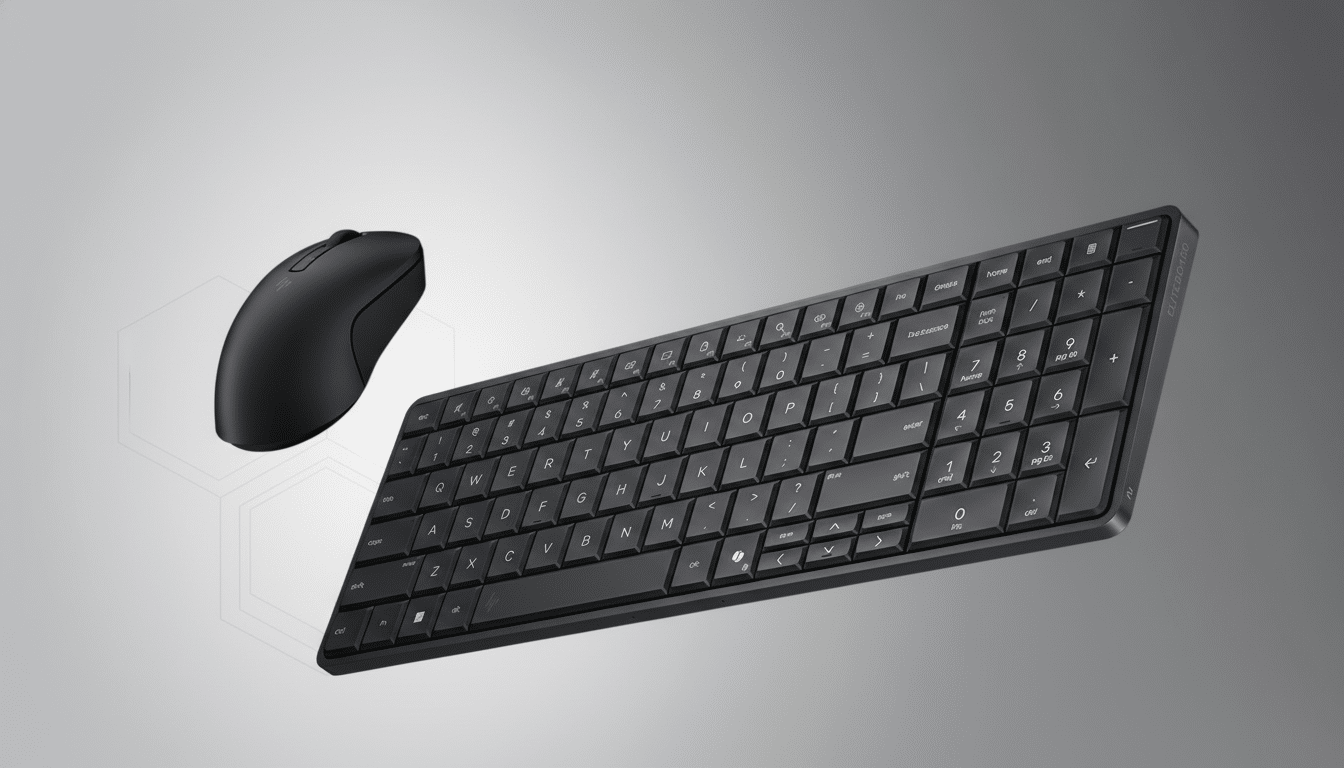
Thermals are handled via generous perforations beneath the keys and a quiet blower. In use, the fan stayed largely unobtrusive and the chassis never felt hot to the touch, even under sustained multitasking.
Built for Hybrid Work and Modern Hot Desks
HP is aiming squarely at modern offices where screens are already on every desk. Many hybrid employees dock laptops and never open them, paying for displays they don’t use. The EliteBoard skips the wasted panel and hinges while keeping portability; it slips into a bag like a keyboard, then becomes a desktop the moment it’s plugged in.
This pitch tracks with broader workplace trends. Gallup notes that a majority of remote-capable employees now work hybrid, and facilities teams continue to expand hot-desking to optimize space. For IT, a single device that’s easy to carry, easy to clean, and easy to service can trim total cost of ownership.
Ports Power and a Clever Single-Cable Dock
The EliteBoard includes two USB-C ports (one USB4) and Wi-Fi 6E with an option for Wi-Fi 7. HP bundles a multi-device wireless mouse; there’s no touchpad, which makes sense for a desktop-first workflow.
HP’s compact adapter is the secret sauce. A single long USB-C cable connects the keyboard PC to a small hub that hangs off your monitor setup, handling power delivery, display output, and wired networking via an RJ-45 jack. You can daisy-chain multiple displays and keep the desktop free of cable spaghetti. It feels more like a single-cable laptop dock than a traditional desktop.
Typing Feel, Thermals, and Overall Acoustics
Key switches are silicone-dome with 2mm of travel—think a very good business laptop keyboard transplanted to the desk. It’s not mechanical, and the feedback is softer than a clicky board, but it’s whisper-quiet and comfortable for long stretches of writing or coding.
The perforated base helps airflow without turning your desk into a wind tunnel. In testing, the fan remained subdued during video calls and office workloads, which bodes well for open-office environments and conference rooms.
AI PC Silicon in a Slim, Serviceable Chassis
Inside are AMD Ryzen AI processors, starting at Ryzen AI 5 330 and scaling to Ryzen AI 7 350 Pro, with up to 50 TOPS of NPU performance for on-device AI. Configurations go up to 64GB of DDR5 and 2TB of NVMe storage—laptop-class specs in a chassis the size of a typing surface.
Integrated speakers and dual mics matter more than you’d think. As Microsoft and independent software vendors push local AI features—from transcription to real-time assistance—clean audio capture and playback without extra accessories keep desks tidy and IT simpler.
A Battery That Works Like a Mini UPS for Continuity
Two versions are planned: with or without an internal battery. The battery isn’t about commuting; it’s about continuity. Unplug the EliteBoard and walk to a meeting room without losing your place—no shutdowns, no suspend-resume dance. Think of it as a built-in UPS measured in minutes, not hours.
For fixed installs—reception desks, kiosks, training rooms—the battery-free variant reduces cost and complexity while keeping the same footprint and cabling advantages over mini-PCs and all-in-ones.
How It Fits in Offices and What It Might Cost
HP has not disclosed pricing or availability, but expectations point toward premium business-laptop territory rather than a commodity keyboard. If it lands near the $1,000 mark, the calculus will hinge on fleet discounts and the value of reduced breakage, easier service, and cleaner desks.
Compared with nostalgia plays like the Raspberry Pi 400, the EliteBoard is in a different league—enterprise-ready, AI-accelerated, and built for scale. IDC and Gartner both expect AI-capable PCs to drive refresh decisions, and this design rides that wave while solving a real-world problem: most “desk laptops” don’t need to be laptops.
HP’s EliteBoard G1a isn’t just a neat form factor revival; it’s a thoughtful response to how and where we work now. If the final pricing pencils out, this keyboard PC could be the cleanest way to bring AI-era compute to every desk without bringing back the clutter.
