


By Alex Godonoaga, Naperville electrician and Founder of Cob Services.
It’s very frustrating when you turn on the microwave when your washer and dryer are working simultaneously, and suddenly you hear a click and the power goes out.
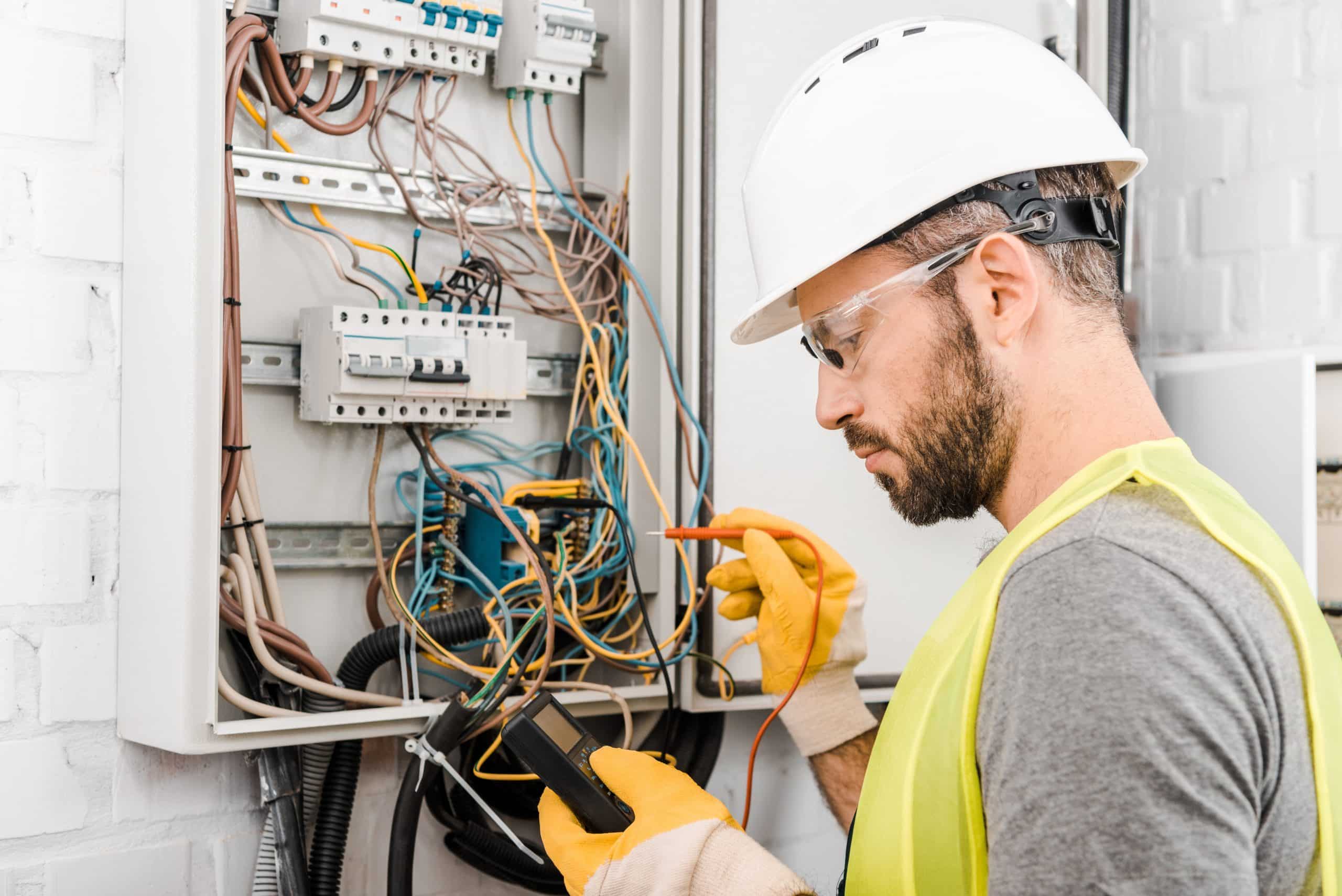
That’s your circuit breaker keeping your home safe. Its mission is to cut power before all wires overheat and cause a fire. It’s a good system but when it happens so often it can be a sign that there’s a deeper issue. In these cases, you usually don’t know if it trips because you have too many appliances plugged in, or if the actual breaker is failing and needs to be replaced.
This is exactly why I decided to write this blog post, to help homeowners understand what’s going on before they call in a pro to replace it.
1. The “User Error” Check: Is it an Overload?
Before you blame the hardware, you have to rule out the most common culprit: Circuit Overload. This happens when the demand for electricity exceeds the circuit’s capacity.
How to Test It:
- Identify the Circuit: Go to your panel and see which switch has flipped to the “OFF” or neutral position.
- Take Inventory: Walk through the rooms controlled by that breaker. What is plugged in?
- The “High-Draw” Suspects: Look for appliances that generate heat or have motors. These are notorious energy hogs.
- Space heaters
- Hair dryers
- Microwaves
- Window A/C units
- Vacuum cleaners
The Test: Unplug the high-draw devices on that circuit. Reset the breaker. If it stays on and functions normally with just lights or low-power electronics, you don’t need a new breaker—you need to redistribute your power usage.
2. The Short Circuit vs. Ground Fault
Here’s the thing, if you unplugged everything and then the breaker trips right after you reset it, that’s probably because you have a Short Circuit or a Ground Fault.
- Short Circuit: A hot wire touches a neutral wire. This causes a massive surge of current, and the breaker trips instantly to prevent a fire. You might see sparks, smoke, or hear a popping sound.
- Ground Fault: A hot wire touches a ground wire or the metal side of an outlet box.
Verdict: If the breaker trips immediately after a reset with nothing plugged in, do not keep trying to reset it. This is a wiring emergency, not necessarily a “bad breaker,” but it requires an electrician immediately.
3. Signs the Breaker Itself is Bad
Breakers are mechanical devices. Like any machine, they wear out over time. If you have ruled out overloads and short circuits, look for these physical signs that the breaker mechanism has failed.
A. It feels hot to the touch
Touch the plastic part of the breaker (carefully). It is normal for breakers to be slightly warm, but if it is hot to the touch, the internal components are failing or the connection to the bus bar is loose.
B. It looks physically damaged
Inspect the breaker for:
- Scorch marks around the terminal.
- Melted plastic.
- A burning smell emanating from the panel (often smells like burning fish).
C. The “Mushy” Switch
When you flip a breaker, it should have a distinct, crisp “click” or “snap” into position. If the lever feels loose, wobbly, or fails to “stick” in the ON position even after cooling down, the internal spring mechanism is broken.
D. Old Age
Standard circuit breakers are designed to last 30–40 years. However, in humid climates or areas with frequent power surges, their lifespan can be shorter. If your home still has a fuse box or a panel from the 1970s (specifically brands like Federal Pacific or Zinsco, which are known safety hazards), replacement is mandatory, not optional.
Summary Checklist – When to Replace
| Symptom | Diagnosis | Action |
|---|---|---|
| Trips only when hair dryer + heater run | Overload | Move appliances to different outlets. |
| Trips instantly with nothing plugged in | Short Circuit | Call Electrician. Dangerous wiring issue. |
| Breaker is hot or smells burning | Failing Breaker | Replace Immediately. Fire hazard. |
| Handle will not stay in “ON” position | Mechanical Failure | Replace. The spring is broken. |
| Panel is 40+ years old | End of Life | Consider full panel upgrade. |
A Note on Safety
If the circuit needs to be replaced, this is a standard job for an electrician. It’s not recommended for untrained homeowners to do it themselves because the main bus bars in the panel are live (they carry lethal voltage) even when the main breaker is off. In general, any types of electrical installations should be done by a licensed electrician.
