


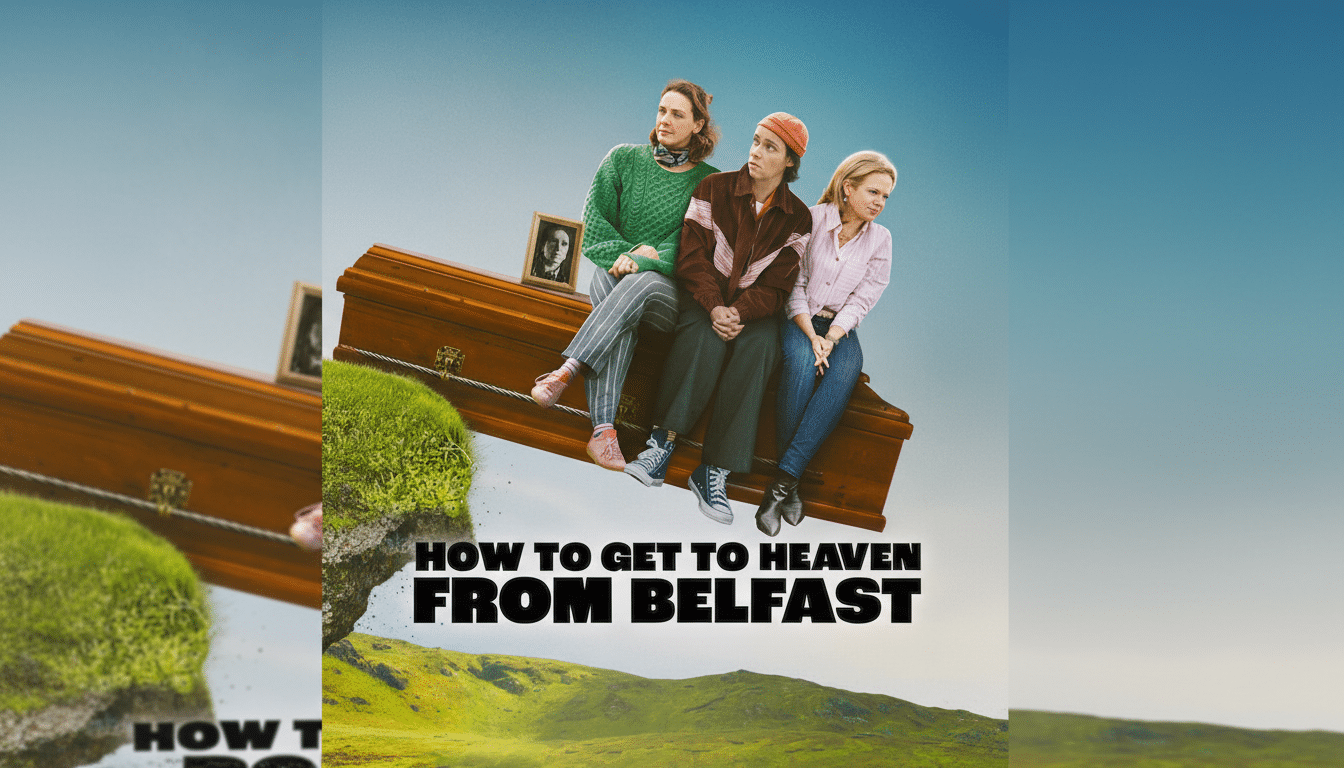
Lisa McGee’s new Netflix mystery comedy How to Get to Heaven From Belfast delivers a sly wink to fans of her breakout hit Derry Girls, hiding a perfectly pitched Easter egg in its finale. It’s not a throwaway reference or a sly line read; it’s a full-on visual tribute that ties McGee’s Belfast-set caper back to the city where her pop-culture phenomenon began.
A Seamless Derry Girls Nod That Lands In The Finale
Without giving away plot specifics, the eighth and final episode briefly lands in Derry, where an unmistakable mural of Erin, Clare, Michelle, Orla, and James looms into view, school ties and all. The artwork isn’t set dressing cooked up in a studio—it’s the real-life Derry Girls mural created by local social enterprise UV Arts and commissioned by Channel 4 in 2019 for the series’ second season campaign.
That mural, painted on the gable wall of Badgers Bar on Orchard Street, fast became a selfie magnet and a shorthand for the show’s cultural footprint. By weaving it into How to Get to Heaven From Belfast, McGee treats the mural as both landmark and legacy, placing her new characters in a living, breathing Northern Irish story world fans already understand.
There’s an extra layer of delight for viewers spotting Saoirse-Monica Jackson—who plays Erin Quinn in Derry Girls—appearing in How to Get to Heaven From Belfast. Seeing Jackson within a series that nods to the mural of her Derry persona is a meta flourish that rewards long-time fans without distracting newcomers.
Why The Derry Girls Mural Still Matters To The City
The Derry Girls mural isn’t just fan service; it’s become a civic symbol. Visit Derry has regularly highlighted the site on walking tours, and local authorities have referenced the piece as an example of how public art can fuse humor with heritage. The mural’s endurance also reflects how the show broadened global perceptions of Northern Ireland—balancing teenage chaos with a deft depiction of the Troubles and the peace process.
Channel 4 has reported multi-million consolidated audiences for Derry Girls, and industry watchers often cite it as the broadcaster’s biggest comedy hit in years. Its resonance continued on Netflix, where international streaming transformed the cast into household names and turned the mural into an international photo op. The Easter egg inside How to Get to Heaven From Belfast recognizes that outsized impact, grounding a new story in the same streets that fueled the old one.
Crucially, the inclusion also spotlights UV Arts and a broader Northern Irish street-art movement that has flourished over the last decade. Community-focused groups have used murals to narrate complex histories and create fresh points of pride, and this particular piece—commissioned for a marketing campaign—has outlasted billboards and timelines to become a permanent character in Derry’s cityscape.
McGee’s Connected Northern Irish Universe
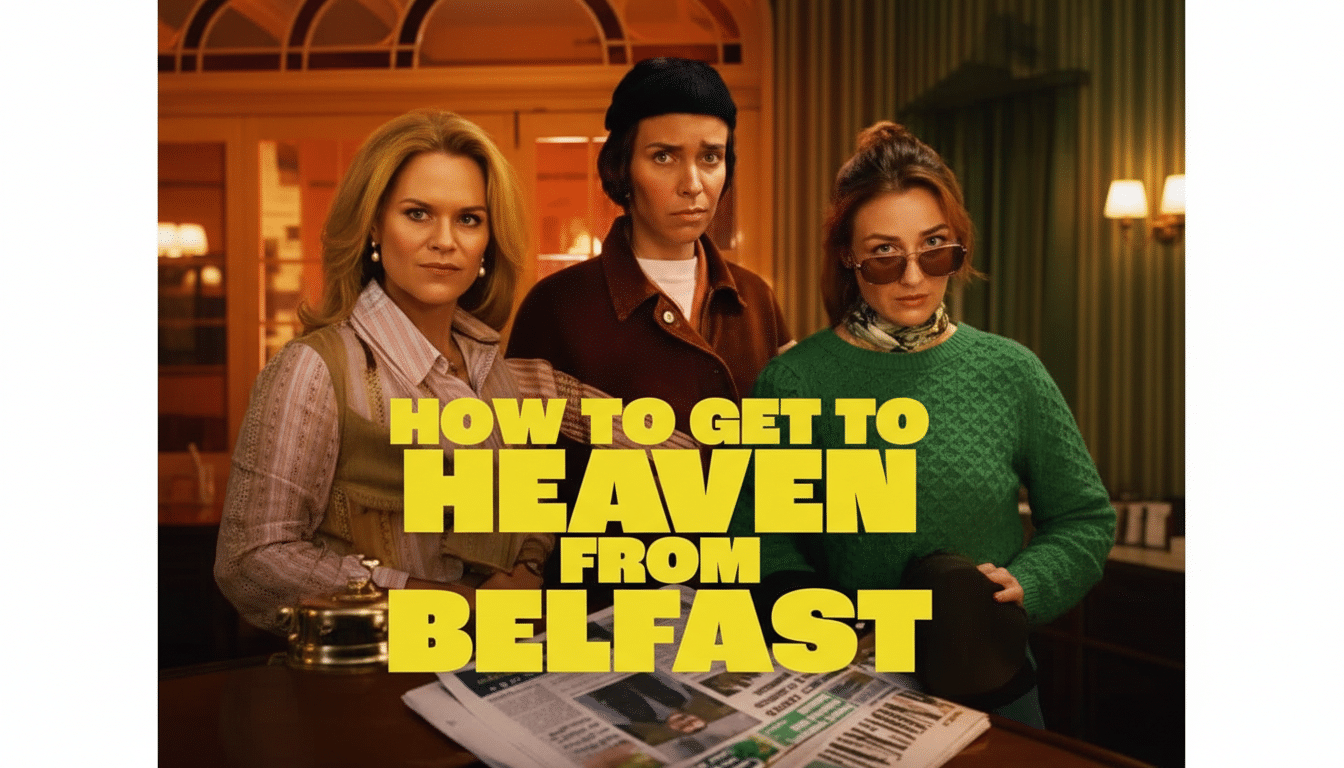
How to Get to Heaven From Belfast may have a different engine—mystery, grief, and gallows humor power the plot—but McGee’s signatures are intact: spiky female friendships, disarming jokes that flip into gut punches, and a granular sense of place. The quick detour to Derry is a deliberate bridge between creative worlds, implying continuity of tone and community rather than continuity of characters.
It also reflects the way audiences now navigate TV: hopping between shows by creator rather than by genre. Just as viewers followed Vince Gilligan from Breaking Bad to Better Call Saul, or Phoebe Waller-Bridge’s voice from Fleabag to behind-the-scenes projects, McGee’s name signals a precise blend of wit and heart. The mural cameo is a quiet promise that this new series understands what made the last one stick.
Where To Spot It And What To Watch To Catch The Nod
Fans will find the Derry Girls mural in the final episode of How to Get to Heaven From Belfast—blink and you’ll miss it, but it’s unmistakable when it appears. The mural itself remains in place in Derry, where it features on guided routes promoted by Visit Derry and is regularly referenced by arts organizations and local media.
For a fuller experience, watch or rewatch Derry Girls to feel the cultural pulse behind the mural, then dive into How to Get to Heaven From Belfast to see how McGee transposes that sensibility into a darker, twistier register. Both are currently streaming on Netflix, making this a seamless double bill of Northern Irish storytelling with a visual handshake between the two.
In the end, the Easter egg works because it’s earned. It’s not a nudge-wink cameo designed to farm clicks; it’s a piece of real public art that has already outlived a campaign cycle, reintroduced at just the right moment to reframe McGee’s growing universe—Belfast to Derry, grief to laughter, history to here-and-now.
