


Choosing an electric scooter for rough pavement is not simply a matter of buying the model with the biggest motor or highest top speed. Cracked asphalt, potholes, patched roads, hills, and longer weekend routes place greater demands on suspension, tires, braking, and battery range than smooth city streets.
For riders who regularly deal with these conditions, the best approach is to choose enough capability for the roads they actually ride. Good suspension and suitable tires may matter more than extra speed, while stronger climbing power and a larger battery become more valuable as hills and ride distances increase. At the same time, more rugged hardware often means more weight, so everyday practicality still matters.
Start With the Roads You Actually Ride
Before comparing specifications, think about the roughest surfaces you encounter on a regular basis.
If most of your riding takes place on smooth bike lanes and well-maintained streets, a lighter commuter scooter may be enough. Once your routes regularly include pavement cracks, potholes, construction patches, brick sections, park paths, moderate hills, or occasional gravel, features such as better suspension, larger tires, and stronger braking become more useful.
The key is to choose for your normal riding conditions rather than the most extreme road you might encounter once or twice a year. Buying far beyond your real needs can leave you with a heavier and less convenient scooter without delivering much benefit during everyday rides.
Manufacturers such as NAVEE offer scooters for different combinations of city commuting, recreational riding, and more demanding road conditions, so it is worth comparing the complete setup rather than judging a scooter by motor wattage alone.
Prioritize Suspension and Tires
Suspension should be near the top of the list when rough pavement is a regular part of your route. Repeated impacts from cracks and potholes increase vibration and rider fatigue, while a capable front-and-rear suspension system helps the scooter remain more settled as the surface changes.
Tires work together with the suspension. Larger pneumatic or tubeless tires generally handle pavement cracks, road edges, and smaller potholes more comfortably than small solid tires. They can also provide better contact with the ground when a route occasionally moves onto hard-packed gravel or another uneven surface.
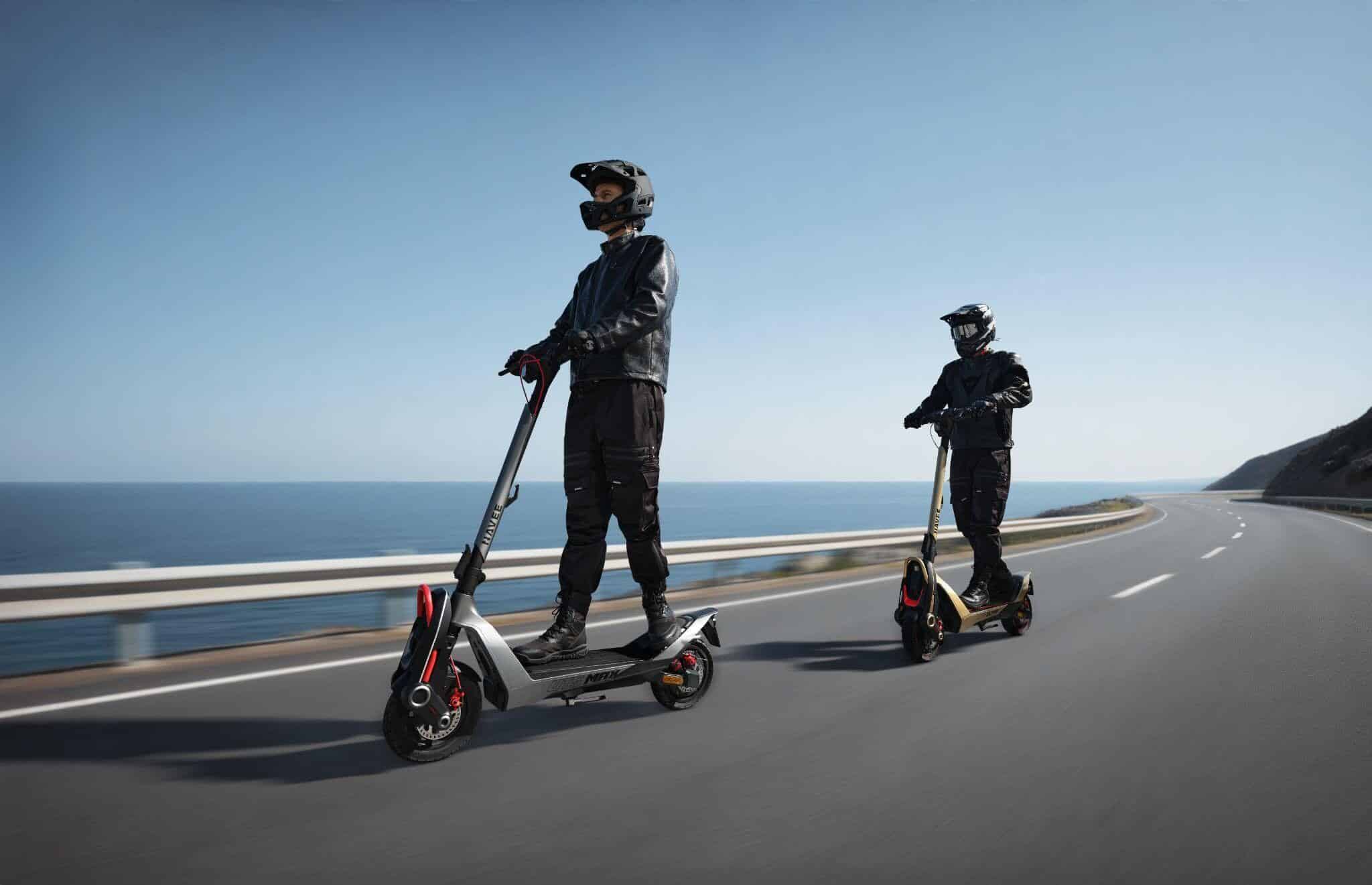
The NAVEE UT5 Max is one example of this type of setup. It combines dual hydraulic suspension with 12-inch self-healing tubeless tires, making it relevant for riders whose daily roads are noticeably rough and whose weekend routes may include hills or mixed surfaces.
That does not mean the largest tires or most substantial suspension are automatically better. Both can increase the size and weight of a scooter. The goal is to gain enough comfort and control for your actual roads without adding unnecessary bulk.
Match Power and Range to Your Ride
Rough pavement alone does not require extreme motor power. Power becomes more important when uneven roads are combined with steeper hills, heavier rider loads, luggage, repeated acceleration, or looser surfaces.
For primarily urban riding, a balanced scooter with effective suspension may provide a better experience than a much more powerful model with poor ride comfort. Riders who regularly climb hills or carry more total weight should pay closer attention to torque and climbing capability.
Weekend riding also changes how you should think about range. Advertised range figures are useful for comparison, but real-world distance can vary depending on speed, rider weight, hills, temperature, tire pressure, and how often you stop and accelerate again.
Instead of choosing a scooter whose maximum stated range only just covers your planned route, look for enough battery capacity to comfortably complete your longest normal ride with some reserve. That extra margin is especially useful when weekend trips include unexpected detours, longer climbs, or more demanding road conditions.
Know When More Terrain Capability Makes Sense
If your main problem is occasional cracked asphalt on otherwise predictable streets, a lighter scooter with good suspension and suitable tires may already be enough.
The case for a more capable setup becomes stronger when several demands begin to overlap. Broken pavement, repeated hills, longer weekend distances, gravel sections, heavier loads, and less predictable surfaces place more stress on the entire scooter rather than on one component alone.
At that point, comparing purpose-built all-terrain electric scooters can be more useful than simply choosing a faster city commuter. Look for a balanced combination of front-and-rear suspension, larger tires, sufficient climbing power, dependable braking, and enough battery capacity for longer routes.
The important point is that speed alone does not make a scooter suitable for rough roads. A powerful motor provides limited benefit if the tires, suspension, or brakes are not suited to the surfaces you regularly encounter.
Balance Capability With Everyday Use
More terrain capability usually comes with trade-offs. Larger batteries, stronger frames, bigger tires, and more substantial suspension systems generally increase overall weight and size.
Before buying, think about what happens when the ride ends. Do you need to carry the scooter upstairs? Lift it into a car trunk? Store it inside an apartment or office? If frequent lifting is part of your routine, portability deserves almost as much attention as performance.
If you mainly roll directly from a garage onto the road or only transport the scooter occasionally for weekend rides, accepting additional weight may be worthwhile in exchange for better suspension, range, and stability.
Ultimately, the right electric scooter for rough pavement and weekend riding is not the one with the most extreme specifications. It is the one that matches the roads you encounter most often while leaving enough capability for hills, longer distances, and occasional mixed surfaces. Prioritize comfort and control first, then choose the level of power, range, and terrain capability that fits how you actually ride.
A well-matched scooter should make rough pavement feel less demanding during the week while giving you the confidence and range to explore farther on the weekend—without adding more weight or complexity than you really need.

