


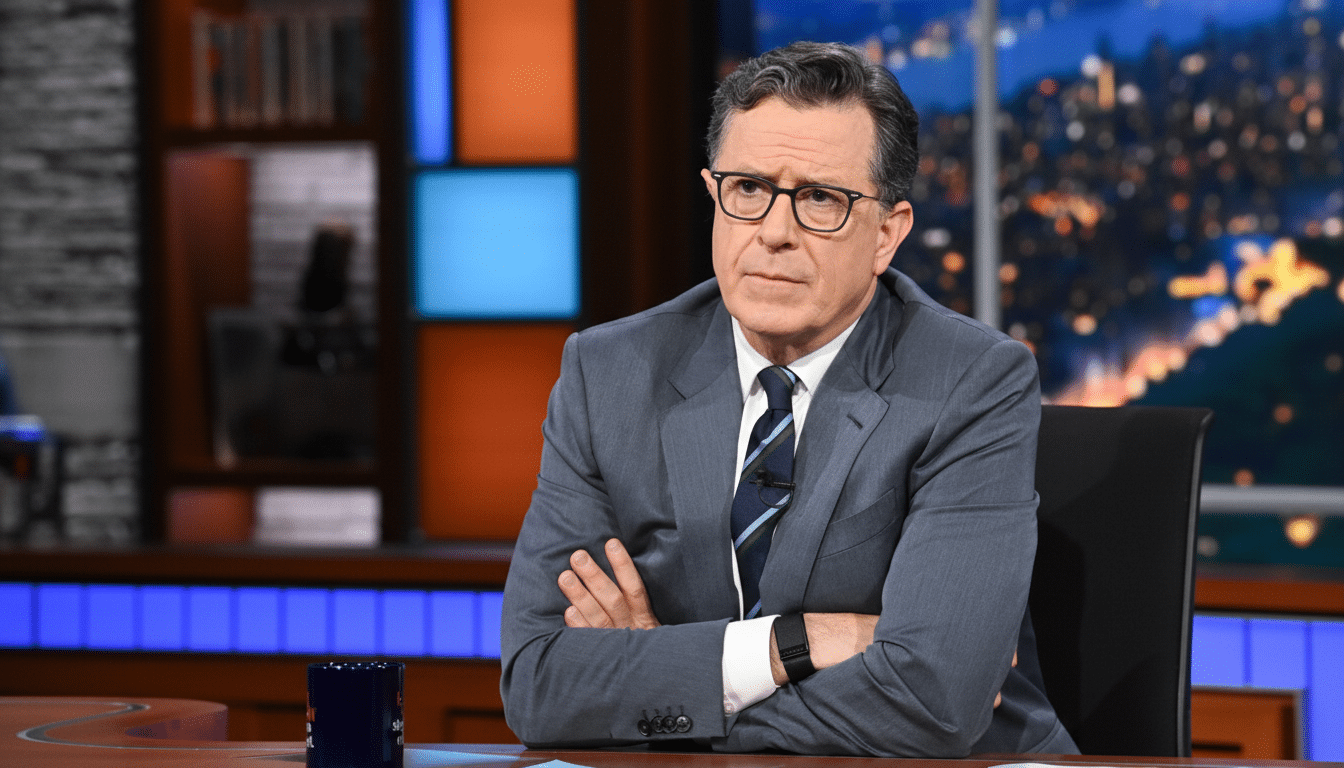
The room’s clearest verdict came not from an acceptance speech but from a presenter one: Stephen Colbert didn’t just give an award at the Emmys. The audience gave a seven-minute standing ovation, a rare and unscripted spontaneous moment that had nothing to do with affection for a late-night host. It was an industry-wide act of solidarity after a torturous few days for Colbert, his show staffers and the late-night ecosystem in general.
A show of solidarity after a sudden cancellation
The cheers followed news that CBS had axed The Late Show with Stephen Colbert, which had been a hit fixture of the format. Network executives framed the decision as financial, but it reverberated like a thunderclap through Hollywood. Late-night colleagues and creatives called the move into question, while Colbert himself emphasized the human cost by pointing out that approximately 200 employees’ livelihoods were predicated on the show remaining on the air. The applause in the room of writers, producers and crew who understand exactly what that means was also a message: The community is behind ya girl.
The one that landed: Ford, Spielberg, and a résumé
Colbert played into the moment with classic showman’s timing, joking about what he’ll do next for a job and actually giving a résumé — and an amusingly dated headshot — to Harrison Ford, begging him wryly to deliver it on up to Steven Spielberg.
The joke succeeded because it threaded two needles at once: It acknowledged the uncertainty while deflating it with self-deprecation. On a grandstanding-proof awards show stage, it was the joke that made everyone’s heart crack and then expand — turning his empathy into energy.
Peer recognition sealed it
Support didn’t stop at applause. Colbert came back to pick up Outstanding Talk Series and he defeated a strong field that included The Daily Show and Jimmy Kimmel Live. The reaction built to a chant, clear indications that among colleagues at least, the win was more than simply one host’s — it was an acknowledgment of a show that helped define an edgy era for political satire and civic commentary.
His acceptance speech struck a balance between gratitude and grace. He thanked CBS for the show’s run and focused on his team and family, dedicating the moment to loved ones, like his longtime executive assistant Amy Cole. He thought about the show’s central premise — love — and how, as it developed, it became a meditation on loss as well. The sentiment struck a chord in a room that has suffered shutdowns, restructurings and business model changes.

The industry recognition corresponds with the data. “Late Show” has been leading late night in total viewers for the better part of the decade, per Nielsen data, and Television Academy honorees have long shortlisted Colbert’s team across writing and series categories. Those track records made the cancellation — and the community’s backlash — all the more pointed.
Context: corporate shake-ups and political crosswinds
The standing ovation came with an undertone of the narrative that was playing itself out offstage in another corner of the media landscape. The move came as ViacomCBS, the parent of CBS, which owns Paramount and is pursuing a high-stakes merger with Skydance Media that has faced regulatory scrutiny. Around the same time, it reportedly agreed on a $16m settlement with Donald Trump over an argument about edits to a 60 Minutes interview—after having called it “without merit”—thereby making perceptions of politics and wheeling dealing even more rife.
Colbert, who pulled no punches in his criticism of the president, called the settlement a bribe. Trump in return publicly celebrated The Late Show’s cancellation and called for more late-night programs to be removed from the air. Whether or not those dynamics had any sort of influence on corporate decision-making, they gave Colbert’s Emmys moment a bit more of an edge: The room was clapping for a performer, sure, but also for the principle that satire and scrutiny belonged in mainstream TV.
Why the moment transcends the room
Emmys ovations don’t inflate balance sheets, but they establish where the creative community is willing to draw lines. Colbert’s reception felt like a defense of late-night’s cultural function, a thank you to the workers who make it and a reminder that viewers continue to depend on smart, daily commentary for help processing the news cycle. At a time when clips travel faster than cable ratings late-night is still an access point for civic conversation and collective catharsis.
That’s why the reaction felt strangely unanimous: it wasn’t about one joke or a single trophy. It was a decade of not just influencing the national conversation, but also the people who were behind the camera building it and — maybe most importantly — a shared belief that institutions should reward rather than punish programs that take risks and reach out to the audience. The Emmys crowd didn’t just applaud Stephen Colbert; they applauded what his show stood for — and made it known they want that particular voice in the room.
