


Honor just took the wraps off a smartphone that features a mechanical gimbal built-in, offering the first look at hardware that could reshape mobile video. First publicly demonstrated on the CES show floor, according to eenews.com, the so-called Robot Phone trades a fixed rear module for a small, motorized arm that actually physically stabilizes the camera while you’re shooting in real time.
Although it’s still a pre-release unit we see here, Honor is claiming that this design is nearly final and the device should be available shortly after a commercial launch (timing of which would likely coincide with the next Mobile World Congress).
- Why a Real Gimbal Matters for Stabilized Mobile Video
- Inside the Clever Mechanical Package Powering Stabilization
- The Software to Match the Hardware for Creators
- Market Context and Rivals in the Race for Stabilized Phones
- What We Still Don’t Know About Specs, Heat, and Pricing
- Early Takeaway: Promise Beyond Gimmick, Proof to Come
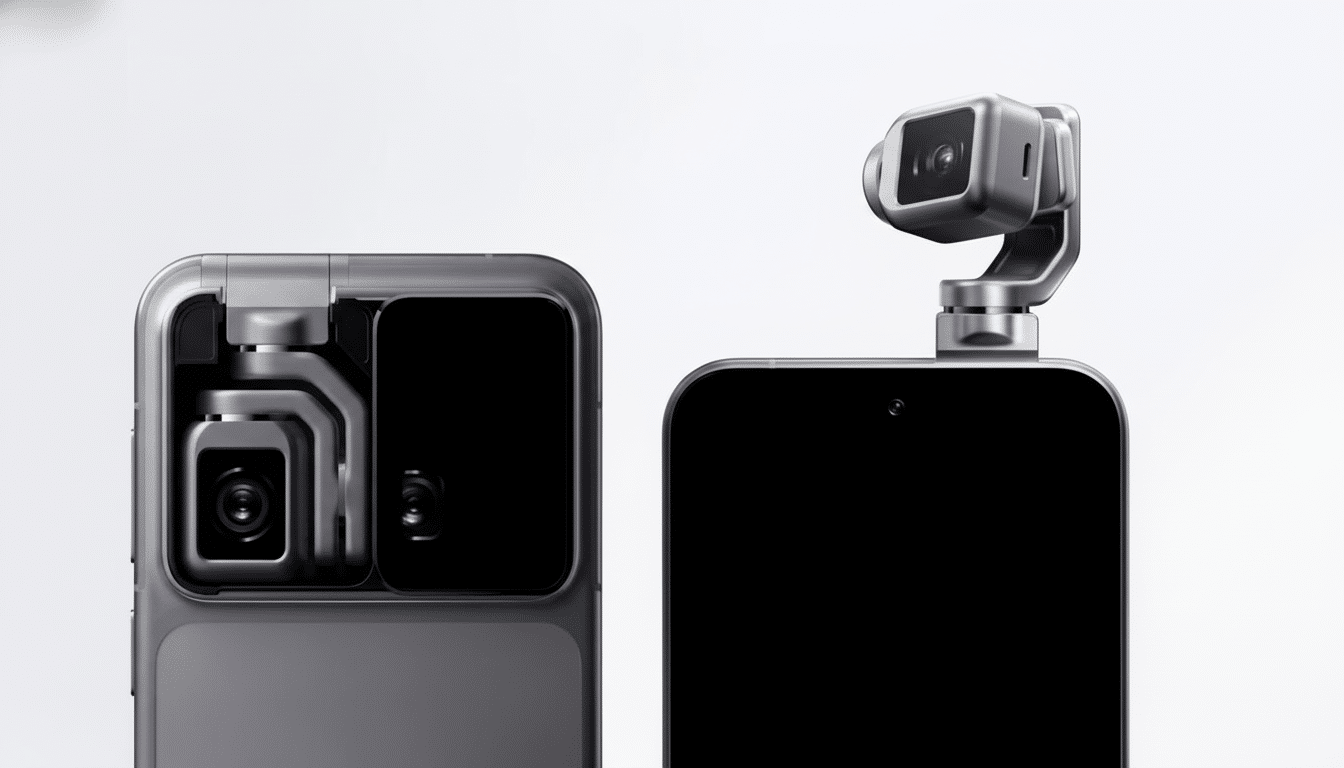
The signal is unmistakable: This isn’t some moonshot concept. It’s a product targeting creators who want Steadicam-like smoothness without bolting accessories onto their phones.
Why a Real Gimbal Matters for Stabilized Mobile Video
Most phones use a combination of optical image stabilization (OIS) and electronic stabilization (EIS). Those systems work, but they don’t physically separate the camera from hand movement as does a three-axis gimbal. By directly counter-rotating across pitch, yaw, and roll axes, a gimbal can provide longer, glide-like shots with less warping, reduced rolling-shutter wobble, and more usable footage in low-light situations where shutter speeds are lowered.
We’ve gotten hints of this notion in the past. Vivo’s “gimbal” cameras improved OIS by repositioning the lens-sensor assembly, but they didn’t rely on an external, articulated arm. Honor’s take seems more akin to pocket gimbals like the DJI Osmo Pocket, just shrunk down and built-in. If it can deliver what the sketches promise, this could be the first common phone with real gimbal movement without needing an accessory.
Inside the Clever Mechanical Package Powering Stabilization
As someone who’s seen the engineering in person, it’s impressive. The gimbal arm retracts into a large internal cavity and is sealed by a sliding shutter when not in use. That’s all being tweaked, but the goal is a one-tap deployment that’s quick, safe, and reliable. With the forces that are going to be in play there, durability will be prime—the ability to at least take a drop or twelve, how quickly it clogs with dust, and especially through repeated open-close cycles.
There are visible outlets at the rear of the chassis too, hinting at some thermal management for the gimbal motors and camera stack. Active stabilization generates heat, and continued recording can quickly drive most phones toward throttling. I’d expect Honor to tune the motor torque, speed, and duty cycle to balance stability vs. thermals vs. battery life. The inability to have a space budget on the gimbal might imply tight packaging elsewhere—which is no mean feat given the amount of volume-consuming multi-sensor arrays, large batteries, and mmWave antennas also demanding it.
The Software to Match the Hardware for Creators
But hardware is only half the tale. Honor previewed software concepts to make the gimbal a creator tool with purpose, not a gimmick. Lay the phone face-down and the arm can follow a subject around while you walk about, effectively serving as a tiny, self-aiming camera. The company also (unsurprisingly) teased AI-assisted features like outfit “fit checks” and probably subject tracking, timelapse, and hyperlapse modes.
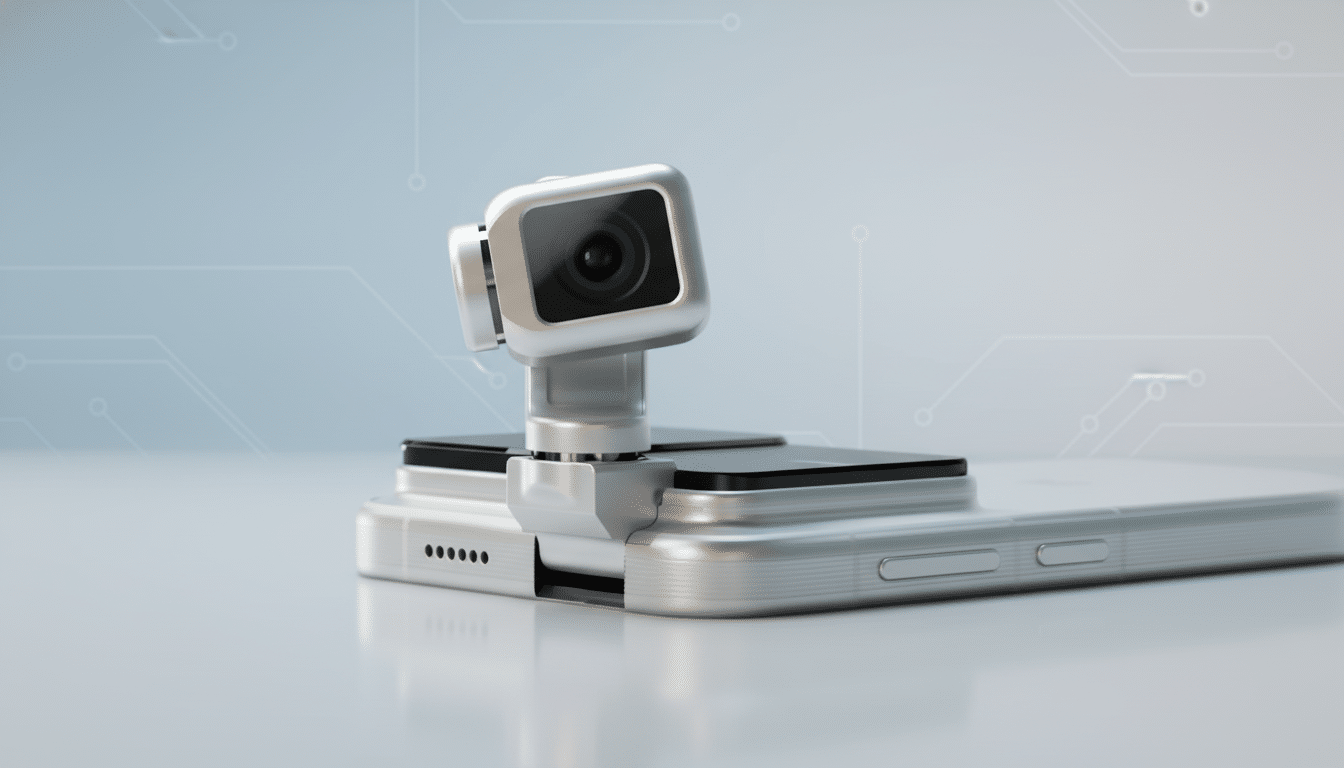
Look for granular control over follow speed, pan limits, and horizon lock—features standard to gimbal pros. If Honor opens the APIs to third-party apps, creators will be able to capture stabilized video internally within social platforms, lessening the friction that can kill adoption. That integration, along with dependable face/eye AF and solid audio capture, would decide its real-world utility.
Market Context and Rivals in the Race for Stabilized Phones
Camera features are still a top purchase driver in high-end smartphones, and this has been reiterated by the likes of IDC or Counterpoint Research. Manufacturers have increasingly leaned on larger sensors, periscope-style telephotos, and AI denoising; stabilization, by contrast, has more or less plateaued at OIS plus EIS. If Apple builds a gimbal into its camera, the visible, visceral leap might be enough—something consumers can feel in the first clip they shoot.
The conviction risks are equally stark. Mechanical systems weigh, cost, and can fail. Ruggedness and ingress protection ratings can also be difficult to stick to. And competitors can quickly counter with software tricks that close the margin for casual users. Honor’s wager here is that creators—vloggers, short-form video producers, and mobile journalists—will appreciate a tool that raises footage beyond what software can possibly do alone.
What We Still Don’t Know About Specs, Heat, and Pricing
Crucial stats are still unknown:
- Sensor size
- Primary lens aperture
- Focal lengths
- Frame-rate limits with stabilization engaged
- Whether the gimbal supports horizon lock at 360 degrees or partial ranges
- Battery drain during continuous filming
- Motor noise seeping into on-device mics
- How well it stabilizes video in low light
- How the system behaves with telephoto or ultra-wide modules, when present
Thermal behavior will be crucial. The vents on the chassis signal care put into heat dissipation, though only long takes will tell if the phone can shoot 4K or higher-resolution footage without throttling. Finally, it’ll all come down to price: whether this is a niche creator device or an effective halo phone that pushes the mainstream toward a new type of mobile camera.
Early Takeaway: Promise Beyond Gimmick, Proof to Come
Honor’s robotic gimbal phone is more than just a gimmick, it appears. The hardware is endearingly small, the concept addresses an honest-to-god creative problem, and early software planning points to real-world use cases beyond tech demos. With a formal reveal on tap for MWC and a retail release coming soon, the biggest remaining question is a clear one: will the production unit bring with it an appreciable leap in real-world recording quality? If true, it would mean the playbook for mobile cameras may need to be rewritten.
