


Honda has pulled the wraps off the Base Station Prototype, a compact, solar-equipped travel trailer aimed squarely at campers who want to leave hookups behind without stepping up to a heavy tow rig. The concept targets a sweet spot in the market: light enough for a typical SUV, yet outfitted with bona fide off-grid capability and a flexible interior that converts from day lounge to family sleeper.
Smaller Footprint, Bigger Ambitions for SUV Towing
Unlike traditional travel trailers that demand full-size trucks, Honda’s Base Station is designed to be towed by vehicles as common as a Honda CR-V or the company’s upcoming 0 Series electric SUV. That’s a telling constraint. The CR-V’s towing capacity is modest by industry standards, so Honda’s engineering team is clearly pursuing an ultralight architecture to broaden who can realistically own and store a trailer at home.
- Smaller Footprint, Bigger Ambitions for SUV Towing
- Built for Off-Grid Stays with Solar and Battery
- Clever Interior with a Pop-Up Roof and Bunks
- Why Honda’s Timing Makes Sense for RV Shoppers
- Competitive Landscape And Differentiators
- What We Don’t Know Yet About Specs and Price
- Bottom Line: A Compact, Off-Grid Trailer to Watch
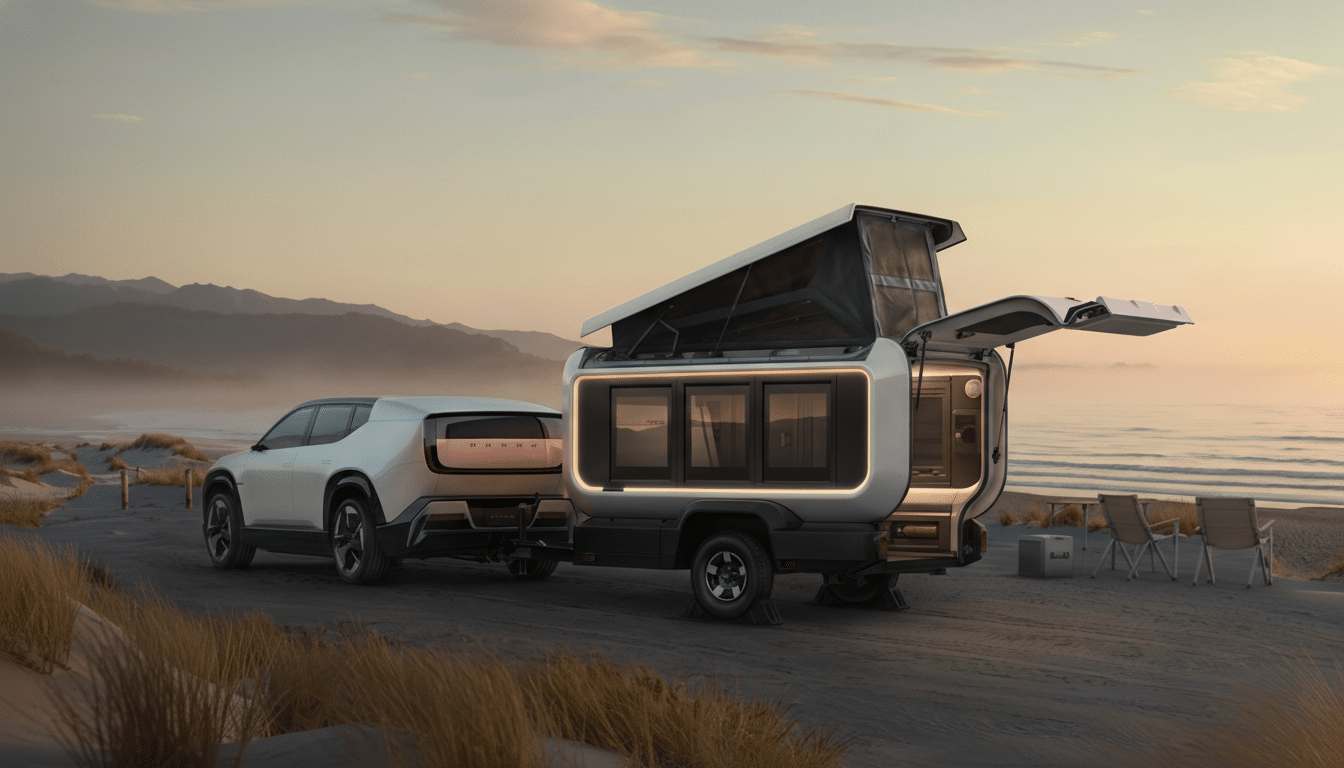
Honda says the Base Station will fit in a standard residential garage or parking space—another practical differentiator that reduces storage costs and anxiety. The company hasn’t released pricing or a launch timeline, only noting it intends to be “competitive in the lightweight travel trailer segment.”
Built for Off-Grid Stays with Solar and Battery
The Base Station ships with a lithium battery, inverter, and roof-mounted solar, eliminating the need for a gas generator in many scenarios. Honda hasn’t disclosed battery capacity or solar output, key specs that determine how long air conditioning, induction cooking, and lighting can run. As a reference point, induction cooktops often draw 1–1.8 kW, while compact RV air conditioners can pull similar power under load; sustained off-grid use will hinge on battery size and solar harvest.
Campers can still plug in at powered sites or pair the system with a generator if needed—an ironic twist given Honda’s enduring reputation in portable power. The move toward solar and induction aligns with a broader RV shift away from propane stoves and toward cleaner, quieter electric cooking.
Clever Interior with a Pop-Up Roof and Bunks
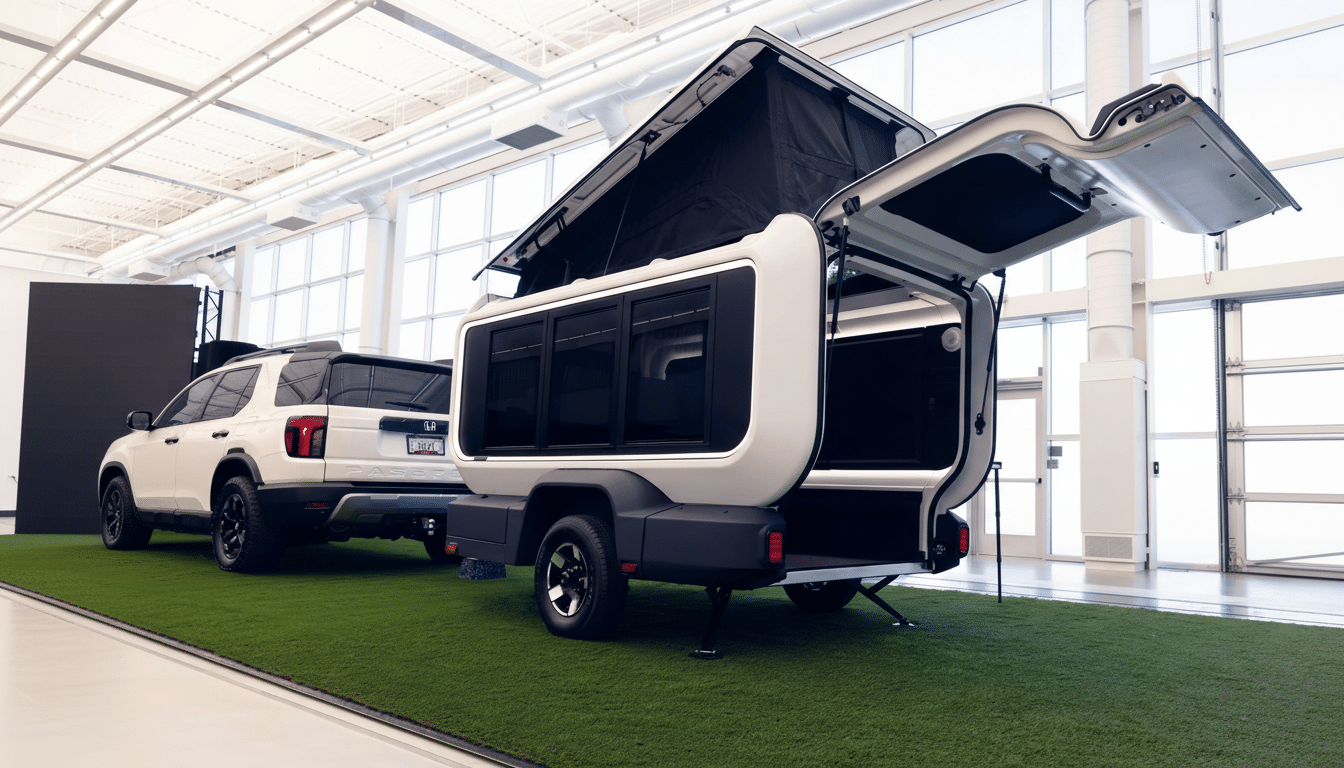
Inside, Honda emphasizes light and adaptability. Five large side windows flood the cabin with daylight, and a pop-up roof lifts interior height to about seven feet, transforming the space from a low-profile tow mode to a comfortable standing room layout at camp. A futon converts into a queen-size sleeping area, while an optional kids’ bunk adds flexibility for families.
Amenities include air conditioning, an external shower, an outdoor kitchen with running water, and an induction cooktop. The same design team worked on Honda’s foldable Motocompacto scooter, and that heritage shows in the multipurpose, pack-flat ethos inside the trailer.
Why Honda’s Timing Makes Sense for RV Shoppers
The lightweight segment is one of the most accessible entry points to RVing. Industry data from the RV Industry Association consistently shows towables make up the majority of shipments, driven by owners who want to use the vehicles already in their driveway. A compact trailer that can slip into a garage directly addresses pain points like storage fees and neighborhood restrictions.
The Base Station also lands as new electrified tow vehicles enter the market. EV towing can cut range substantially—energy agencies and independent road tests commonly report 25–50% declines depending on speed, terrain, and trailer profile—so minimizing frontal area and weight is increasingly critical. A smaller, more aerodynamic trailer is simply easier on both EVs and hybrids.
Competitive Landscape And Differentiators
Honda’s concept arrives amid a flurry of innovation from established and startup brands. Premium icons like the Airstream Basecamp distill features into compact footprints, while newcomers are pushing electric-first designs with integrated batteries and large solar arrays. Recent CES debuts show a trend toward powered-assist trailers and app-connected energy management. Honda’s angle is mainstream accessibility—SUV towability, garage fit, and a recognizable brand promising easy ownership.
The company’s message underscores that intent. “Base Station is a perfect example of what can happen when you let a team of researchers, designers and engineers pursue bold new ideas to create new value for our customers,” said Jane Nakagawa, vice president of the American Honda R&D Business Unit. “We designed it to make camping more accessible and enjoyable for families across America.”
What We Don’t Know Yet About Specs and Price
Key questions remain: final curb weight, battery capacity, solar wattage, water tanks, and price. Those numbers will determine trip length off-grid, comfort in hot climates, and the breadth of tow vehicle compatibility. If Honda can keep weight low enough for compact crossovers while delivering meaningful battery capacity and efficient climate control, the Base Station could broaden the market beyond traditional truck owners.
Bottom Line: A Compact, Off-Grid Trailer to Watch
Honda’s Base Station Prototype blends SUV-friendly towing, solar-backed electrification, and a space-smart interior in a package designed for everyday garages. The concept reads as a calculated bet: off-grid capability without overkill, features families actually use, and a footprint that meets the realities of modern driveways. Final specs and pricing will decide its place among rivals, but the intent is clear—Honda wants more people camping off-grid, without making them buy a bigger vehicle to do it.
