


A start-up quietly hijacked a corner of the CES show floor with a kitchen oddity that, in retrospect, seems inevitable: a chef’s knife that vibrates as you use it.
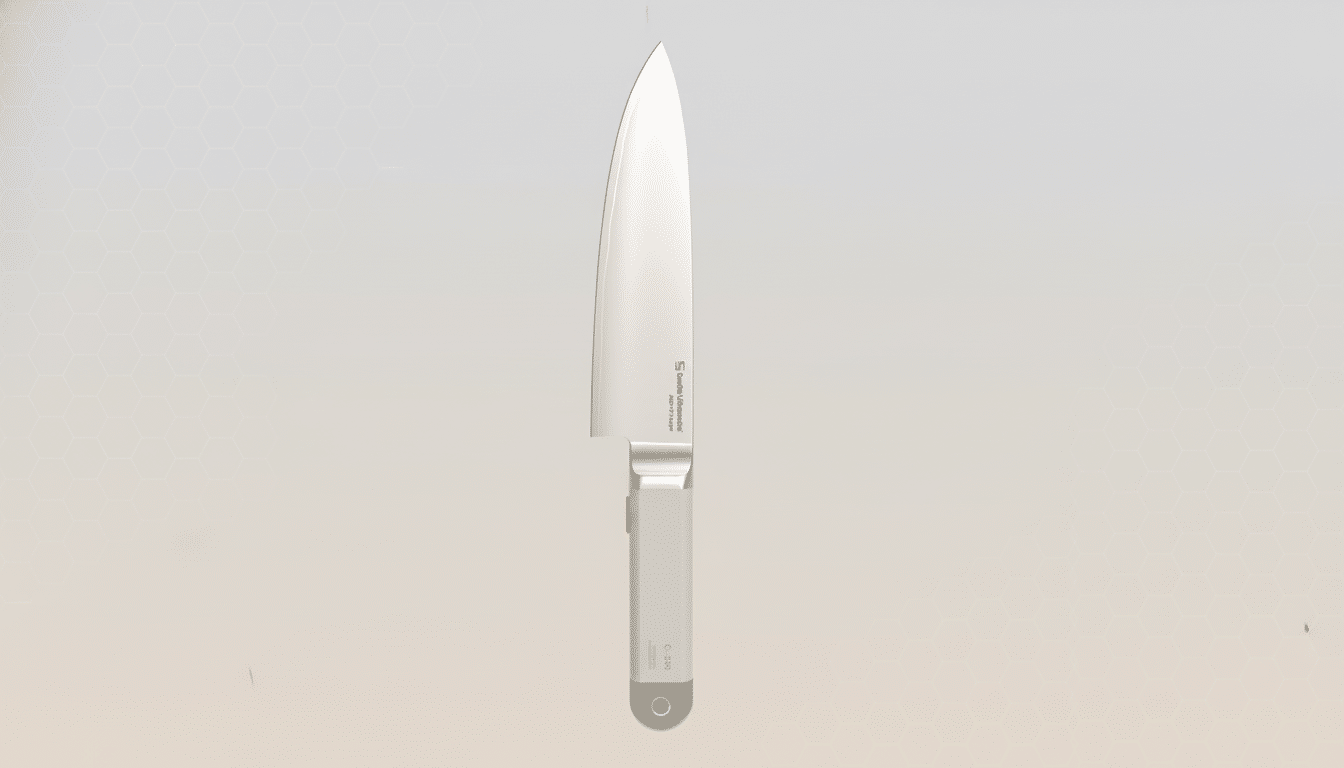
Seattle Ultrasonics’ C-200 Ultrasonic Chef’s Knife aims to bring this industrial ultrasonic cutting technology into the home, with a promise of cleaner slices with less sticking (not to mention easier gliding through delicate foods) while never looking or feeling like a gadget.
- A knife that hums under the radar on the CES show floor
- How ultrasonic cutting works to reduce drag and residue
- Shrinking the pro ultrasonic rig down to a drawer size
- Early cutting impressions from hands-on CES demos
- Specs, price and availability for the C-200 kitchen knife
- Safety and care notes for using an ultrasonic chef’s knife
- Why this ultrasonic chef’s knife could matter for home cooks
A knife that hums under the radar on the CES show floor
Push a small orange button on the handle and the blade, an eight-inch Japanese steel piece, oscillates at about 30,000 cycles per second. The movement is minuscule — around 10 to 20 microns, less than a quarter the width of a grain of salt — so you don’t see or feel the blade move. What you do feel almost immediately is how it glides: tomato skins part with a whisper, crumbs resist clinging and thin slices yield more readily to a gentler touch.
The company claims the micro-vibration decreases drag on the knife edge, resulting in less force required to cut and, presumably, fewer sharpenings. It feels in hand more like a luxury, slightly heavier chef’s knife than some sort of gadgetized utensil.
How ultrasonic cutting works to reduce drag and residue
Ultrasonic blades vibrate at high frequency, momentarily overcoming static friction where metal meets food. The “micro-sawing” effect of that action allows fibers to cut away cleanly and removes sticky residues that otherwise would smear across the blade.
The technique itself isn’t novel: Industrial ultrasonic cutters made by firms like Sonics & Materials and Dukane are used in bakeries and cheese plants to create tidy, repeatable slices. Studies published in the Journal of Food Engineering have shown that ultrasonics can reduce cutting forces and decrease edge debris formation in soft, layered products such as cakes or pâté.
Shrinking the pro ultrasonic rig down to a drawer size
For commercial ultrasonic systems, it’s usually a shoebox-sized generator attached to a blade. Seattle Ultrasonics worked the electronics into the handle — doubling over the circuit board to get it to fit — so there’s one more place for your knives, or whatever. It has a removable battery that charges via USB-C, with an optional wireless charging tile made from mahogany available for countertop parking.
According to the International Electrotechnical Commission, the knife is dust-tight and can tolerate low-pressure water jets (it has an IP65 rating for its resistance). Translation: hand-washable just like you would a regular chef’s knife, not a dishwasher candidate.
Early cutting impressions from hands-on CES demos
For produce, the contrast is subtle, but undeniable. Paper-thin cuts of tomato are made with less trepidation at the heel, and soft breads leave behind fewer trunk-and-branch crumbs as the blade slices through them. You never hear or feel the oscillation during normal use, although a quiet, glassy ping can emerge if the blade is wet — like running a damp finger over a crystal rim.
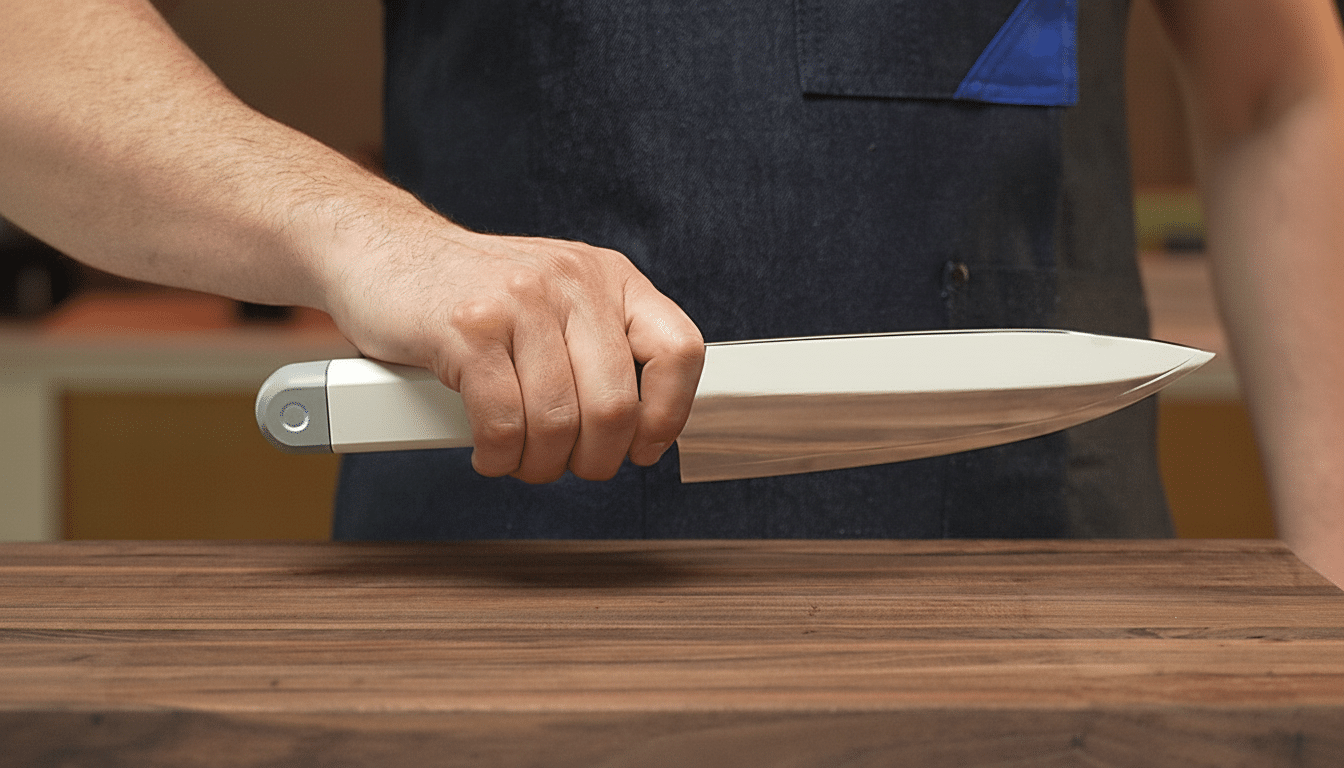
Does it do better than a razor-sharp chef’s knife? Not dramatically. Think of it like going from a regular bike to an e-bike: the basics are the same, but effort falls off and consistency improves. The largest improvements are likely to be realized when using delicate or tacky materials — think slicing sashimi, cutting through laminated pastries, soft cheeses and frosted cakes — where smearing and drag can kill precision.
Specs, price and availability for the C-200 kitchen knife
The C-200 features an eight-inch Japanese steel blade, in-handle activation, a rechargeable battery (removable) and IP65 water resistance. The maiden production run is sold out and due to ship soon, with a second wave of reservations open in advance of a follow-on release window.
Pricing is set at $399 for the knife by itself and $499 with the wireless mahogany charging tile. That places it in line with the more upscale Japanese chef’s knives from brands like Shun and Miyabi, which can retail for between $300 and $500 — but of course don’t vibrate.
Safety and care notes for using an ultrasonic chef’s knife
And because the oscillation amplitude is so small, the blade looks like a regular chef’s knife — no exposed moving mechanism.
The usual methods of cutting and care should be observed. The company suggests hand-washing, quick drying and charging the battery away from the sink. Traditional methods of honing and sharpening are still applicable, but they may be used less frequently if drag really is reduced.
Why this ultrasonic chef’s knife could matter for home cooks
For the more and more home cooks investing in pro-grade gear, a workable ultrasonic knife could push expectations of what a “sharp” knife feels like.
The questions now that remain open are pragmatic ones: the life of the battery, the long-term durability of the transducer and how well the edge holds up after months of actual prep work. If early interest is any gauge, competitors should not be far behind.
