


Google is experimenting with a new way to surface your videos in Google Photos, and it looks a lot like the vertical, swipeable format that made TikTok addictive. Early tests in the Android app point to an AI-curated “Related” feed that compiles clips with common elements, turning your private library into a faster, more serendipitous viewing experience.
What Google Is Testing in the New Photos Video Feed
In version 7.60 of the Photos app on Android, some users are seeing a “Related” button when they open a video. Tapping it launches an Explore page with a vertically scrolling stream of other clips Google Photos believes are connected—by occasion, place, or theme. The company already does something similar for pictures through Memories, and this appears to be the video-first counterpart.
Each entry in the feed includes basic actions: save to favorites, share, open details via the three-dot menu, or jump to “View day” to pull up everything captured on that date. Because this is a limited test, relevance may vary, but the scaffolding is clear: AI sifts your library for patterns, then serves related clips in a continuous, thumb-friendly flow.
How the Vertical Related Video Feed in Photos Works
The experience mirrors familiar short-form paradigms, but with a crucial twist: it’s all your content. Rather than pulling from a public network, Photos surfaces videos from your own archive, reducing friction to rediscover moments that otherwise sit buried in albums. Google Photos has long used machine learning to recognize faces, landmarks, and objects; that foundation likely helps the app cluster clips by context, even when you never labeled them.
Imagine opening a single clip from a weekend trip and immediately swiping into other footage from the same city, the same friends, or the same fireworks show. For busy libraries, this solves a real recall problem. Keypoint Intelligence has estimated that people capture well over one trillion photos annually, and countless hours of video ride alongside those images. The challenge isn’t storage—it’s discovery.
Why a TikTok-Style Personal Video Feed Makes Sense
Vertical, swipe-to-browse interfaces have become the default way people consume video across platforms. YouTube has said Shorts now attracts more than two billion logged-in monthly users, and TikTok’s global audience exceeds one billion monthly users. That behavior shift has trained everyone to expect instant, low-friction video discovery. Bringing a similar format to personal media is a logical extension—familiar muscle memory applied to your own memories.
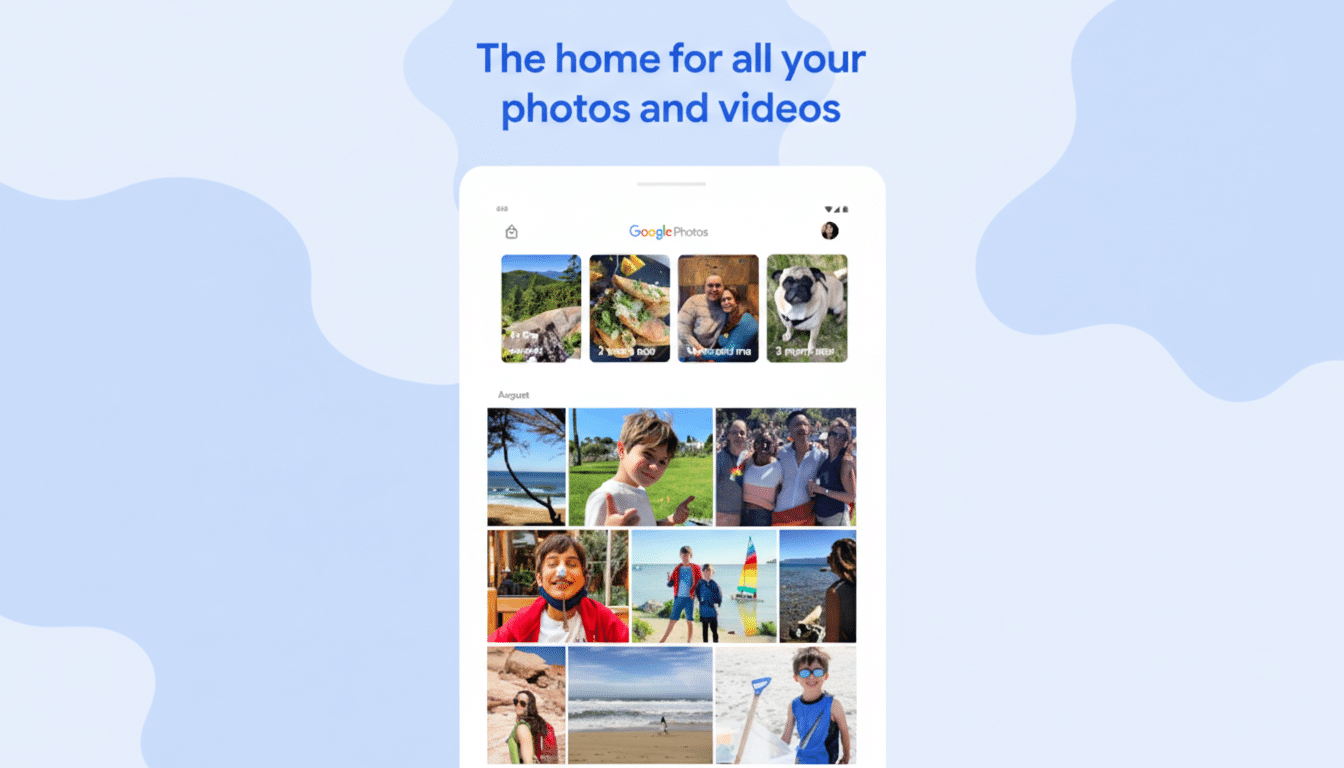
It also complements Google’s position in AI-assisted curation. Memories automatically builds story-like recaps of photos and clips, but it’s largely prescriptive. A Related feed adds an exploratory layer, letting users swipe into context-adjacent moments at their own pace rather than waiting for a prepackaged montage.
Availability timeline and early notes on the test
The Related video feed is not broadly available, and Google has not announced a rollout timeline. As with many Photos experiments, features often appear to a subset of users before expanding—or quietly disappearing—based on feedback. If it ships widely, expect incremental refinement to the AI models that decide which clips qualify as “related.”
Separately, a light theme for the Google Photos image editor is rolling out in the same app version. The brighter canvas makes it easier to see dark edges and fine details during edits, addressing a common complaint from users who process photos on phones with OLED displays.
What to watch next as Google tests the Related feed
Two questions loom. First, how tightly will Related videos integrate with existing Memories and map-based views? A unified approach could let users jump between an AI montage, a place-based cluster, and a swipeable feed without losing context. Second, how will Google tune the balance between novelty and accuracy? Overly broad matches diminish trust; overly strict matches kill discovery.
If the test graduates to a full release, Google Photos may evolve from a passive archive into a more active, short-form browser for your life—one that borrows the muscle memory of TikTok and Shorts but keeps everything private by design. For users drowning in footage they rarely rewatch, that could be the nudge that brings forgotten videos back into view.
