


Google is testing a Gemini feature designed to make it easier to switch from rival AI assistants by importing your old conversations. A leaked interface suggests the tool can ingest chat histories from services like ChatGPT or Claude so Gemini can immediately reflect your preferences, tone, and past context—without starting from zero.
Why Google Wants Your Old Chats For Gemini
Personalization is the sticky glue of AI assistants. The more an app has “learned” your voice, recurring projects, and shorthand, the harder it is to leave. By lowering this switching cost, Google is effectively competing on portability—offering a faster path to a useful assistant that already knows you.
- Why Google Wants Your Old Chats For Gemini
- How The Gemini Migration Tool Appears To Work
- Compatibility And File Formats Remain Murky
- Privacy And Training Implications For Imported Chats
- The Competitive Stakes In AI Assistant Switching
- Other Gemini Tweaks Spotted In The Latest Leak
- What To Watch Next As Google Prepares This Feature
It’s a playbook that worked for browsers and password managers, where one-click imports accelerated adoption. For AI, conversation histories are the new bookmarks: high-signal context that turns a generic model into a personal utility.
How The Gemini Migration Tool Appears To Work
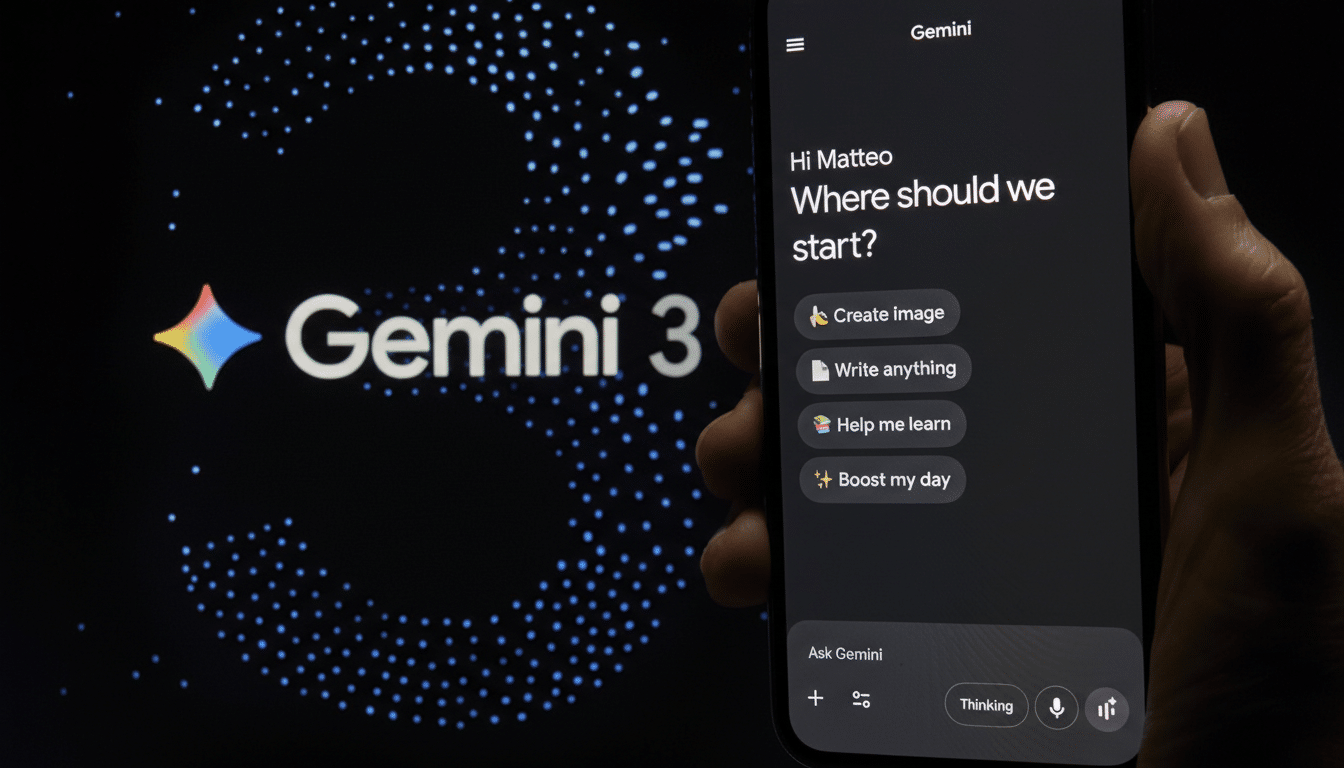
The option reportedly surfaces from Gemini’s home screen under the plus icon used to attach files. In the leaked build, it sits below a shortcut to NotebookLM and shows a chat-bubble icon, hinting at a conversation-focused import rather than a broad file uploader.
When activated, a pop-up instructs users to download their chat history from another AI platform, then upload it to Gemini. The early interface doesn’t clarify accepted file types or schemas, and in testing examples the feature did not fully function—signaling it’s still under development.
Compatibility And File Formats Remain Murky
Interoperability is the sticking point. There’s no widely adopted standard for exporting AI chats with metadata such as timestamps, attachments, and system prompts. OpenAI offers a ChatGPT data export that delivers a bundle of JSON and HTML files, but each vendor structures data differently, which complicates automated imports.
If Google pursues broad compatibility, it may need to parse multiple vendor-specific exports or push for a common schema, similar in spirit to the cross-industry Data Transfer Project. Regulatory pressure around data portability—enshrined in frameworks like GDPR and echoed by newer digital competition rules—could further nudge vendors toward standardized migration paths.
Privacy And Training Implications For Imported Chats
The leak warns that imported data would be stored in Gemini activity and used to train the AI. That will raise eyebrows for users who have chats containing sensitive work product or third-party personal information. Consumer defaults, enterprise carve-outs, and clear opt-outs will matter.
Major AI providers increasingly separate data handling for business and education customers—often promising that enterprise content won’t be used to train models. If Google rolls this feature out widely, expect fine-grained controls and prominent disclosures to align with those expectations.
The Competitive Stakes In AI Assistant Switching
Switching tools rarely change market share on their own, but they remove friction at key decision moments—when a user hits a paywall, needs a capability, or loses trust. With ChatGPT reporting 100M+ weekly active users in public remarks, even a small flow of switchers could be meaningful if their imported histories make Gemini immediately more helpful.
For rivals, the calculus is delicate. Blocking exports undermines user trust and may clash with portability norms. Enabling them invites churn but signals confidence. The most likely outcome is a détente: vendors allow exports, then compete on speed, multimodal quality, tool integrations, and safety.
Other Gemini Tweaks Spotted In The Latest Leak
The same leak points to a new image download option with 2K and 4K resolutions, a nod to creative workflows that need higher fidelity. Another feature labeled Likeness surfaced without details; this may relate to identity controls or provenance signals, echoing efforts across YouTube and other platforms to flag AI-generated content that imitates real people.
What To Watch Next As Google Prepares This Feature
Key questions remain: which platforms will officially support exports, what formats will Gemini accept, and will users get explicit toggles to keep imported data out of training? If Google ships robust, privacy-aware migration with solid parsing of ChatGPT and Claude archives, expect portability to become a competitive checkbox across the AI landscape.
In short, Google is testing a smart wedge at a pain point every power user feels. If done right, importing your AI past could make your next assistant feel familiar on day one.
