


Google and Apple said they were developing a plan for a new way to quickly move data between Android phones and iPhones, so people who switch devices will not have to endure days of frustration learning to use their new platform. Early code tidbits found in an Android Canary build and documentation given to developers hint at a system-level migration process that may surface when you set up an Android phone from scratch, with what seems like broader support for data types and fewer holes than in existing tools.
A Fix for a Painful Process That Keeps Going Wrong
For years, there have been two main ways to migrate from one mobile ecosystem to the other: Google’s Switch to Android and Apple’s Move to iOS apps. Although they cover the basics, such as contacts, calendars, and photos, users often complain about partial transfers of data, lost message histories, mismatched apps, and also slow transfer speeds: pain points that make transitioning to a new device difficult and time-consuming.
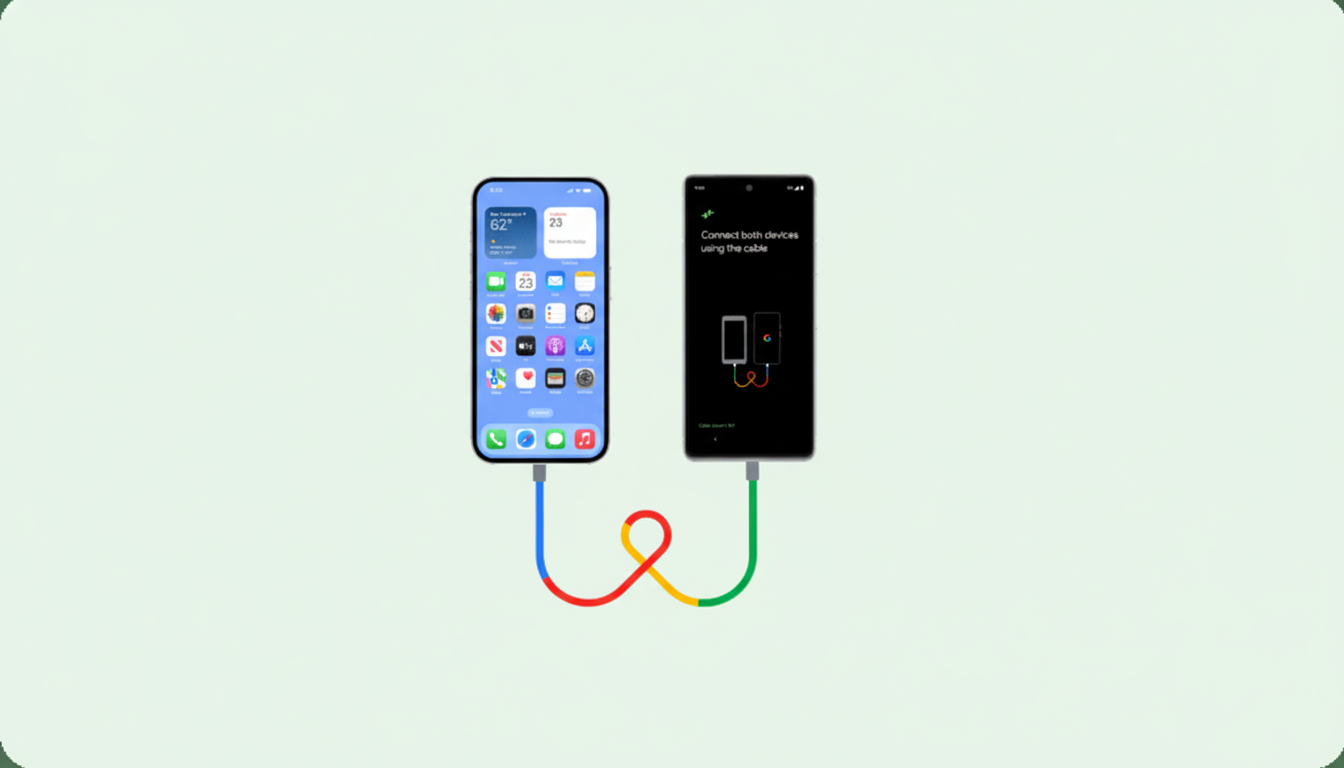
Messaging is the thorniest issue. SMS and MMS trundle unreliably, RCS histories (for those who’ve already started using the standard) generally don’t come along, and iMessage can create activation snafus if it isn’t properly disabled. Media libraries may stall part way through being transferred, and app parity is patchy: paid apps, subscriptions, and sign-ins often need manual reinstalling. And even ordinary actions, such as transferring an eSIM or wallet passes, can require carrier calls and additional verification steps.
What the New Approach Could Make Possible
Although details are scant, the collaboration indicates a setup-oriented cross-platform workflow that might in future even support wired and local encrypted Wi‑Fi transfers together with improved status reporting for transmissions and automatic retries. Anticipate broader data categories: call logs, alarms, home screens and shortcuts as well as application lists (with store links) can be expected, along with more extensive media libraries. The firms might also simplify any eSIM switching with the assistance of GSMA’s standardized eSIM transfer systems, meaning you won’t have to visit a carrier shop or scan paper QR codes.
End-to-end encryption content is the wild card. Transferring message histories between platforms should be handled in a manner that is respectful of user privacy and legal requirements. WhatsApp’s cross-platform chat migration — a feature that was first made available on select Android devices before being rolled out more widely — is one valuable precedent. More broadly, the widespread mainstreaming of passkeys and standardized account recovery could make recovering access simpler as well, while the long-ago-announced Data Transfer Project — with both companies involved — creates a template for interoperable, user-permissioned data portability.
Early Signs in Beta Software Point to New Migration Tools
Google’s latest Android Canary for Pixel contains references to migration components that seem to be related to the new experience, 9to5Google reported. The flow will present itself during device setup as an experience by itself, instead of exposing it to users in a standalone app, reducing user action and moving transfer logic closer to the OS. On the Apple side, signs suggest that it will come in an iOS developer beta at some point prior to a more general release, which would seemingly follow its path from beta to stable.
Key first‑party integration might unlock permissions and APIs that third‑party utilities can’t touch, resulting in more complete moves of photos, videos, messages, and app associations. That depth is what earlier efforts have been lacking.
Why the Timing Matters for Cross‑Platform Migration
Better toggling occurs where consumer demand crashes with the force of regulation. The European Union’s Digital Markets Act injects new vitality into the concepts of data portability and less lock‑in for “gatekeeper” platforms. Improved migration tools also respond directly to such expectations by preventing the sort of friction that can affect device selection.
The market impact potentially could be meaningful. IDC estimates Android has approximately 70–75% share of the global smartphone pie and that iOS claims somewhere in the region of 25–30%, and data from CIRP indicates that around 10–15% of new iPhone purchasers in the US routinely migrate from Android in a typical year. The more seamless the cross‑platform transitions, the greater switching confidence, and those flows can move at the margins — an effect both companies understand very well.
What to Watch Next as Cross‑Platform Transfers Evolve
Key questions remain. Will message histories — including RCS on Android and legacy SMS/MMS on both ends — migrate without a hitch? And how will the process for app entitlements, subscriptions, and regional content rights be handled? Will eSIM and wallet passes be free to move around with one tap, or will carriers play gatekeeper for parts of the flow? And how much flexibility will users have to make granular selections without turning the process into a hike in the weeds?
Count on a phased deployment — initial beta exposure, testing with certain devices and then slow rollout as carriers, app developers, and cloud services hammer out the handover specifics. If Google and Apple finally deliver a sturdy, OS-level pipeline with upfront privacy disclosures and predictable results, changing phones could at last feel routine and not risky — which might shift competition on features and value, not just the expense of moving your digital life.
