


Google’s long-rumored fusion of ChromeOS and Android just moved from speculation to substance. A leaked internal bug report, first flagged by 9to5Google and shared by a Telegram tipster known as Frost Core, reveals “Aluminium OS” in action, complete with build identifiers, device details, and UI clues that point to a unified, desktop-class Android experience running on Chromebook-grade hardware.
The takeaway is straightforward but seismic: Google appears to be standardizing on an Android core for laptops while preserving the desktop behaviors people expect from ChromeOS. That shift could redraw the lines for app compatibility, AI features, and enterprise management across millions of devices.
- What the Aluminium OS leak reveals about ChromeOS and Android
- A unified Android and Chrome experience for laptops
- AI at the core with Gemini models and assistants
- Hardware and developer implications for Aluminium OS
- Why this shift matters for Google’s platform future
- What to watch next as Aluminium OS approaches launch
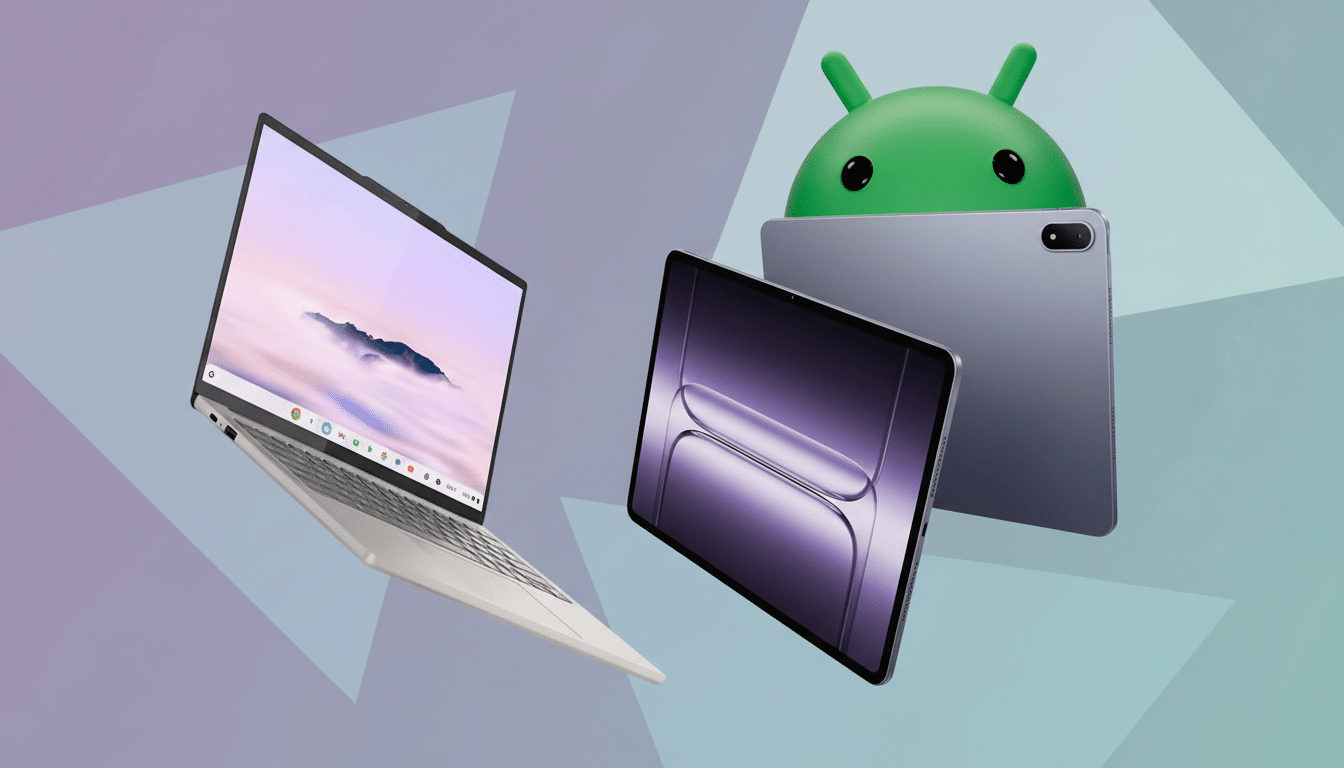
What the Aluminium OS leak reveals about ChromeOS and Android
The bug report centered on Chrome Incognito tabs included two screenshots and a description referencing an HP Elite Dragonfly 13.5 Chromebook running on a “Brya(Redrix)” board with a 12th‑gen Intel Core (Alder Lake‑U) CPU. Crucially, it listed an Aluminium OS build string, ZL1A.260119.001.A1, and identified the Android base as version 16.
Video shared alongside the reporting shows an interface that looks unmistakably like ChromeOS, but with subtle tells: a taller status bar optimized for larger displays, a refined pointer, and a Chrome browser that drops the extensions button while in a “mobile” mode. Those cues suggest a dynamic UI that can shift between mobile and desktop behaviors depending on context.
Seen through a developer lens, the ZL1A build marker follows the familiar Android style of platform branches, which hints at a coordinated release train for laptops rather than an experimental fork. The presence of Android 16 APIs would also give developers the modern toolkit they expect, without fragmenting app targets.
A unified Android and Chrome experience for laptops
Creators like Shane Craig have likened Aluminium OS to the tablet and foldable experience on premium Android phones: unfold or dock, and the UI becomes more desktop-like with broader panels and more capable multitasking. The leaked build appears to push that concept to full laptop scale with a windowing model familiar to ChromeOS users.
If Google gets the balance right, users could see the best of both worlds: Android’s vast app ecosystem with ChromeOS’s productivity-first windowing, input, and peripheral support. The disabled extension button in Chrome’s mobile view implies the system can deliberately toggle features to fit each mode rather than forcing a one-size-fits-all browser.
AI at the core with Gemini models and assistants
Android Authority reports that Google is framing Aluminium OS as “built with AI at the core,” which aligns with the company’s broader Gemini push. Rick Osterloh, Google’s SVP of Devices and Services, has described the effort as bringing the full AI stack—Gemini models, assistant capabilities, and the Android developer ecosystem—into the PC domain.
In practice, that could mean systemwide text generation, summarization, and context-aware assistance across documents, web apps, and native Android software, all presented in a desktop paradigm. On-device inference paired with cloud models would also fit Google’s hybrid AI strategy, improving privacy and latency for common tasks while scaling up for heavier workloads.
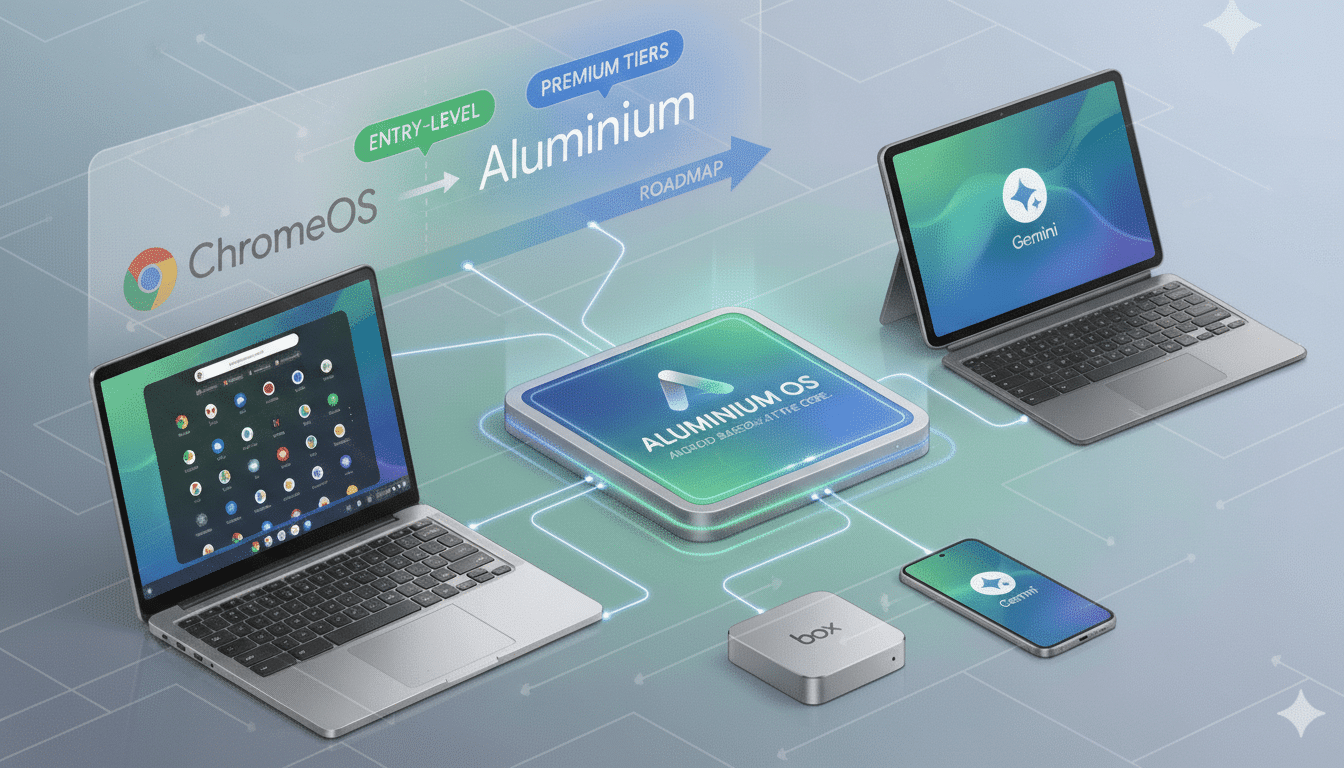
Hardware and developer implications for Aluminium OS
The HP Elite Dragonfly detail is a strong signal that Aluminium OS targets x86 laptops out of the gate, while its Android base practically guarantees first-class ARM support. The “Brya” lineage maps to existing Chromebook platforms, suggesting firmware, security, and update practices learned from ChromeOS—like seamless A/B updates and verified boot—could carry over.
For developers, Android 16 under the hood means modern APIs, Jetpack libraries, and a predictable app model. Expect the system to reward adaptive layouts and large-screen patterns: responsive UI, keyboard and pointer affordances, robust multi-window behavior, and thoughtful support for stylus and external monitors. Testing how apps behave when the browser flips between mobile and desktop modes will be essential.
Enterprise IT will be watching management knobs. A convergence of Chrome Enterprise policies with Android Enterprise controls would simplify fleet oversight, identity, and app distribution. If Google unifies those stacks, it could reduce friction for schools and businesses that have long mixed Chromebooks with Android tablets and phones.
Why this shift matters for Google’s platform future
Android powers roughly 70% of smartphones globally according to StatCounter, and its developer gravity is unmatched. Bringing that ecosystem to laptop form factors with first-party AI woven in could accelerate large-screen Android app quality while giving budget PCs and education devices a fresh jolt of capability.
It also clarifies Google’s platform story. Instead of two parallel operating systems evolving separately, Aluminium OS points to a single, AI-native core that adapts to phones, tablets, and full PCs. That coherence helps users, developers, and IT—and raises the competitive bar against Windows and macOS in the process.
What to watch next as Aluminium OS approaches launch
Keep an eye on three signals:
- Public developer documentation or SDK guidance for Aluminium OS
- Early builds landing on reference hardware
- Clarity on app and extension behavior across mobile and desktop modes
Also watch how Google positions enterprise management, Linux tooling, and Chrome’s role inside the new stack.
For now, the leak provides the clearest view yet: Aluminium OS is real, it runs on modern laptop silicon, it looks like ChromeOS while speaking Android 16, and it is being engineered with Gemini-era AI at the center. If Google lands this, the PC is about to feel a lot more like Android—without giving up what made Chromebooks successful.
