


FolderFort is attempting to drive cloud storage toward a simpler, web-first model, with no apps to install; its 1TB Pro plan fully runs in your browser. The service promises to be fast, secure, and available in any modern browser on Windows, macOS, or a mobile device—an alluring mix for users looking to have the service at their beck and call but resist the monthly bill creep.
The top-level features are simple:
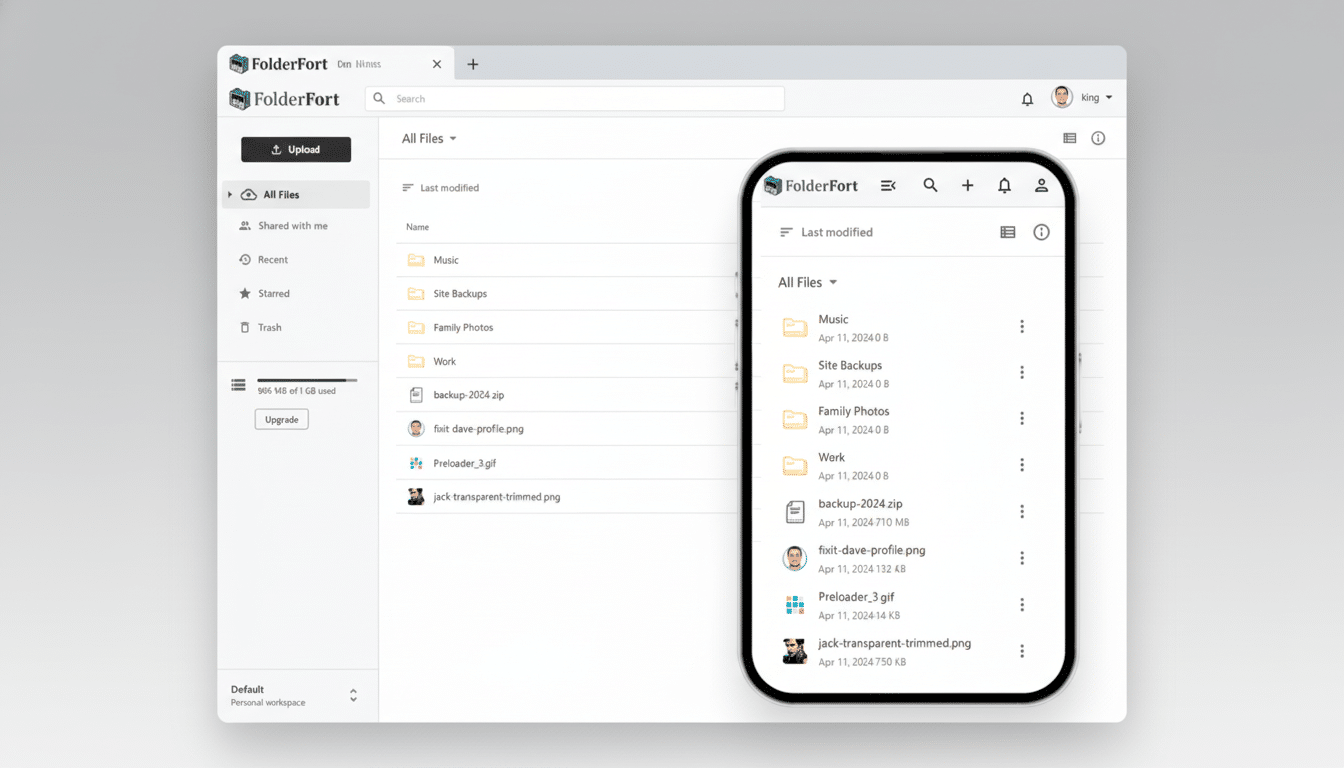
- 1TB of storage space
- Unlimited workspaces and users
- Family and team access without managing multiple accounts
The service is built on top of the infrastructure of the long-running cloud storage provider Backblaze, which has a history of clearly reporting how often its storage systems suffer downtime; FolderFort boasts 99.99 percent availability—in other words, roughly four minutes per month during which data might not be available.
Why browser-based access to cloud storage matters now
Browser-based tools have already emerged as the default for hybrid work and shared devices—and storage is no different. With nothing to install, users can sit down at a company laptop, their personal tablet, or a borrowed machine, log in, and have the exact same files and interface. It matters for small businesses with bring-your-own-device policies, and it particularly matters when ordering in bulk (such as for schools or nonprofits that can’t standardize on one platform).
It also reduces support overhead: IT teams don’t need to manage (and update) desktop clients across different OSes; there are no required updates for what is displayed in the app, and there is certainly no sync conflict troubleshooting. For end users, it’s consistent across Chrome, Safari, Edge, and Firefox: open a tab, drag in some files, share a link, and move on.
Built on proven cloud infrastructure with transparency
FolderFort’s use of Backblaze is an interesting choice. Backblaze’s publicly released Drive Stats have offered the industry a glimpse at hard drive reliability at scale for some time, with annualized failure rates (AFR) consistently sitting in the low single digits, depending on the model and age of drives. That degree of transparency is rare and adds confidence that the files aren’t simply being stored at low cost—they’re being stored on very well-defined hardware.
Performance is another prong. For all that upload-and-download-speed blather, it’s always going to be up to the local networks; FolderFort’s web app, on the other hand, is built for handling files by the thousands—and does so quickly. Large files, in particular, will resume exactly where they left off if a connection drops. The company’s 99.99% uptime claim translates into approximately 52 minutes of downtime per year, which is in line with what can be expected from a mature cloud service and is consistent with the expectations of users who desire always-on access to their applications.
Security and sharing controls for teams and families
Security is table stakes for cloud storage, and FolderFort has encryption in transit and at rest, permissioning that makes folders private or public by sharing a link or with named collaborators only. That foundation dovetails with advice from organizations like the Cloud Security Alliance, which speaks to least-privilege access and strong data protection when it comes to SaaS tools.
In practical terms, this might mean a marketing team can spin up a workspace for a campaign, invite agency partners as necessary, and keep client contracts confined to a folder with restricted access. A single family can share a central photo archive without all buying separate plans for each person. There are no workspace or user limits, which means there is no artificial ceiling that otherwise forces upgrades far in advance of any realistic storage limitations.
Pricing details and who the 1TB Pro plan is best for
The active sale price of the 1TB Pro plan ($49.97) is an 87% off promotion from the $399 listed price, placing FolderFort squarely in the budget-friendly category, especially for those who do not want to pay recurring monthly fees.
For reference, the consumer-grade plans from larger providers typically start at a couple of dollars per month for a moderate amount of storage and go up from there as you tack on users or features.
Freelancers handing off work to a client, small studios trading media assets, and household members collating documents spread out across devices will all recognize the economics of that scenario. And when capacity requirements fluctuate, FolderFort claims you can simply add on storage as a service without any downtime, eliminating the potential friction of migrating to a new tier or platform mid-project.
The bigger picture for browser-first cloud storage
Data volume isn’t slowing down. Analysts have projected that global data creation will be explosive this decade, and Flexera’s State of the Cloud reports indicate today’s organizations are mostly running multi-cloud strategies. In that environment, a straightforward, browser-accessible repository can be the line between a workflow that scales and one that doesn’t.
Would-be buyers still need to assess the basics—how permissions correspond to your policies, data handling and disclosure for compliance considerations, where files are physically located—before you suddenly have another critical workload in one big bucket. But for people who value speed and ease of access, have users do a bunch of cool shit with the app to draw them in—and, hey, just keep scrolling; we’ll never charge you any wacky fees!—this guy’s strong case lightens the mood.
