


Samsung’s Galaxy Z TriFold is the phone everyone stops and stares at on the show floor, it really is that clear from the moment it opens. By tacking on the third panel to fold out of it, Samsung made a pocketable slab that opens up into a 10-inch canvas — closer to tablet scale than any other phone that folds.
Where conventional foldables straddle the line between phone and mini-tablet, the TriFold doggedly insists we’re in maximum screen territory. It’s a window into where mobile productivity is going, with a form factor that seems as if it’s trying to make your laptop nervous.
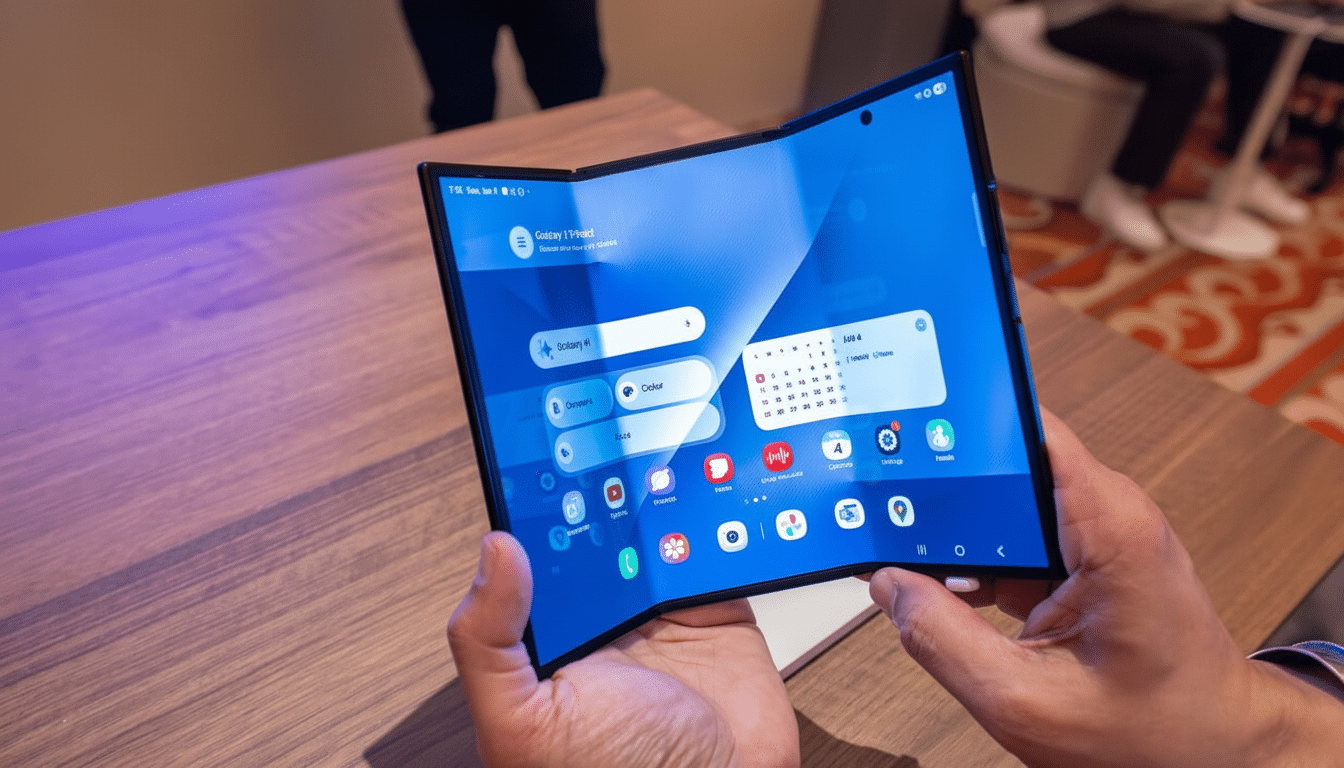
Work and play on a three-panel screen built for multitasking
It’s a simple idea from Samsung: take the Z Fold prototype and add a third screen segment. The result is a screen that expands from the already roomy 8 inches of the Z Fold 7 out to roughly 10 inches at its largest — a maybe-50% bump in usable area that suddenly recasts how you multitask, edit documents or review slide decks on the go.
The engineering is striking. When unfolded, the body is an almost impossibly thin 3.9mm — which, Samsung insists, makes it the world’s thinnest phone of its kind by more than half — graduating to a still very svelte 12.9mm when folded shut, with hinges that are smoother than what was possible on previous-generation foldables. There’s even a nice detail for durability: you’ll feel the phone subtly vibrate if you begin closing panels in the wrong order, reminding you to fold left before right to avoid damaging the mechanism.
Both are bright, punchy and razor-sharp on the inside. You’ll notice two of them unless you’re looking straight on — a trade-off that’s expected with a tri-panel design — but size and vibrance eliminate the knowing lines for almost anything I do, be it spreadsheets, reading, side chat from my kid or split-screen chat and video.
Design Choices That Involve Real Trade-Offs
Unlike Samsung’s two-panel foldables that sit at in-between angles for “laptop” or “kickstand” modes, the TriFold is binary: closed and fully open. That is, none of that propped-it-halfway-up-for-desktop-typing, hands-free video or creative-selfie-framing business. You can use the outer screen as a viewfinder, but you can’t prop the device open at 110 degrees on a rock and shoot a time-lapse.
It’s an intentional decision that prioritizes maximum screen real estate and structural simplicity over flex-mode flexibility. The result: a slimmer folded profile and smoother tablet experience. The device is rated dust- and water-resistant to IP48, which indicates the hinge and sealing solution for such a complicated build are mature.
Software for the Big Screen, and Serious Work
The TriFold’s worth shines through when you engage Samsung DeX. Plug into a monitor, or work directly on the 10-inch display, and the interface transforms into something more desktop-y: with resizable windows, a taskbar and powerful keyboard shortcuts. For email blitzing, document editing and messaging triage, it’s more Chromebook than phone-like.
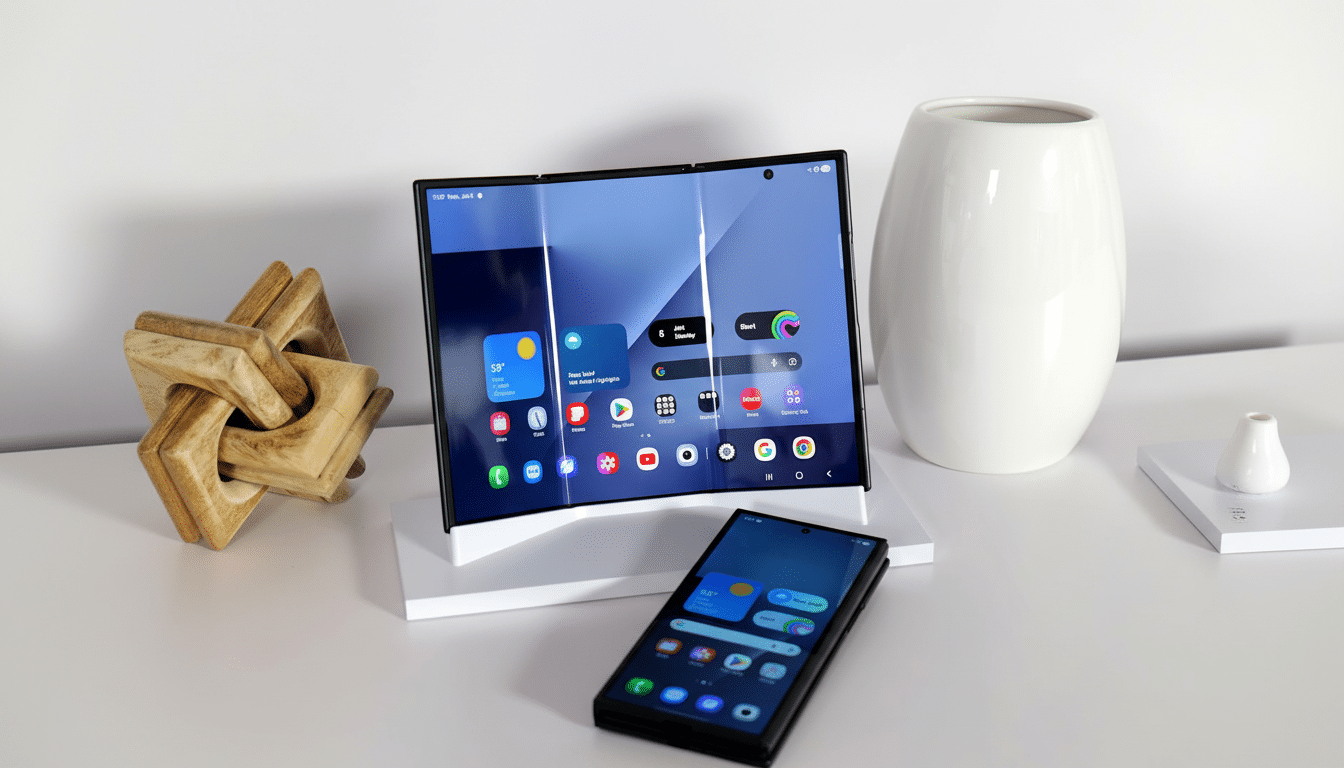
One UI, Galaxy AI features and deep Google services integration — including Gemini — are all in place. Performance is in line with Samsung’s flagship class, putting high-end silicon, plenty of RAM and wide storage options into the device so that when you split the screen between two or three things it doesn’t slow down. Add a Bluetooth keyboard and mouse to that, and you’ve actually got yourself a decent little travel workstation.
Day-to-day, app continuity is seamless: apps leap neatly between that outer display and the expansive inner canvas — and most major productivity or creativity tools now do a good job of dealing with the wider aspect ratio. The learning curve is simply one of habit shift — leaning on the big screen for things you might have been more inclined to save for a laptop.
Who it’s for and why this tri-fold form factor matters
This phone is for people who actually want a tablet in their pocket: frequent fliers, field workers reviewing CAD or floor plans, creators rough-cutting video while on the move and executives whose lives live in slide decks. If you depend on flex-mode magic to take casual selfies or watch bedside video, a regular foldable still might fit better.
Price will be premium. With the Z Fold 7 likely costing a little under $2,000, you can expect to see the TriFold come in at the high end of Samsung’s range. That said, the marginal utility is more tangible than past foldable experiments — including Samsung’s own disastrous Galaxy Fold — and the hardware feels far more finished than all those tri-fold prototypes we’ve seen from other brands over the years.
The broader context is encouraging. Global foldable shipments are already in the mid-teens of millions and growing, IDC estimates, while panel yields and hinge durability continue to improve, according to Display Supply Chain Consultants. Tri-panel flagships, should Apple succeed in launching these improved (or similarly powered) devices, could speed up enterprise and high-end consumer adoption.
Bottom line: the Galaxy Z TriFold is a compellingly public argument for why foldables even exist. It’s not trying to do everything — it abandons the flexing angle so that you get a bigger, thinner tablet experience — but in return you get a screen that can slide into your pocket and take up some real work. It’s why it is turning heads, and why competitors will be watching closely.
