


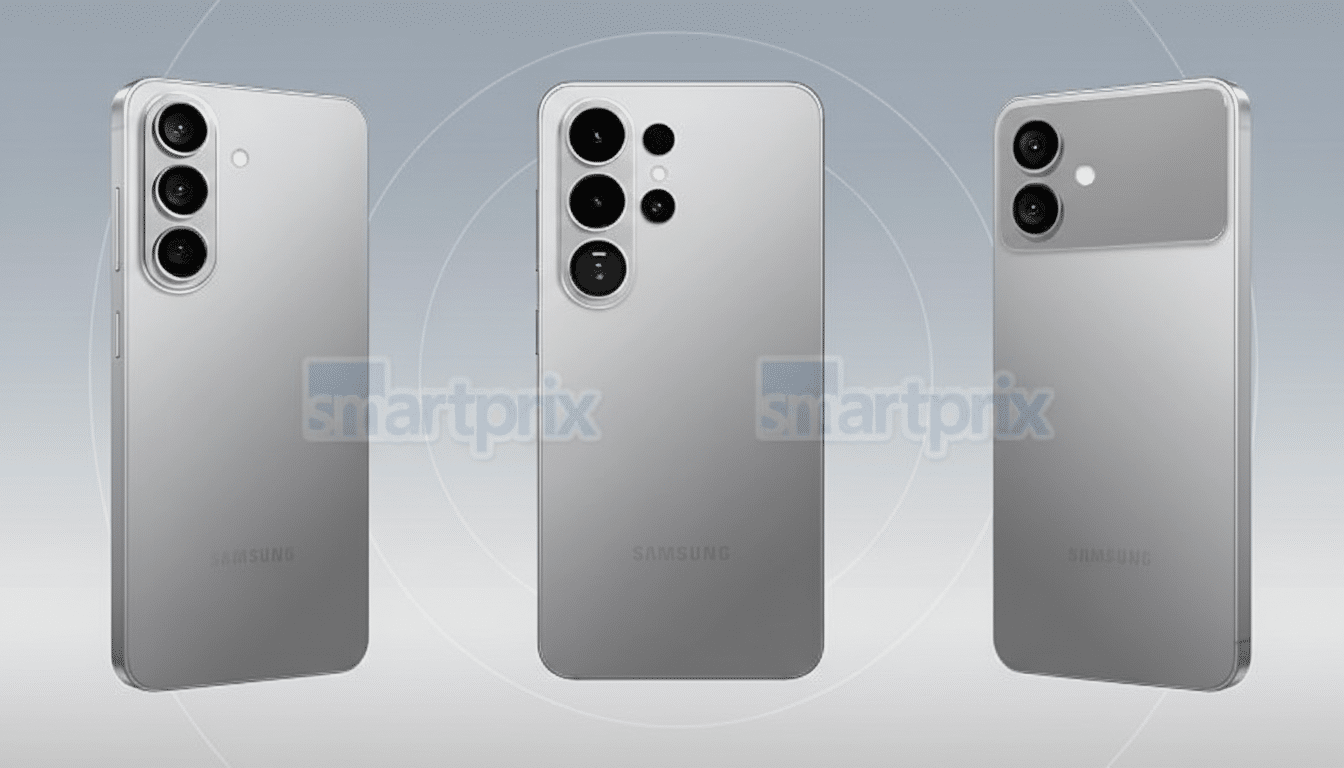
I called it months ago: Samsung is bringing back a proper camera bump on the Galaxy S26 family. The latest leaks all point the same way, and it’s the right move — recent Galaxy S phones had drifted into personality-free slabs. The trouble is, I’m increasingly convinced that this welcome design correction may be the only bold step Samsung takes this cycle.
Why the Galaxy S26 camera bump design matters
Samsung has a long habit of trialing design cues in the A series before graduating them to the S line. Recent A15, A25, A35, and A55 models quietly reintroduced a more defined camera island and even a raised “Key Island” ridge around the power and volume keys. It was a clear signal the company was testing what might scale up.
- Why the Galaxy S26 camera bump design matters
- Where the Galaxy S26 hardware upgrades reportedly stop
- Rivals are setting a harsher benchmark for Samsung
- AI cannot carry the Galaxy S26 upgrade load alone
- What Samsung still has time to fix before Galaxy S26
- Bottom line: design progress but hardware risks remain
A pronounced housing is not just aesthetics. It gives engineers headroom for sensor height, lens alignment, and better control over stabilization tolerances. It can also cut down on stray light and improve thermal behavior around the imaging stack. And critically, it returns a recognizable silhouette Samsung lost after abandoning the contour-cut design of the S21 era — a big deal in product thumbnails and carrier shelves where distinctiveness sells.
Where the Galaxy S26 hardware upgrades reportedly stop
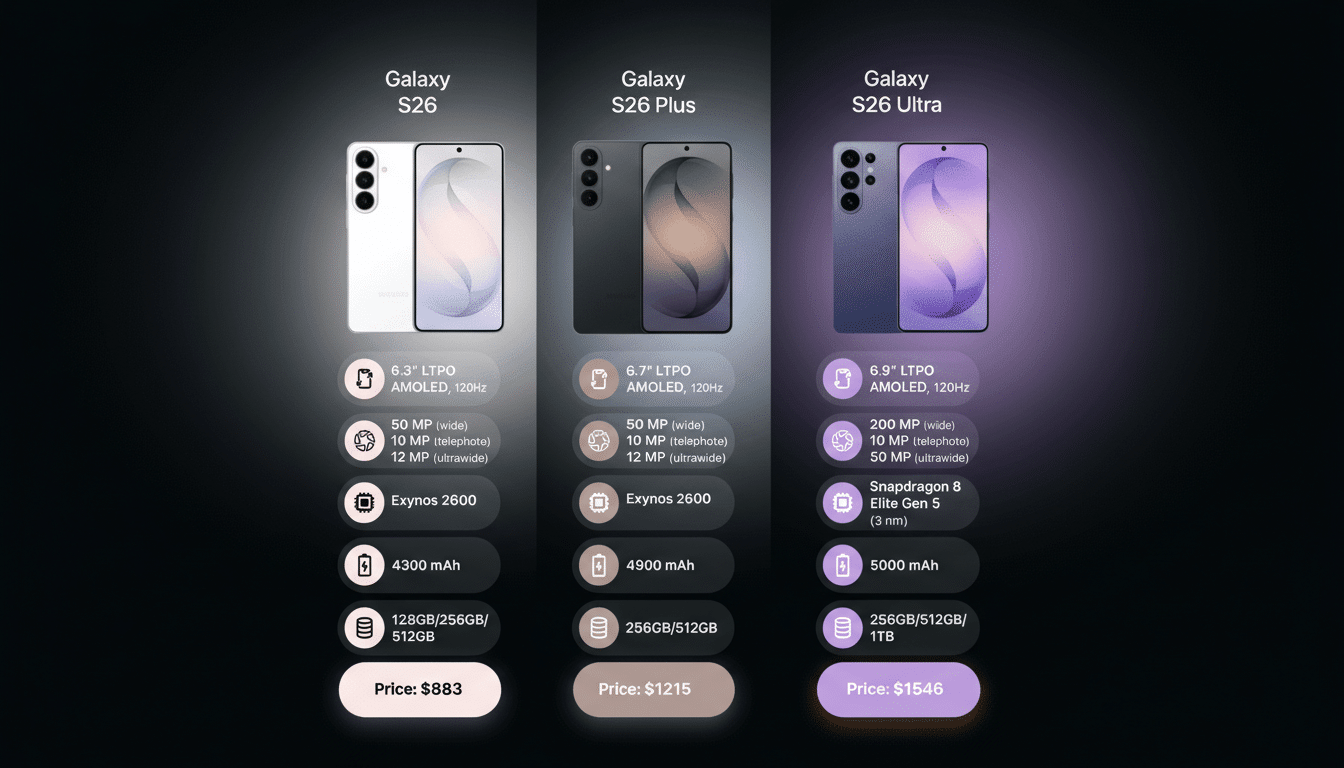
Here’s the worry: beyond that camera bump, the rumored spec sheet looks cautious. Supply-chain chatter suggests the base Galaxy S26 steps from a 4,000mAh battery to roughly 4,300mAh. Useful, yes. Transformative, no.
On the Ultra, wired charging is tipped to move from 45W to about 60W. That should trim charging times until thermal limits kick in, but it still lags the triple-digit wattage that competitors have normalized. Wireless charging appears unchanged, and there’s no credible sign Samsung will embrace Qi2 magnets this round, keeping the accessory story tied to cases rather than a native magnetic system.
The most deflating rumor is the reported carryover of main, ultrawide, and standard telephoto sensors. If true, any imaging improvement will rest almost entirely on software. That’s fine for refinement, not for leapfrogging rivals.
Rivals are setting a harsher benchmark for Samsung
Look around: Xiaomi and Oppo have pushed 1-inch-class sensors and dual-periscope systems into their Ultra-tier flagships, the sort of hardware that unlocks genuine low-light and zoom gains. OnePlus, meanwhile, has delivered 80W to 100W wired charging in several markets, regularly achieving sub-40-minute full refills — a stark contrast to Samsung’s conservative stance.
On the ecosystem side, Apple’s MagSafe popularized a magnetic attachment standard that Qi2 now formalizes through the Wireless Power Consortium, improving alignment, efficiency, and accessory convenience. If Samsung skips magnets again, it concedes another year of ecosystem coherence to its biggest rival.
Consumer research from firms like Counterpoint Research and GfK consistently ranks camera quality and battery life among the top reasons people buy premium phones. If those pillars feel incremental on the S26, a fresh silhouette won’t shift sentiment in meaningful numbers.
AI cannot carry the Galaxy S26 upgrade load alone
Yes, Galaxy AI will almost certainly headline again. On-device translation, generative photo tools, and assistant features are maturing across the industry. But last year proved something blunt: AI branding has a short shelf life without hardware muscle. Google pairs its AI pitch with changes to sensors and silicon. Chinese OEMs back computational tricks with audacious optics. Buyers notice when nighttime noise, shutter lag, and charging anxiety persist despite clever software.
What Samsung still has time to fix before Galaxy S26
If sensor modules truly carry over, Samsung can still win with smarter optics: improved glass, wider apertures where feasible, longer OIS travel, and a faster capture pipeline to reduce motion blur and shutter latency. Those shifts are visible in every photo and video.
Standardizing Qi2 magnets across the S26 range would modernize accessories overnight and deliver a clearer story to shoppers. Nudging the base model closer to a 4,600–4,800mAh battery and lifting wireless charging above the status quo would address daily pain points more than a new paint job ever could.
Even small UX moves matter: a quicker camera launch, tighter HDR tuning, a cleaner Pro mode, and an Auto Night toggle with predictable behavior can make the S26 feel instantly better where users live most — the camera and the lock screen.
Bottom line: design progress but hardware risks remain
I’m glad the design instinct was right; the camera bump’s return gives the Galaxy S26 a face again. But if most of the hardware reads like a rerun, this refresh risks pleasing the eye while leaving core frustrations intact.
In a year when competitors are shipping real step-changes in imaging and charging, Samsung needs more than a silhouette to stay compelling at the top end. The right design is the start, not the story.
