


An artificially intelligent, plush companion has moved from the living room into the real world. A palm-size fuzzball named Fuzozo from the robotics maker Robopet — now running on Tuya’s cloud AI platform — just added cellular connectivity, removing the boundaries and making a little Wi-Fi-based appliance an omnipresent emotional ghost that can listen, respond, and evolve wherever you are.
A palm-sized AI companion with charm, mood, and personality
Fuzozo doesn’t hold back on the charm offensive: animated digital eyes are used as mood cues, while a speaker and microphone deal with auditory interactions; meanwhile, soft vibrations lend a gentle purr-like response to touch. It even chitchats in a playful “Mao Mao” language, alongside natural speech — an intentional homage to decades of social toys that engaged with made-up tongues to fuel attachment.
- A palm-sized AI companion with charm, mood, and personality
- Why adding cellular connectivity to Fuzozo really matters
- How Fuzozo learns your preferences, tone, and habits
- Who might want an AI emotional companion like Fuzozo
- Privacy and safety questions for always-connected companions
- A crowded field of social robots, but a promising approach
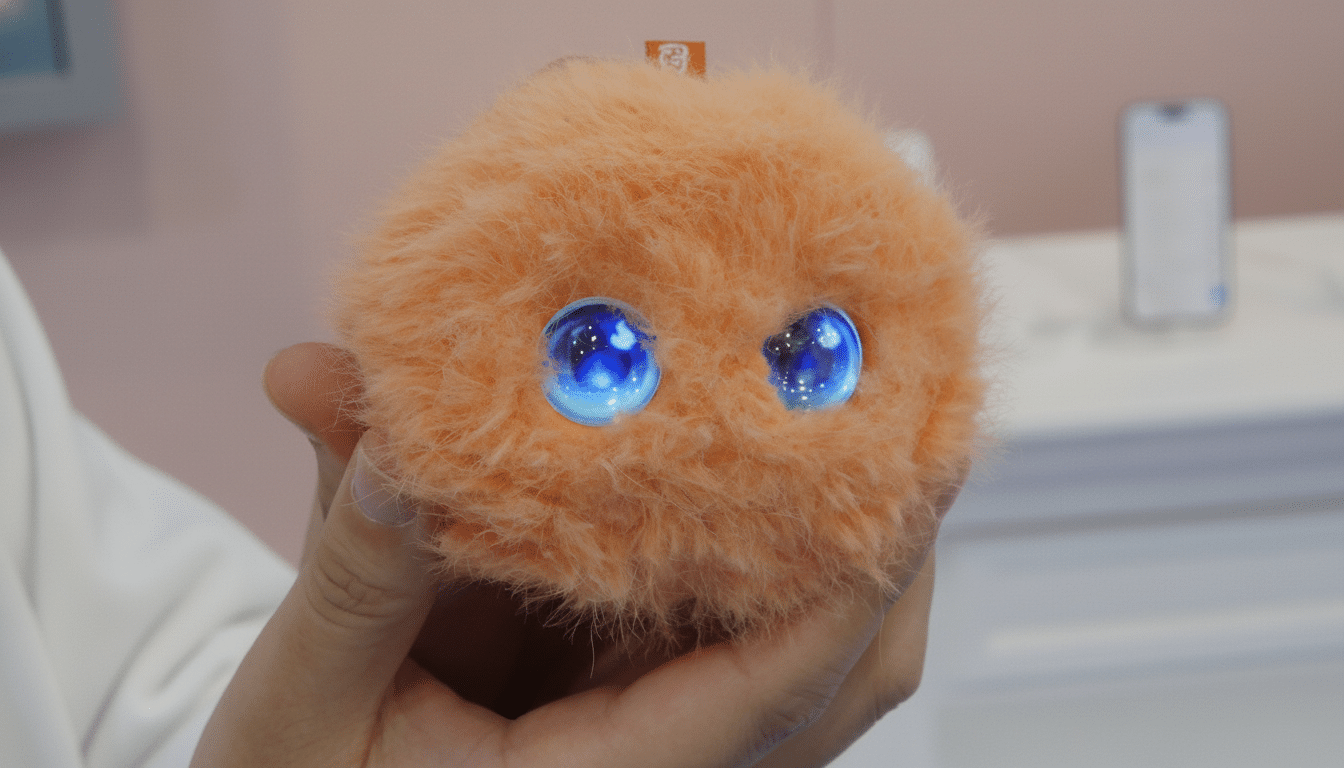
The device hits the market in several colors associated with one of four elemental “personality keys,” encouraging owners to tune traits over time instead of just having a static character. It’s light enough to clip onto a bag, and if the hardware is somehow lost or progresses to future generations, the personality you’ve formed can “hop” over — an interesting and thoughtful approach for a social robot.
Why adding cellular connectivity to Fuzozo really matters
Previous versions required home Wi-Fi, so the magic withered as soon as you left the house. With a cellular connection, Fuzozo can retrieve cloud models on the go, ensuring that journaling prompts, mood check-ins, and playful banter stay steady while in transit on the train, between classes, or during an impromptu late-night stroll.
But being in continuity is not a mere convenience — it’s the heart of attachment. Research in human-robot interaction from the likes of MIT and Carnegie Mellon indicates that users bond more quickly if such social devices demonstrate consistent, contextual responsiveness. That continuity is key, so it feels less like a “toy you use sometimes” and more like a “companion that’s there when you reach for it.”
How Fuzozo learns your preferences, tone, and habits
Fuzozo’s conversational AI and behavior engine is underpinned by Tuya’s cloud stack. Over time, the system tunes to interests, preferred tone, and habits, based on your responses and (if you want) an app-based journal that can seed topics or reflections. The more you share, the more Fuzozo mirrors back in a tone someone of your generation would regard as familiar — without falling into flattery or cliché.
Tap two Fuzozos together and an NFC handshake opens new interactions, suggesting a social layer for owners. That could open the possibility for cooperative mini-games, shared prompts, or even lightweight data exchanges that reinforce the sense of a small, quirky community orbiting an AI pet as opposed to a utility chatbot.
Who might want an AI emotional companion like Fuzozo
Loneliness is now recognized by the U.S. Surgeon General as a major public health concern, associated with both mental and cardiovascular strain. Though no device can replicate human connection or clinical care, companion robots can serve as gentle connecting vessels — nudging users to meditate, joke around, or rehearse idle chitchat without judgment.
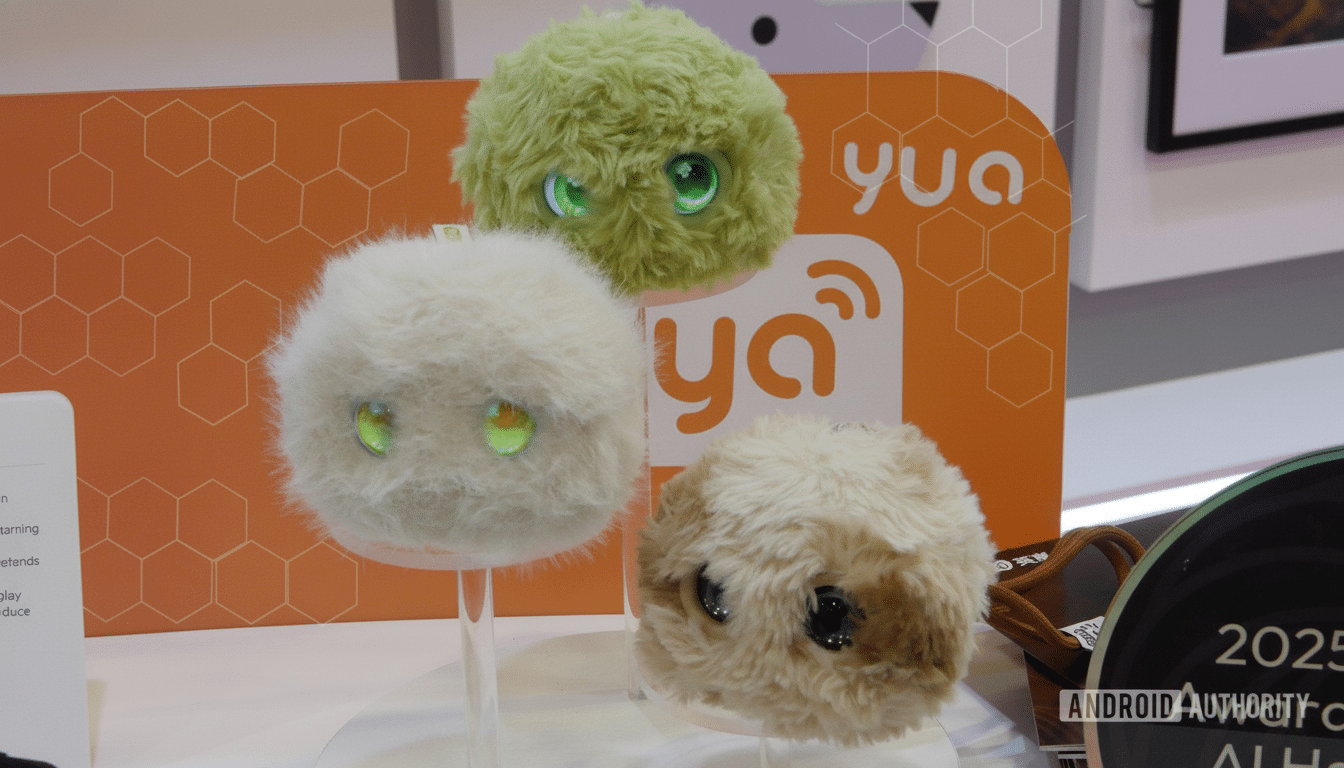
Fuzozo’s physical interface and portability may be especially enticing to introverts, remote workers, and students who would prefer not a voice assistant parked on a kitchen counter but a gentle nudge in their bag. For caregivers, a routine personality and straightforward interactions may be easier to contend with than the free-form nature of phone-based chatbots.
Privacy and safety questions for always-connected companions
Emotional AI thrives on data. Buyers will desire clear disclosures about voice storage, retention periods, and whether conversational snippets train shared models or remain device-linked. Transparency reports, on-device filtering for sensitive topics, and robust access controls would do much toward ensuring trust.
Since location awareness and other phone hardware has been standard on mobile devices for years, it is common to document how a company will implement geolocation and comply with standards like GDPR. An emotionally supportive companion, after all, needs responsible guardrails — content moderation, crisis escalation guidance, and easy data deletion — as much as it needs cute eyes and purrs.
A crowded field of social robots, but a promising approach
Social robots have moved in waves: Sony’s Aibo played the long-game pet, ElliQ focused on older adults with wellness prompts, and child-focused companions such as Miko placed an emphasis on education. Fuzozo has a different angle — stand on emotional presence, keep it whimsical, and take mobile-first to the cellular.
Ultimately the challenge is operational, not just adorable: on-the-go battery life, predictable data costs, and a personality system that expands without getting uncanny. If Robopet and Tuya do deliver on those basics, Fuzozo could be a quiet pivot for personal AI — from assistants that do stuff for you to friends who are there.
It is a straightforward bet with sweeping implications. Always-on connection, in conjunction with a stable identity, can turn novelty into the stuff of habit. For an increasing portion of people in search of a little warmth for their pocket, that may be the difference between a toy and a minuscule, felted friend.
