


HOW IT HANDLED THAT: If your day is a mix of Chrome and Safari, or Firefox peppered with the occasional privacy-oriented browser, you know the friction of always needing to make that declaration. Browser Picker, a free Mac app, turns that headache into a one-click decision by allowing you to choose which browser opens the next link — without navigating system settings or removing yourself from your train of thought.
Ichabod! Why Multi-Browser Workflows Keep Growing
Web work is fragmented. Per StatCounter, Chrome continues to rule with about 65% of the world’s share and Safari is close to 20% and Firefox has its die-hard fans. That division mirrors what’s real on laptops: people cycle browsers for discrete tasks — work SSO is in one, banking in another and researching, a third. Privacy advocates, including those affiliated with the Electronic Frontier Foundation, have long advised “compartmentalization,” or isolating activities in one browser from those in another to constrain tracking and cross-site cookies.
- Ichabod! Why Multi-Browser Workflows Keep Growing
- Browser Picker for Mac: a simple menu bar link chooser
- How it fits into real work across profiles and teams
- Free vs. Pro: what you get and who should upgrade
- How it stacks up against alternatives on macOS
- Who will benefit most from this flexible link picker
If you’re a developer or an IT team, perhaps even more so. Three major engines—Blink/Chromium, WebKit, and Gecko—are what today’s modern web apps run on, so QA and support need fast repeatable ways to test links across environments. That’s particularly useful when using deep links from Slack, Jira, or email clients which will always open your system default.
Browser Picker for Mac: a simple menu bar link chooser
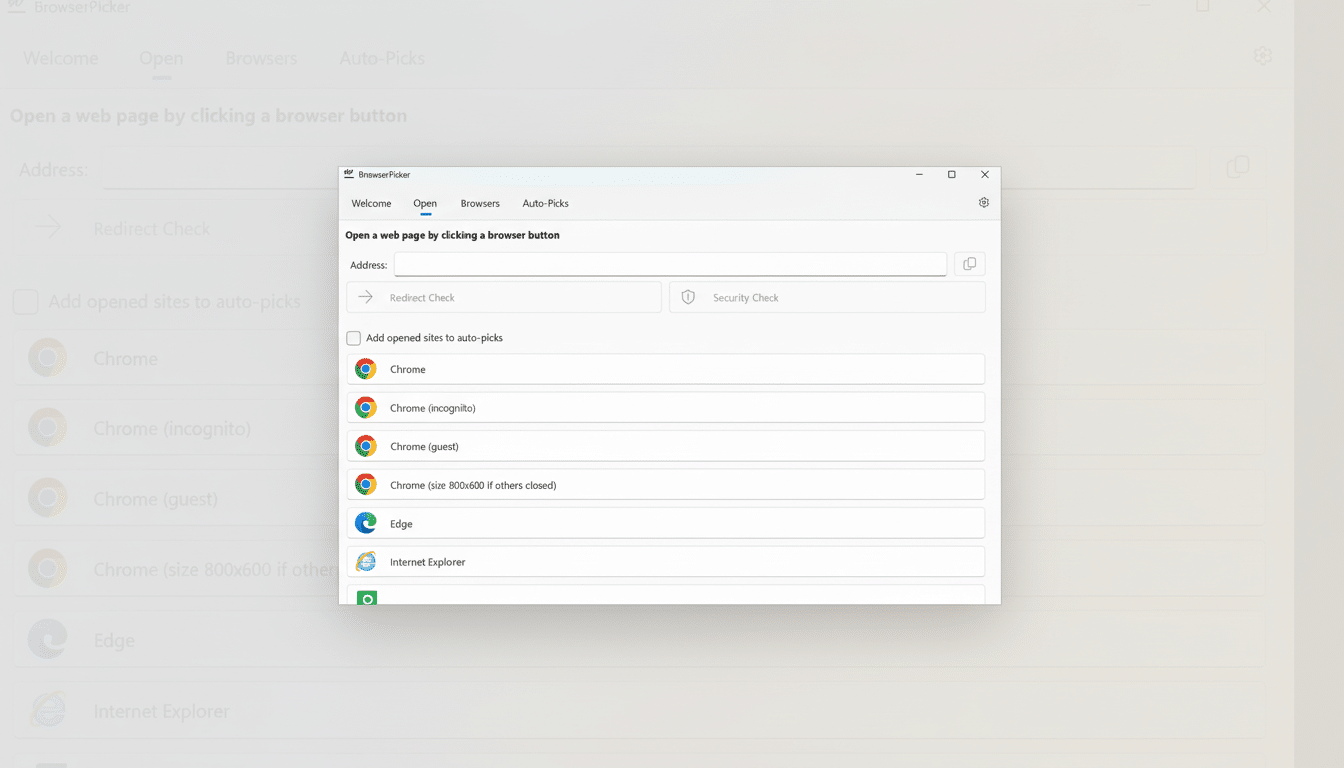
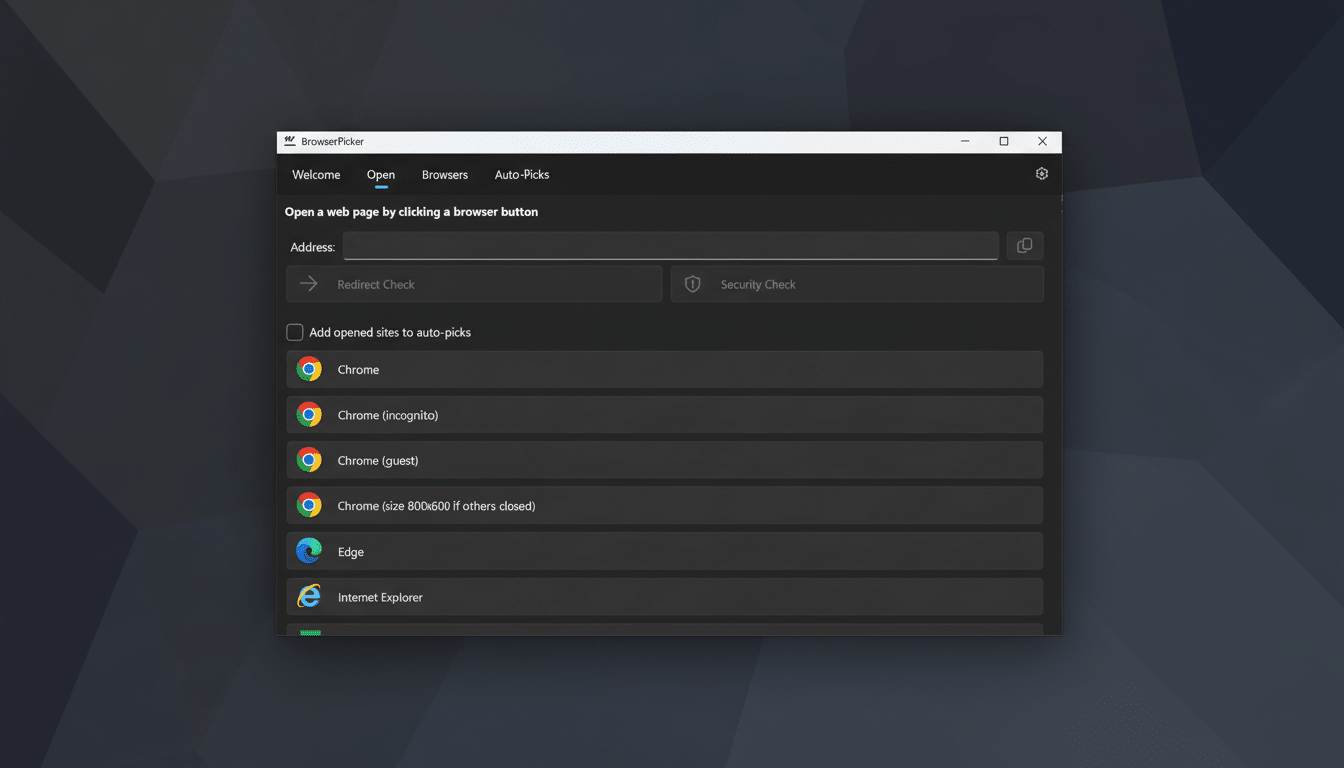
Browser Picker is a small menu bar utility in the Mac App Store that allows you to decide just which browser should open each new link on the fly. So, rather than permanently changing your default (the only thing you can do as of last week) in System Preferences, you just pop open the menu and choose a browser to be “temporary” (quotes because it’ll stay that way until you change it again), which is great for those times when, geez, I have to let this Zoom join link into my corporate Chrome profile but everything else needs to live in Safari.
The app also has a clipboard workflow: you can just copy a URL, open the menu and choose “Open URL from Pasteboard.” The browser you select fires off that address right away. If you’re walking into a fresh new setup, Browser Picker will kick-start installations of other browsers from its menu to keep your toolkit up to date.
How it fits into real work across profiles and teams
Consider a common pattern. You separate out personal email and shopping in one browser to keep cookies apart. You keep a hardened browser for banking. Your organization needs a particular browser profile for SSO. Over the course of the day, it brings links from Messages, Slack and Calendar. With Browser Picker, you have the option to decide the exact moment when Safari passes a web page handoff to Firefox — no more back-and-forth with changing settings and copying links.
This immediacy matters. Menu bar accessibility allows you to choose the proper target without losing focus. For power users, it’s a nice middle ground between macOS’s one-size-fits-all default and heavier rule-based tools. For everyone else, it’s simply more convenient.
Free vs. Pro: what you get and who should upgrade
Browser Picker is free to download and use. For a one-off Pro upgrade ($5.99) you get to make as many switches as you like, accelerate the installation of in-app browsers and open links without limits. If you’re just toeing these waters, the free version is a no-nonsense way to determine if this workflow saves time. If you’re a menu bar person, the Pro tier eliminates caps heavy users will probably reach quickly.
How it stacks up against alternatives on macOS
Mac power users might be familiar with tools like Choosy, Finicky and Browserosaurus that add rules for how to route links based on URL patterns, apps or profiles. Those are great for intricate automation. Browser Picker takes a different approach: It focuses on four things — speed and manual control in selecting the next click. If you’d rather use your own judgment instead of propagating routing rules, this Picker-based approach feels deliciously simple.
And most important of all, it’s distributed via the Mac App Store, subject to Apple’s review and notarization pipeline. For many organizations, that’s better than sideloading tools — particularly in managed environments where IT policies lock down installs.
Who will benefit most from this flexible link picker
Developers, and QA especially, who are continuously verifying behaviors across WebKit, Gecko, and Chromium will love the quick toggling. Security-minded users get effortless compartmentalization. Information workers with client accounts or multiple Google profiles can avoid SSO-related mix-ups and risk cookie integrity policies. And for anyone simply wishing for fewer copy-paste acrobatics, there’s a more peaceful workflow on day one.
The web spreads out over browsers and profiles, and today’s habits are too sophisticated for the default browser. Browser Picker meets you where you are — working across ecosystems — and sands away the small but insistent frictions that accumulate every time you follow a link.
