


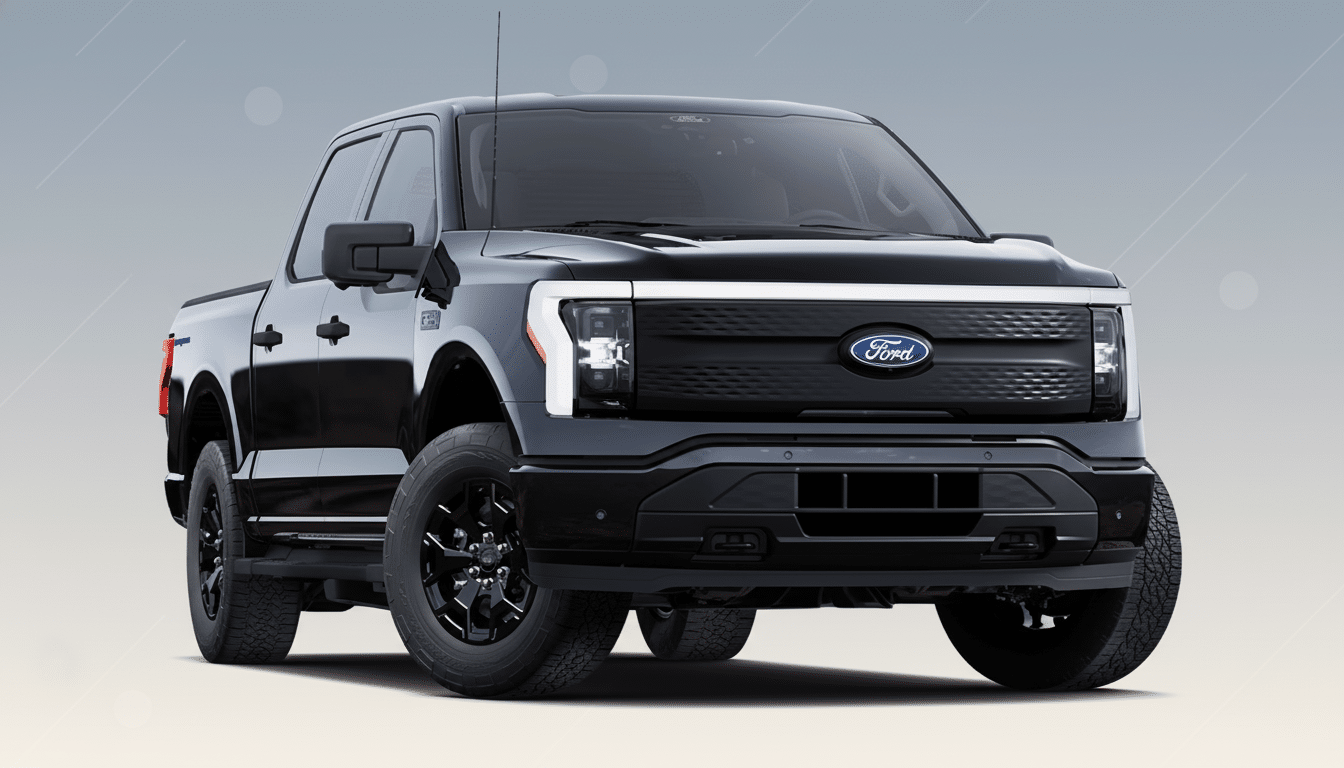
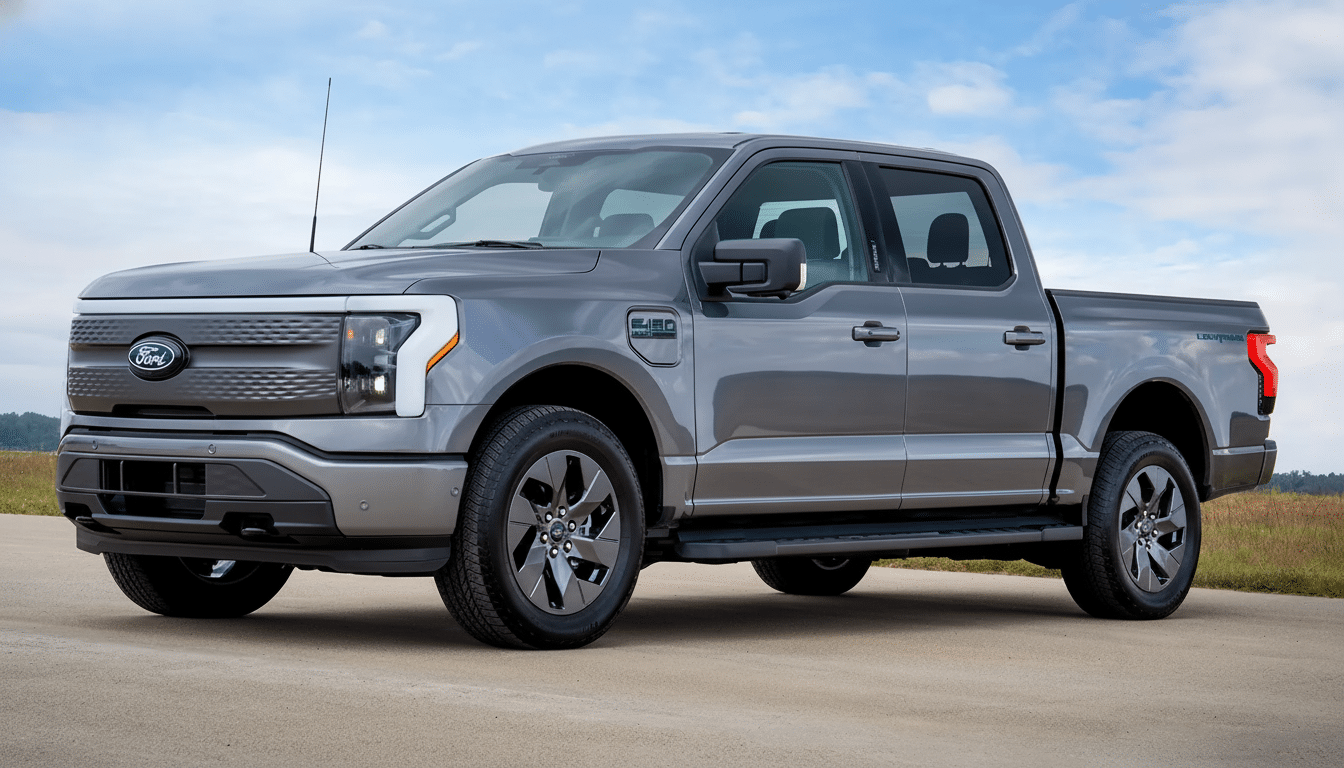
Ford is discontinuing its all-electric version of the F-150 Lightning and instead offering an extended-range model that includes a gasoline generator to recharge the battery on the go. The company says the configuration aims to achieve more than 700 miles of total driving range, a departure to “extended-range electric vehicles” as Ford reviews demand, cost, and regulation for huge battery-only trucks.
Pricing and on-sale timing were not shared. The broader EV strategy reset will incur a $19.5 billion charge, which will affect several vehicle and battery sites at Ford, the company said. The automaker also reiterated its plans for a midsize all-electric pickup on a new platform it is developing.
- Why Ford Is Shifting Gears on Electric Pickup Plans
- What the F-150 Lightning Range-Extender Setup Is Like
- Consequences for towing and work with the F-150’s generator
- The Broader Strategy Reset and Ford’s Capital Shift
- Competitive and global context for extended-range EVs
- What to watch next for Ford’s generator-equipped F-150
Why Ford Is Shifting Gears on Electric Pickup Plans
Big-battery trucks have been costly to develop and difficult to scale up profitably. The F-150 Lightning never approached the widely promoted $40,000 starting price for most retail customers, and U.S. sales averaged about 7,000 units a quarter over the past two years, climbing to nearly 11,000 in late 2024. With industrywide sustained price reductions due to Tesla pressure on margins and with new layers of incentive rules and emissions targets, there was also new planning risk for overhang on legacy programs.
On the consumer side, public charging continues to be a pain for many. According to data from the market research firm J.D. Power, about 1 in 5 attempts to charge a vehicle fail because of equipment or payment problems — a level of reliability that stands as an impediment to broader deployment of large electric vehicles with long ranges. For a vehicle that must tow, haul, and cover big miles, Ford is betting it can remove significant friction without abandoning electric propulsion.
What the F-150 Lightning Range-Extender Setup Is Like
In an extended-range electric vehicle, a gasoline engine powers a generator that charges the battery pack and motor, but it does not drive the wheels directly. Think of it as a battery-electric truck with its own onboard charger for times when outlets are few or towing loads are heavy. The approach evokes systems in the Chevrolet Volt and, more recently, the Ram 1500 Ramcharger, which touts a range of up to 690 miles.
The technical benefit, though, is flexibility: The truck can operate as a pure EV for everyday use and lean on the generator to keep its battery topped off during long hauls, steep inclines, or job sites where pulling equipment drains the packs. The trade-offs are increased weight, mechanical complexity, and tailpipe emissions when the generator is running. The extent of regulatory treatment will depend on specification details such as electric-only range and full-cycle efficiency.
Consequences for towing and work with the F-150’s generator
Independent tests have found that towing with today’s electric pickups can reduce highway range by up to 50 percent. An onboard generator helps offset the weight of that penalty, and with it, long-haul capability without stops for an extended charge. It also cements one of Lightning’s signature use cases: power on the go. Married to a large battery pack and gasoline generator, that could yield best-in-class worksite power and perhaps improved vehicle-to-home backup capabilities — though Ford hasn’t detailed those features yet.
The Broader Strategy Reset and Ford’s Capital Shift
Ford indicated a shift of capital from larger, unprofitable EV nameplates and into hybrids, extended-range EVs, and battery-electric vehicles that cause less sticker shock to consumers. The company also posted record U.S. hybrid sales in 2024, driven by the Maverick Hybrid and F-150 PowerBoost, suggesting that buyers are reacting to electrification with a safety net.
The midsize all-electric pickup intended for 2027 will roll on an efficiency-first platform from a skunkworks operation headed by Doug Field and Alan Clarke. That program is designed to slash weight, complexity, and cost — where battery prices provide a hand up but not a cure-all. BloombergNEF puts the average pack price at about $115/kWh in 2024, but for the huge batteries that go into full-size trucks, bills of materials are still stretched.
Competitive and global context for extended-range EVs
Ford is not alone in recalibrating. General Motors has pulled forward some BEV launch timing and is bringing back plug-in hybrids in North America. Stellantis’ Ramcharger opts for a generator-augmented architecture as its first electrified full-size pickup. In China, Li Auto has scaled the concept with hundreds of thousands of its extended-range SUVs — a bridge to full BEV ownership between ICE and BEV.
Policy and incentives continue to fluctuate. Content regulations — battery-specific under the Inflation Reduction Act — and emissions-based state-level programs also remain influential in terms of strategy and supply chains. Ford’s restructuring charge illustrates how those forces ripple through factory footprints and contracts, including plans for its BlueOval battery ventures.
What to watch next for Ford’s generator-equipped F-150
Key things to watch include:
- Electric-only range for the Lightning extended-range
- Generator size and fuel consumption
- DC fast-charging speed
- Towing ratings under load
- Any payload loss with added tow-max capability
Americans shopping for electric vehicles, be they battery-powered or plug-in hybrid, could well find that their eligibility for federal and state-level incentives rides on the ability to control the vehicle’s destiny in terms of how far it can go before recharging and where its electricity is coming from. Most of all, pricing is going to make or break whether a generator-equipped Lightning can make that jump from early adopters and contractors to mainstream truck buyers.
If Ford can strike it just right — as the ideal balance between all-EV driving feel and low daily running costs, with road-trip and towing assurance when needed — then the second act of this F-150 Lightning could help further redefine what a work-capable electric pickup looks like in this market cycle.
