


A conversational AI assistant will be available across Ford’s product range, precluding the need for drivers to hunt down and peck at menus or cluttered touchscreens while on the move, previewing, as well, a next-generation BlueCruise intended to bring hands-free today, eyes-off later functionality. The rollout introduces part of that system in the company’s smartphone app now, and it will progress to vehicles with a newly designed and lower-cost BlueCruise stack that should be found in more places and offer a higher level of automation.
What Ford’s AI Assistant Will Do for Drivers
The digital assistant will be hosted on Google Cloud and take advantage of off-the-shelf large language models, according to Ford, but the differentiator will be deep access to vehicle-specific data. In practical terms, that makes it possible to answer questions you might only think of in relation to ownership: whether a pickup’s bed will accommodate two or three bags of mulch, what the oil life is, what condition the tires are in, and how the vehicle should be set up for towing.
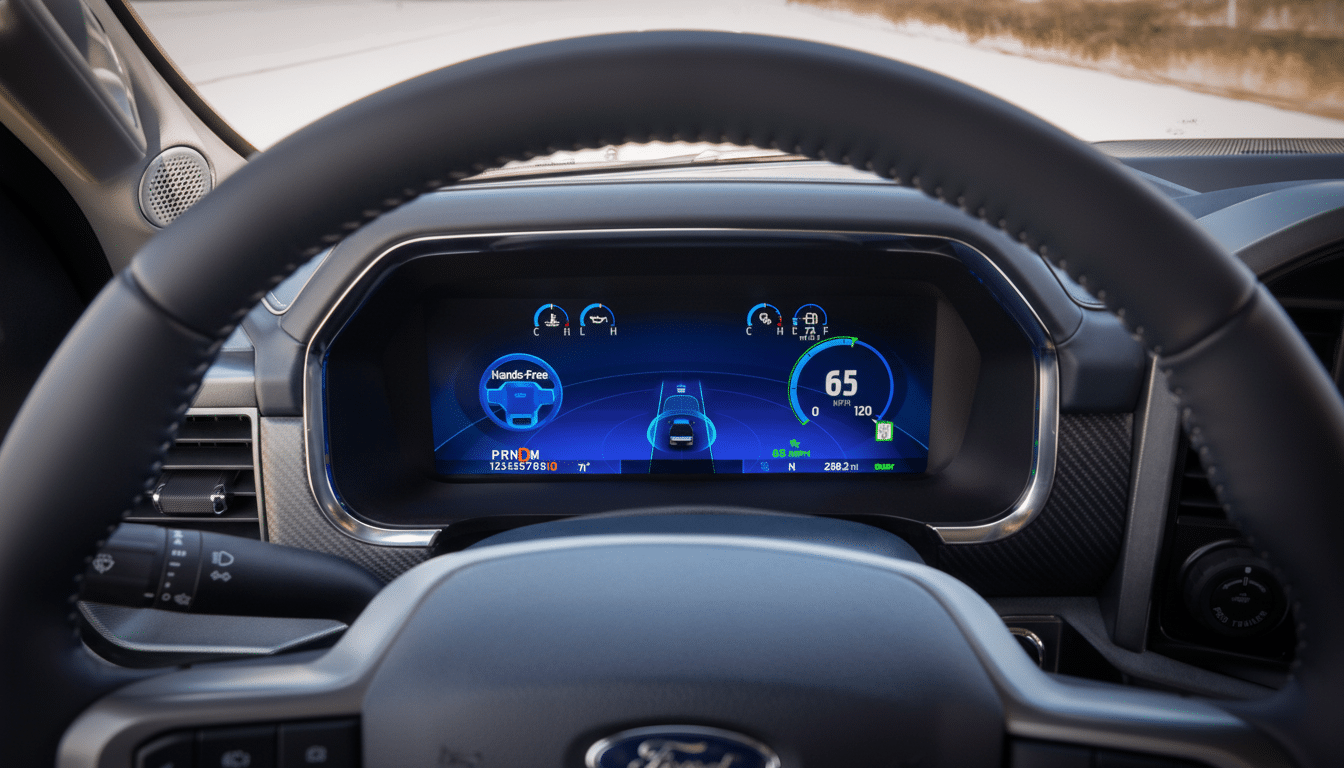
Ford will debut the assistant in the redesigned Ford app before creating a native in-vehicle experience for specific models. Though Ford didn’t go into details about the full in-cabin interface, the direction is clear: voice-forward, context-aware assistance that can be leveraged for messaging, navigation, and vehicle commands — territory where rivals like Rivian and Tesla have already waded into with their own assistants. The benefits of cloud-hosted LLMs are rapid iteration thanks to regular updates, but Ford will still run into the traditional issues of latency, privacy, and being able to degrade gracefully when an internet connection isn’t behaving.
BlueCruise Roadmap and a Major Cost Breakthrough
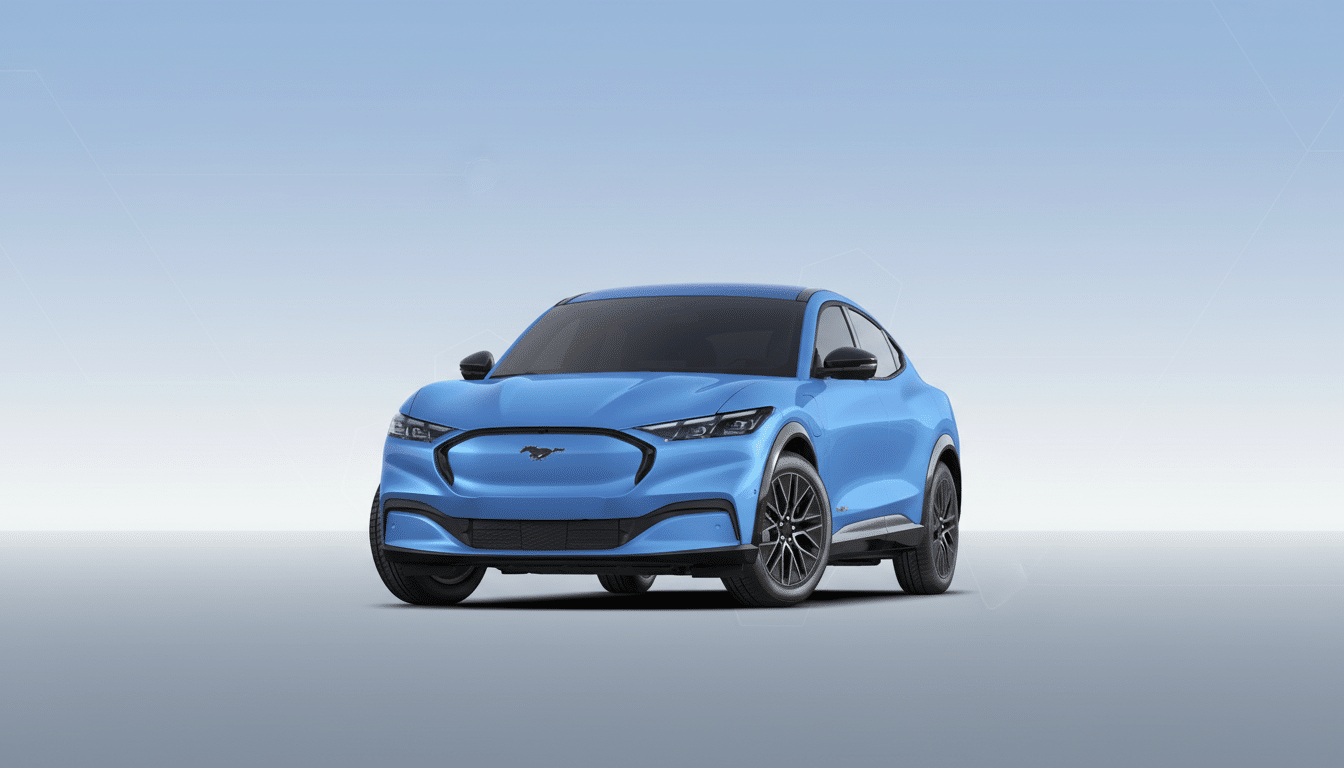
According to Ford, its next-gen BlueCruise is 30% cheaper to produce than the current setup — a not-insignificant cost drop that either opens up standard fitment of the gear or reduces the price of a subscription for hands-free cruise control. The first application will debut on a new “Universal Electric Vehicle” platform, starting in a midsize pickup, soon proving that Ford will take advanced driver-assistance features beyond luxury trims.
It’s rising, starting with capability; cost to follow. Ford has bet on “point-to-point autonomy,” the industry’s shorthand for supervised driving that can route across different types of roads with limited manual intervention. It’s the same goal Tesla is trying to accomplish with Full Self-Driving (Supervised) and that Rivian has teased for its future system. Key to note is that these are still driver-supervised — with eyes on the road and hands at the ready in case they need to take over — until regulations and validation data support a higher level of automation.
Eyes-Off Ambition and the Reality of Regulation
Ford’s path includes a so-called “eyes-off” mode that would take BlueCruise beyond today’s partial automation toward SAE Level 3 under certain conditions. Eyes-off is not without precedent — Mercedes-Benz’s Drive Pilot gets the okay in some scenarios in certain U.S. states — but it requires redundancy, mapping that’s high-fidelity (strong and subtle), and almost Stalinistically strict operational design domains. So you could expect Ford to complement this and other examples with strong driver monitoring, fail-operational braking and steering, and conservative geofencing as coverage expands.
Regulators and safety organizations will be crucial in this. The NHTSA remains concerned about advanced driver-assistance systems in the wake of several high-profile crashes throughout the sector, while IIHS has launched ratings to evaluate how well partial automation keeps drivers engaged. Any add-to-the-cart eyes-off feature will have to, transparently and over time, clear a higher bar — performance data and messaging that doesn’t invite us to place too much trust in them (another perennial false friend here).
Why It Matters for Drivers and for Ford’s Strategy
For drivers, the AI assistant offers less menu-diving and more useful guidance: smarter trip planning, maintenance reminders that take into account specifics like weather in your area or terrain type, and towing or payload advice driven by your exact truck configuration. Closely integrated with the Ford app, it can connect at-home planning with in-car execution, such as pre-conditioning an EV (that is, heating or cooling the vehicle), sharing routes, and modifying preferences on the go.
For Ford, the 30% cost cut is built on strategy. Advanced driver assistance has traditionally been buried behind option packages and monthly fees; lower build costs just make it that much easier to slap the hardware in everything, then monetize capability through software tiers and over-the-air updates. That model only flies if the tech is reliable and useful every day, which is why meaningful upgrades — smoother lane changes, better cut-in handling, improved performance in rain and at night — matter as much as headline features.
What to Watch Next as Ford Rolls Out These Features
Among the key milestones: The AI assistant makes its debut in the Ford app, its initial forays into in-vehicle integrations planned and bookended by the introduction of next-gen BlueCruise on a new EV platform. Elements such as onboard compute, sensor suite, and driver monitoring strategy are still unspecified; look for independent assessments to emerge from bodies like IIHS and Consumer Reports once vehicles start arriving in the hands of customers.
And also, keep an eye out for how Ford takes on data security and privacy in serving up a cloud-hosted assistant and whether lower costs of systems mean much broader adoption.
And if the company meets that eyes-off goal along the way, it will also be in a small club showing Level 3-style capability at scale — something that could reset expectations for mainstream safety and convenience, as well as the value of software inside the cabin.
