


It was the year of AI everywhere, and yet 2026 is poised to be the year that AI goes somewhere real.
Foldable phones are poised to jump from niche technolust device to something more mainstream, and a slew of A.I.-powered robot toys, both humanoid and for the home, will prove whether people can handle machines that see, speak and do.
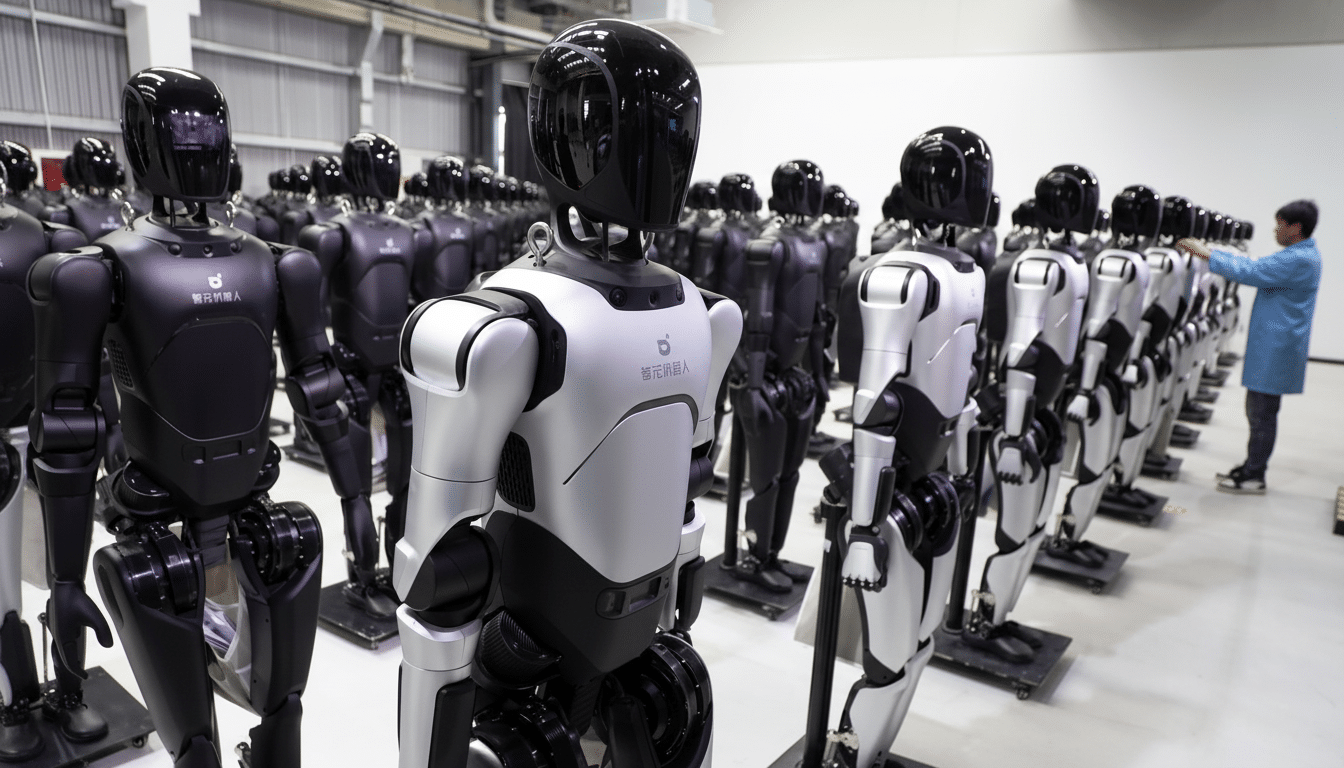
The common thread is embodiment. Screens that fold, machines that move will all result in software advances — provided we get real use out of them; my vote on these products-that-might-summon-proper-functionality is: you can hold them or they help. Here’s what to watch as the next round begins.
Foldables Go Mainstream Across Phones by 2026
“The technology for foldables has matured past the flimsy, primitive first generation,” said Mr. Tarun Pathak, a wireless and smartphone analyst at Counterpoint. Hinge durability has jumped into the tens of thousands of folds, ultra-thin glass is more durable, and waterproofing is no longer rare. Panel prices have been descending gradually, and that’s a lynchpin on the way to more mainstream pricing, according to Display Supply Chain Consultants—along with forecasts from IDC predicting double-digit growth for foldable shipments through mid-decade.
What tilts the curve in 2026 is the arthritic reality. Look for thinner book-style folds, wider outer screens, and flip-type designs with full app-ready cover displays. Samsung and Motorola will bring the weight down below 230 grams on premium models, while Chinese makers keep up aggressive specs-per-dollar. Industry scuttlebutt indicates Apple’s first foldable may at long last arrive, and even a tentative debut would solidify the form factor overnight.
The real test is battery life and app ergonomics. Watch for manufacturers talking up more efficient LTPO panels, adaptive refresh down to 1 Hz on always-on outer screens, and tablet-grade multitasking that treats the inside screen as a productivity canvas instead of just making your phone bigger.
Humanoids and Home Robots Enter Real-World Roles
And videos of robots folding laundry and walking factory floors won’t be mere demos by 2026. Agility Robotics is trialing bipeds in logistics, Tesla keeps iterating its Optimus platform, and 1X and Figure have demonstrated general-purpose humanoids that can manipulate objects with humanlike agility. The fact that we are seeing a steep jump in nine-figure rounds for humanoid and general-purpose robotics suggests enormous commercialization pressure here.
You won’t get a robot butler in every home. The early models will land in warehouses, retail backrooms, and elder-care pilots for whom encrypted, repetitive work justifies the cost. Speaking of that: Safety certification is important. You want references to ISO 13482 (personal care robots), collaborative operation, and manufacturer “restricted autonomy” modes that limit speed and force around people.
The x-factor is human interaction. Robots with multimodal AI — vision, speech, and action models — can follow naturally spoken language like “pick up the red mug by the sink” and ask clarifying questions. That takes robots from preset routines to useful co-workers.
Smart Glasses Get a Second Push With Privacy Focus
Lightweight smart glasses are here again, and they’re more real and less vapory than ever before. Meta’s camera-equipped glasses demonstrated that people will wear assistant-powered eyewear if it looks like eyewear, and Xreal and others showed fresh micro-OLED displays can make the weight reasonable. We can look forward to 2026 models across a variety of brands with on-device AI for translation, captions, and hands-free capture.
Adoption still depends in part on privacy and social norms. Post-Glass opprobations, sellers are calling out visible recording indicators, camera-off hardware switches, and on-device processing. Policymakers and advocates, including the EFF, are going to be watching this like a hawk, and companies that bake privacy into their product in a way that is both apparent and understandable at the UI layer are going to have an advantage.
AI Gets Embodied, Not Almighty, in Everyday Devices
Artificial general intelligence will remain a theoretical topic of conversation in 2026. The Stanford HAI AI Index — which keeps track of such things — has been cataloging increasing training costs and computer needs just as benchmark gains have slowed, and high-profile critics like Gary Marcus argue that scaling text models still won’t be enough to get us to humanlike reasoning. The alternative is what’s known as “embodied AI,” a process in which lighter models relate perception to physical action.
In practice, this means robots and other devices that rely on on-device models to perform safety-critical reflexes, which are supported by larger models in the cloud used for higher-level planning. It’s not as sci-fi; it’s more systems engineering — and it’s how useful autonomy will come.
Supply Chain and Price Signals Shaping Consumer Tech
AI servers are strangling the same parts consumer tech does. Tight supplies and high prices for DRAM and other memory chips, alongside cyberattack-induced stress on domestic supply chains in recent years, tend to ripple into laptop and phone bills. If you spot premium devices rising in price by, say, 10–20% when specced up with hefty amounts of RAM or storage, that’s why.
The silver lining for foldables is that panel yields are on the mend, which does help hedge some costs. But anticipate trade-offs: larger amounts of RAM in AI-forward models could be balanced by slower charging rates, no accessories in the box, or a bigger upsell for higher tiers.
How to Make Sense of the Hype Around New Devices
- For foldables, demand to see specific durability ratings, hinge cycle guarantees, and repair pricing.
- For robots, search for safety certificates, remote intervention policies, and straightforward service contracts.
- For smart glasses, consider what physical privacy controls are available and whether core functions can work offline.
- And generally, go for products that store most of the data on the device by default and let you opt in to move that data to the cloud.
If 2025 was AI in your apps, 2026 is AI in your hands and home. Foldables will no longer seem like a flex and instead feel like the default, and robots won’t be circulating social media curiosities so much as punching a clock. That’s when the technology ceases to be a demo — and becomes infrastructure.
