


You don’t need new gear to make a soundbar sing. With a few no-cost tweaks that align with acoustic best practices from organizations like the Audio Engineering Society and HDMI Forum, you can unlock cleaner dialogue, fuller bass, and more convincing surround from the hardware you already own.
Reposition The Bar For Clean Line Of Sound
Placement is the biggest free upgrade. Center the soundbar directly under the screen, flush with the front edge of the cabinet so the top plate isn’t firing into furniture. Aim for ear height when seated, or tilt the bar up a few degrees if it sits low.
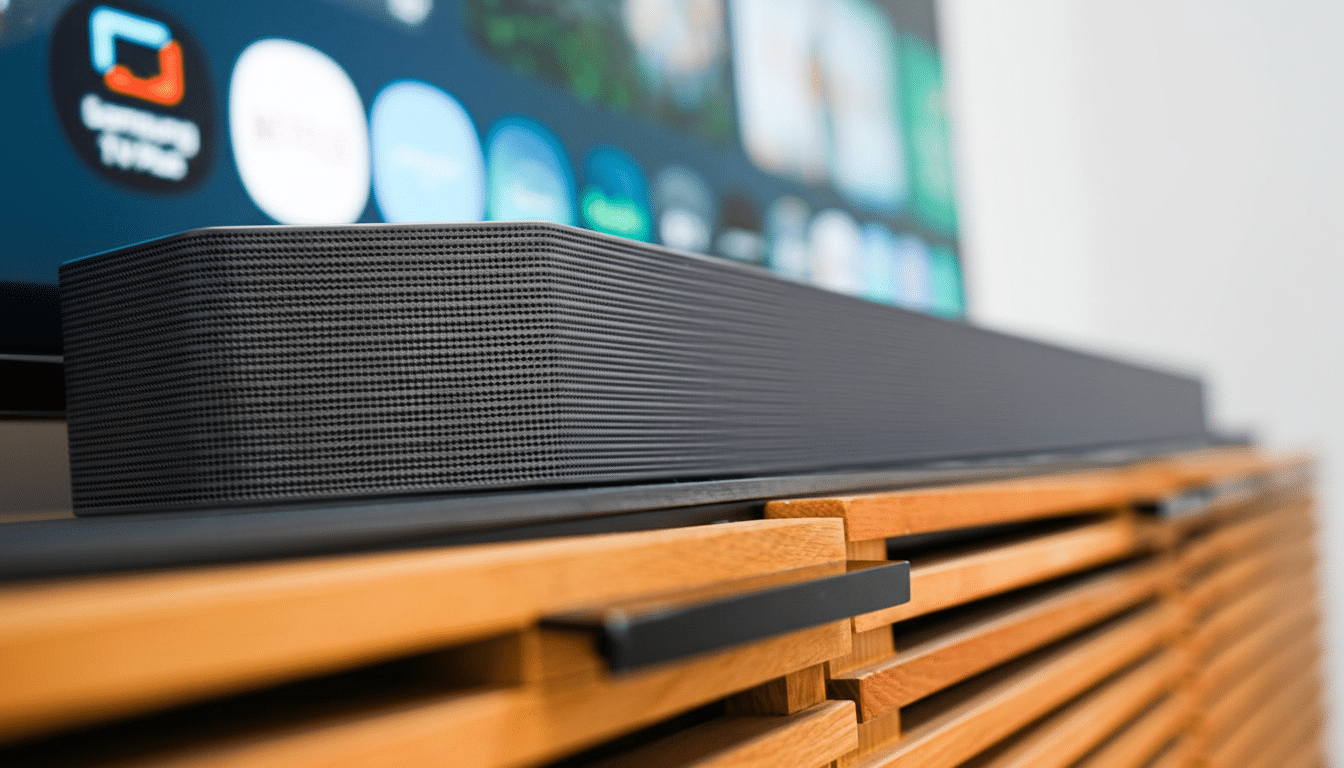
Avoid cubbies and shelves that trap sound; they create comb filtering that smears dialogue. Harman International’s research into small-room acoustics shows that moving a speaker even 20 to 30 centimeters can shift peaks and dips by double-digit decibels. Nudge the bar forward, back, and side-to-side while playing a dialogue-heavy scene until voices sound focused and consistent across seats.
Tune The Room Using What You Already Own
Hard rooms are the enemy of clarity. Close curtains, lay down an existing rug, and drape a throw over that glass coffee table during movie night. Those soft surfaces reduce early reflections that mask speech and treble detail, a phenomenon detailed frequently in AES papers on intelligibility.
Small changes matter. Pull the bar a few inches from a bare wall to tame high-frequency splash, then angle it 5 to 15 degrees toward the main seats to widen dispersion. A bookcase or filled media shelf to one side acts as a diffuser, breaking up slap echo without spending a cent.
Run Calibration and Fix the Mix for Clarity
If your soundbar includes auto-calibration, run it again—especially after any furniture move. Those mics measure your space and rebalance channels for your exact layout. If not, manual EQ and presets still go a long way.
Start with a “Movie” or “Standard” mode, then fine-tune. Raise dialogue or center-channel emphasis one or two steps for clearer speech; studies by broadcasters applying ITU-R BS.1770 loudness guidance show consistent midrange levels improve intelligibility across varied content. Use Night or Dynamic Range Control when others are sleeping to compress extremes without upending overall balance.
Don’t set-and-forget virtual surround. In reflective rooms it can blur transients. Try virtual surround On for big, dry spaces and Off in bright, echo-prone rooms. Revisit bass and treble after each change; small 1–2 step tweaks prevent boomy buildup or brittle highs.
Nail the Subwoofer Setup You Already Have at Home
If your bar includes a sub, placement is free performance. Put it on the floor along a wall or near a corner for natural reinforcement—AES presentations on boundary gain note corners can add roughly 6–9 dB of low-frequency energy. That extra headroom makes effects hit harder without touching the volume.
Use the crawl test: play a steady bass scene, crawl to find the spot with the smoothest, not loudest, bass, and move the sub there. Then trim the sub level until bass blends with the bar rather than calling attention to itself. If your system exposes phase or polarity, try flipping it; the better setting will tighten kick drums and reduce “one-note” rumble.
Get The Signal Path Right For Lossless Formats
Wires beat wireless for fidelity. Use HDMI ARC or, ideally, eARC between TV and soundbar, and disable the TV’s internal speakers so the bar receives the full mix. HDMI Forum specifications confirm eARC’s bandwidth supports lossless Dolby TrueHD and DTS-HD with immersive audio, while regular ARC is typically limited to Dolby Digital Plus.
In the TV’s audio menu, set Audio Output to Bitstream or Passthrough, not PCM, so native formats make it to the bar. In streaming apps, ensure audio is set to the highest available option; Dolby notes that Atmos over Dolby Digital Plus is the standard for most services. Enable HDMI-CEC so one remote controls power and volume, avoiding mismatched levels.
Finally, check for firmware updates on both TV and soundbar. Manufacturers regularly ship fixes that refine eARC handshakes, add new decoders, or improve auto-calibration. It costs nothing and can yield an audible upgrade overnight.
Put together, these free moves—smart placement, room tuning, calibration, sub setup, and a clean signal path—deliver the kind of clarity and impact many people try to buy with new hardware. Try them in order, listen critically, and lock in the settings that make your room and your soundbar click.
