


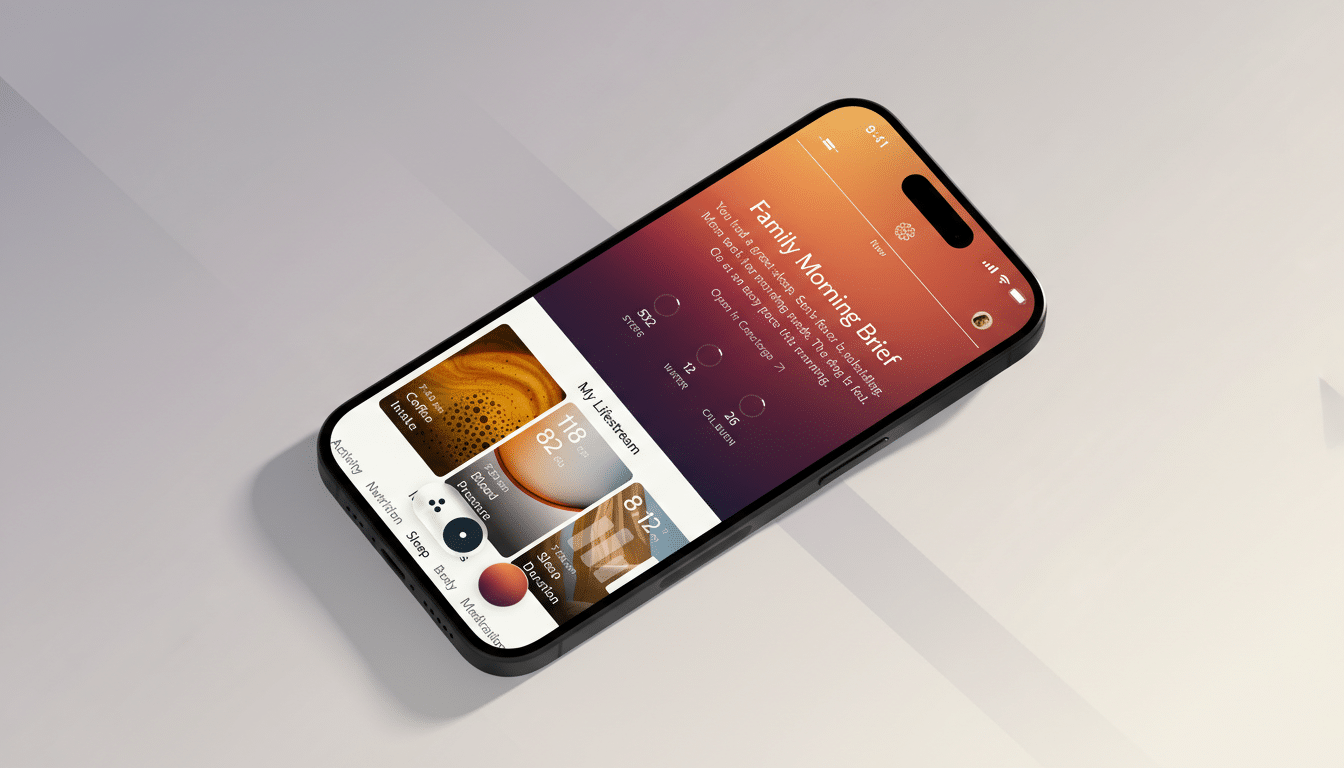
Fitbit cofounders James Park and Eric Friedman are back with a new venture called Luffu, an AI-driven platform designed to help families monitor and coordinate health in real time. The company is introducing an “intelligent family care system” that starts as a mobile app and is expected to expand into purpose-built hardware, with a limited public beta opening via a waitlist.
An AI Hub for Family Care That Centralizes Daily Health
Caregiving rarely happens in isolation, yet most consumer health tools still orbit the individual. Luffu targets the messy reality of shared care—partners, kids, aging parents, and even pets—where information is scattered across patient portals, calendars, devices, messages, and paper files. It’s a bet that ambient AI can transform that sprawl into timely, actionable context for the whole household.
- An AI Hub for Family Care That Centralizes Daily Health
- How Luffu Works to Organize and Elevate Family Health
- Data Sources and Integrations Across Health Records and Apps
- Why Caregiving Technology Is Ripe Now for Broad Adoption
- Privacy and Safety Considerations for Shared Family Health
- The Competitive Landscape for Family-Focused Health Tools
- What’s Next for Luffu and Its Limited Public Beta Rollout

The need is sizable. AARP and the National Alliance for Caregiving have documented steady growth in unpaid care, with recent estimates indicating about 63 million U.S. adults are family caregivers—nearly 1 in 4—up roughly 45% over the past decade. That surge has amplified the cognitive load of tracking symptoms, medications, lab results, and appointments across multiple providers.
How Luffu Works to Organize and Elevate Family Health
Luffu runs AI in the background to capture and organize daily health details, learn patterns, and flag meaningful changes. Users can log information by voice, text, or photos—think snapping a picture of a discharge summary, dictating a new dose, or jotting down a child’s fever and symptoms. The system then surfaces insights such as unusual vitals, shifts in sleep, or missed medications, and can notify the right family members based on their role.
Beyond passive alerts, Luffu is built for natural-language queries across the family’s data. A caregiver might ask if a parent’s new meal plan is correlating with lower blood pressure, whether a teenager’s migraine frequency changed after a medication adjustment, or if the dog’s heartworm dose was recorded this week. It’s an attempt to move from dashboards to dialogue—summaries, trends, and suggested next steps delivered in plain English.
Data Sources and Integrations Across Health Records and Apps
While Luffu has not detailed its full integrations, the path is clear: consumer platforms like Apple Health and Google Health Connect for wearable and activity data; FHIR-based connections to provider portals from systems such as Epic and Oracle Health for labs, visit notes, and problem lists; and pharmacy data to reconcile medications. CMS Blue Button access and patient-directed exchange could make it easier for families to import records from multiple clinicians without repeating paperwork.
Park and Friedman say hardware is on the roadmap. Purpose-built devices could provide more continuous, low-friction signals—ambient temperature, motion and fall detection, or cuffless blood pressure—without adding another task to a caregiver’s day. The hardware angle also gives Luffu control over data quality and battery life, two friction points for consumer wearables used in clinical-adjacent scenarios.
Why Caregiving Technology Is Ripe Now for Broad Adoption
Demographics and policy are converging. The CDC notes that 6 in 10 U.S. adults live with a chronic condition, and 4 in 10 have two or more—conditions that often benefit from early detection of trend changes. At the same time, remote patient monitoring and chronic care management programs have expanded under Medicare, creating reimbursement pathways that reward timely interventions rather than reactive care.
Employers are also leaning into caregiver benefits as a retention strategy, and health plans increasingly fund digital tools that can reduce emergency visits. If Luffu can prove it shortens time-to-intervention—say, by flagging a sleep change and rising nightly heart rate before a COPD exacerbation—it could find traction across consumer, employer, and payer channels.
Privacy and Safety Considerations for Shared Family Health
Coordinating multi-person health data is as much a policy problem as a technical one. Families will expect granular consent—who can see what, and when—especially for teens and older adults. Clear controls, audit trails, and data minimization are table stakes. If Luffu touches protected health information on behalf of clinicians, HIPAA business associate agreements and robust security practices will be required. End-to-end encryption and on-device inference for sensitive tasks could help build trust.
AI safety matters, too. Models must avoid over-alerting, explain why an insight was triggered, and work across diverse ages and health profiles. Transparent labeling of wellness versus medical claims will determine whether and when FDA oversight applies.
The Competitive Landscape for Family-Focused Health Tools
Luffu enters a crowded field that includes Apple Watch’s health features, Oura and Whoop for recovery metrics, and Withings’ connected devices. Where it differs is the family-first design: a unified timeline, role-based notifications, and conversational summaries that bridge the gap between caregivers and care recipients. If its hardware arrives, expect comparisons to ambient home health sensors that prioritize ease over granularity.
What’s Next for Luffu and Its Limited Public Beta Rollout
The company is opening a waitlist for a limited public beta, starting with the app experience. Questions ahead include pricing, the depth of EHR and pharmacy integrations, whether employer or payer partnerships are in play, and how the team will measure outcomes such as reduced caregiver burden or faster escalation to clinicians. Two years removed from their Google chapter, Park and Friedman are betting that the next wave of health tech isn’t another personal tracker—it’s a shared brain for the entire household.
