


The Food and Drug Administration has issued a direct final rule revising the language it uses for safety testing of drugs and biologic products before they are studied in people. The change clarifies that appropriately validated non-animal methods, including human-cell systems, organs-on-chips and computer models, may be used when they fit the scientific and regulatory question.
The action does not ban animal studies or lower the evidence FDA expects before a first-in-human trial. Instead, it removes wording that could suggest animal testing is the only acceptable way to produce nonclinical safety evidence. The rule remains subject to a direct-final-rule process: FDA says it could withdraw the measure if it receives significant adverse comments and proceed through regular notice-and-comment rulemaking instead.

What the rule changes — and what it does not
In its September 21 announcement, FDA said the rule replaces references such as “animal tests” and “animal studies” in its regulations with “nonclinical tests” and “nonclinical studies.” Nonclinical testing is the broad category of laboratory, animal and other preclinical work used to assess a product before it is given to volunteers or patients.
The revised terminology aligns the regulations with the Food and Drug Omnibus Reform Act of 2022. That law recognized that evidence for beginning human studies can come from non-animal approaches as well as traditional animal studies. The new rule does not create a separate, easier approval path for non-animal testing. A developer still must show that its chosen testing package adequately addresses the risks relevant to its product.
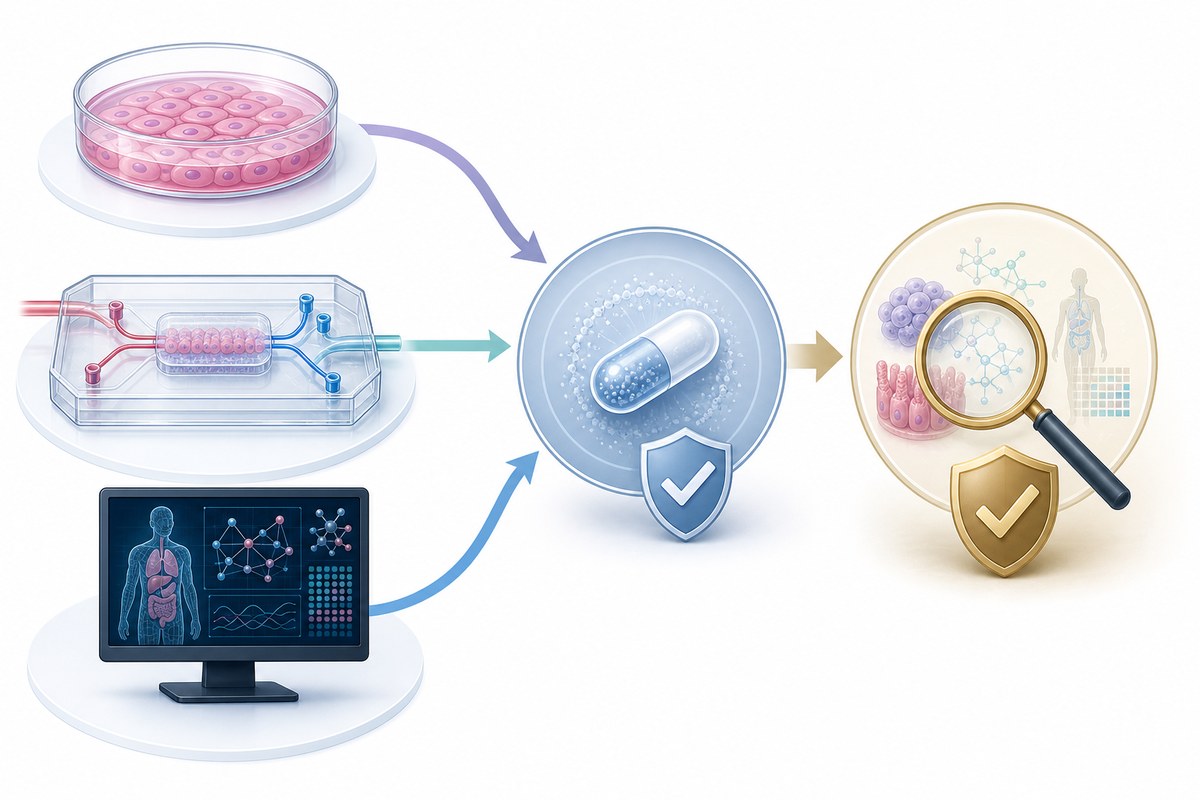
FDA uses the term New Approach Methodologies, or NAMs, for a wide range of tools. Its technical overview of NAMs includes in vitro systems based on human cells or tissues, in silico computer modeling, and other platforms that can evaluate such questions as toxicity, immune effects and pharmacologic activity. An organ-on-chip, for example, is a small engineered device designed to reproduce selected features of an organ or tissue. It can offer information about a particular biological process, but it does not automatically capture the full-body effects of an experimental medicine.
That limitation helps explain why the rule is not a declaration that animal testing is obsolete. A method useful for detecting whether a compound damages liver cells may not answer questions about interactions among the immune system, hormones and multiple organs. For some drugs, particularly those involving unfamiliar biological targets or complex systemic effects, animal studies may remain informative. The appropriate evidence depends on the product, the potential hazard and the specific question FDA must resolve.
Validation remains the practical test
FDA says sponsors may use NAMs when the methods are adequately validated and appropriate for the product and regulatory purpose. Validation is not a generic label attached to a technology. It means demonstrating that a method performs reliably for its intended use and generates evidence capable of answering the decision at hand.
For drug developers, that can require showing how a human-cell assay, computational model or tissue system relates to a safety outcome, how reproducible its results are, and where its boundaries lie. A model that performs well for one type of drug or toxic effect may not be suitable for another. The agency emphasized that the rule does not impose a particular test method, new testing requirement or changed evidentiary standard.
FDA has also launched a database containing 25 initial examples of NAM use cases drawn from publicly available agency review materials. Those examples may help sponsors understand situations in which non-animal evidence has been considered, but they are not a clinical sample or a finding that every NAM can replace animal work. Nor does the database establish that a given technology is validated for every product class or development decision.
The distinction is important because the policy debate often combines several different claims: that animal use can be reduced, that human-based models may better reflect some human biology, and that drug development could become faster or less expensive. FDA describes NAMs as having the potential to improve predictive relevance while reducing or replacing animal use in some settings. But the terminology rule itself does not demonstrate fewer animal studies, faster approvals, lower development costs or improved patient outcomes.
Part of a longer FDA policy shift
The regulatory update follows steps FDA has taken to encourage alternatives while retaining case-by-case scientific review. In May 2025, the agency announced a plan to reduce, refine or potentially replace animal testing for monoclonal antibodies and other drugs where alternative methods can provide sufficient information. The 2022 law supplied the statutory foundation; the new rule brings older regulatory wording into closer alignment with that framework.
Direct final rules are generally used when an agency expects a change to be noncontroversial. FDA published a companion proposed rule so that it can continue with conventional rulemaking if significant adverse comments prompt withdrawal of the direct final version. Medical Daily reported that the comment deadline is December 7, 2026, and that the rule is scheduled to take effect February 4, 2027, if it is not withdrawn.
For now, the most immediate effect is regulatory clarity: developers have clearer confirmation that validated non-animal evidence can be part of a preclinical package, while FDA retains the same responsibility to determine whether the overall evidence is sufficient before a product moves into studies involving people.

