


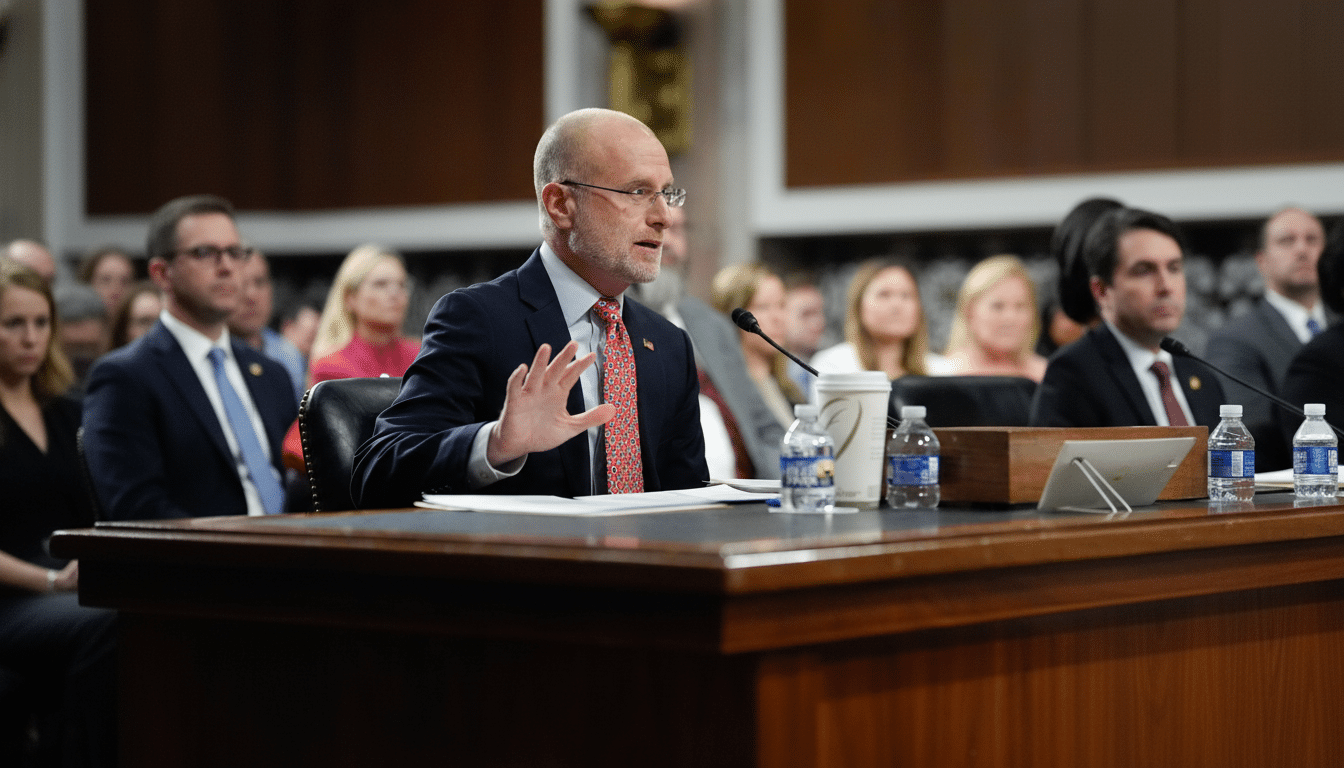
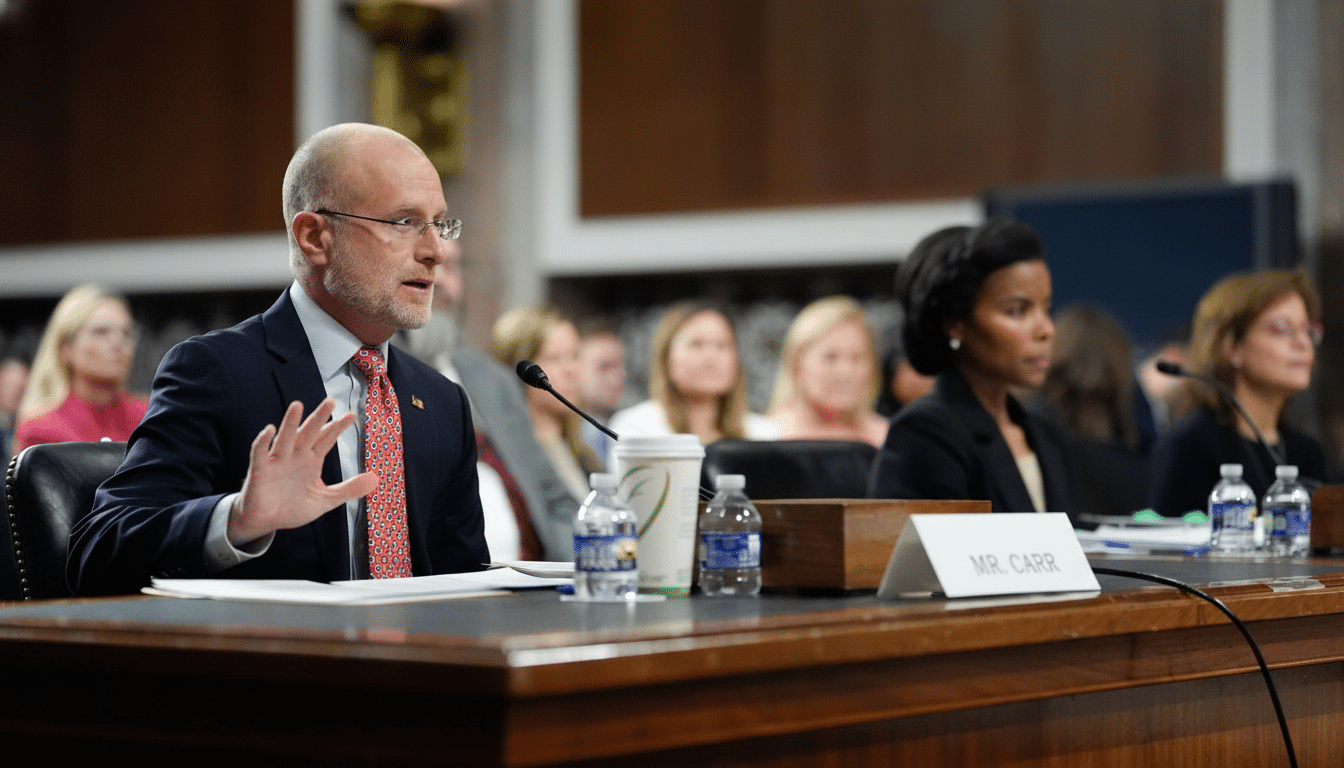
The Federal Communications Commission quietly rewrote its “About” page on Thursday, minutes after a tense oversight hearing before the Senate during which Chair Brendan Carr wouldn’t affirm that the agency is independent. The on-the-fly switcheroo — from “An independent US government agency” to “A US government agency” — transformed a procedural hearing into a question of whether the nation’s telecom regulator remains truly shielded from White House influence.
Senate Hearing Prompted Immediate FCC Website Rewrite
Under questioning from Sen. Ben Ray Luján, Carr ducked the yes/no question on independence time and again, prompting him to read onto the record the FCC’s description of itself. Pressed on whether the website was mistaken, Carr conceded it could be. Within minutes, the language disappeared. Axios reporter Sara Fischer caught the before-and-after, and archived versions of the page reveal that the “independent” phrasing had been present since at least 2016, according to the Internet Archive.
Commissioner Olivia Trusty, a Republican, sided with Carr’s positions, arguing that the FCC does not have explicit “for-cause” removal protections traditional of independent commissions. Democratic commissioner Anna Gomez dissented, arguing the agency is and should be independent. That split pointed to a deeper battle over how much insulation the FCC has — by statute and under modern constitutional doctrine — from direct presidential control.
Is FCC independence secured by design or by norm?
The Communications Act established a five-member, bipartisan commission with staggered, five-year terms; also limiting to three the number of members who could be from one party. Those structural guardrails, as well as congressional oversight, helped give the FCC its name as an independent regulator. But the statute does not specifically say that commissioners can be removed only for cause. The Congressional Research Service has observed that, although multi-member commissions are usually treated as independent, the specific removal protections vary among agencies.
Supreme Court precedent is on the move, as well. In Humphrey’s Executor, the Court affirmed restrictions on firing FTC commissioners; more recently in Seila Law and Collins v. Yellen, the Court expanded presidential removal power with respect to certain agency heads. That doctrine in flux has sparked a debate over whether multi-member bodies such as the FCC, lacking express for-cause language, are legally independent or merely independent in the important-by-way-of-historical-practice sense.
Amid these unknowns, members of Congress have introduced bills to enshrine the FCC’s autonomy into law in a bid to insulate it from direct White House control and other habits that have guided the agency for approximately 100 years.
A fast edit and even faster blowback from observers
Within minutes of the hearing exchange, the FCC’s site had been altered to eliminate the word “independent.” The quick edit was criticized by media observers and telecom lawyers who said that communications regulators needed to present an image of stability and impartiality if they were to be upheld in court. The Internet Archive displays the “independent” language as having been stable for years, a historical breadcrumb that makes this sudden disappearance all the more conspicuous.
The optics matter. Agencies win deference in court by showing that they are expert and insulated from political oscillations. Scrubbing a single word can come across to staff on its own as a small fix, but to litigants and markets, it can indicate a larger change in regulatory posture with implications for rulemakings that are pending — ranging from net neutrality to the auctioning of spectrum and review of media ownership.
The political crosscurrents surrounding FCC independence
For many years, both parties spoke of the FCC as independent, even if presidents mentioned what they would prefer to see the commission do. When the Obama administration asked a Democratic-majority FCC to adopt strict net neutrality rules, Republicans assailed it as executive muscle-flexing over an independent agency. Even Carr himself has previously used that framing to criticize presidential pressure on the FCC.
That rhetorical baseline shifted in the wake of a new executive order issued by President Trump, which suggests that commissions once perceived as independent — such as the FTC, SEC and Federal Communications Commission (FCC), among others — are under immediate presidential control. The White House also stripped two Democratic commissioners of the FTC, a move now caught up in litigation. The Supreme Court is hearing challenges to these removals, and legal analysts are predicting a ruling that might further expand the president’s power to dismiss commissioners. If that were to come about, future presidents might be able to dismiss FCC members on a whim — solidifying the interpretation Carr floated at the hearing.
What to watch next in the fight over FCC independence
Three questions now loom:
- Will the FCC ever restore or clarify its self-description in a way that reflects a legal position based on precedent rather than politics?
- Does Congress act to codify independence and for-cause removal, resolving the matter through legislation?
- How should courts interpret the agency’s position in future challenges to big FCC actions, when judicial deference might turn on an apparent independence from the White House?
More than a matter of word choice, the episode has exposed a structural battle with implications in the real world for broadband policy, competition and media regulation. Whether or not the FCC is independent by statute or only by tradition will determine who’s in charge going forward — and how much those decisions are allowed to endure when political fortunes shift.
