


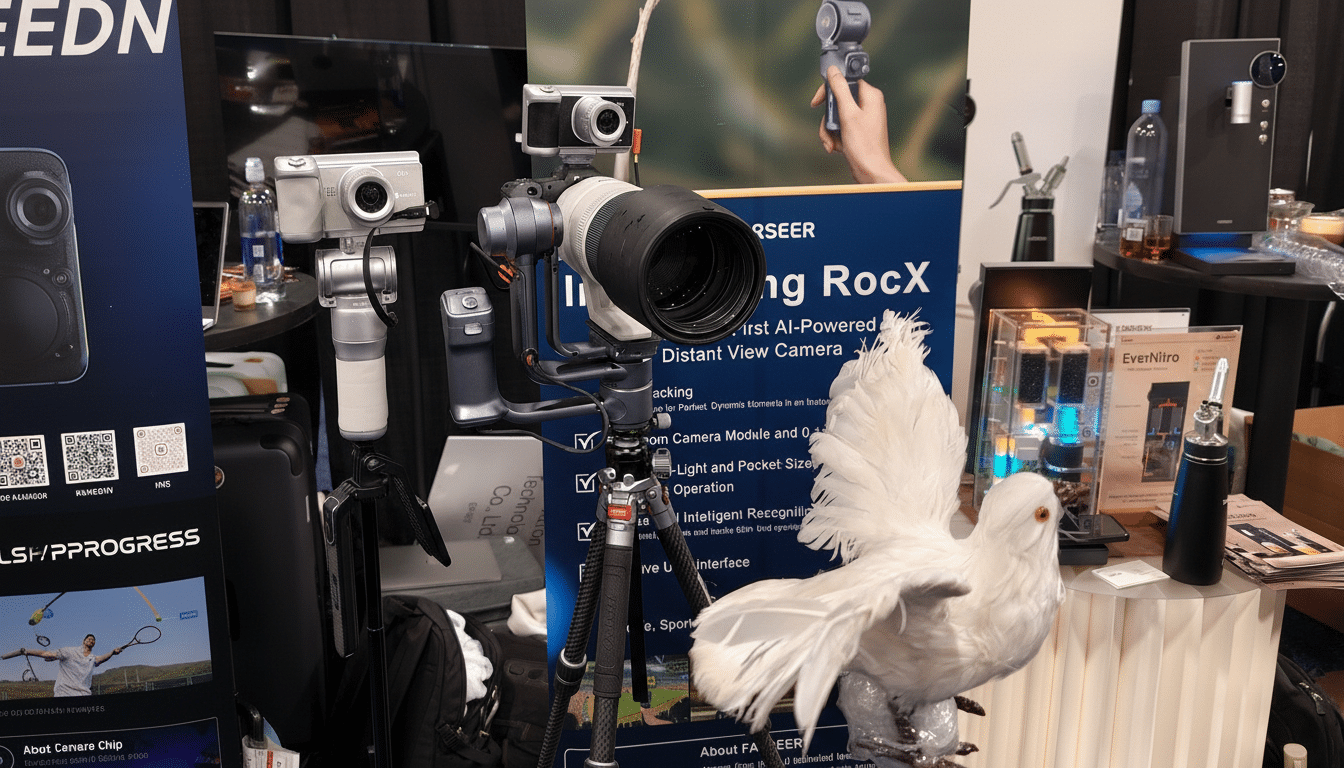
AI is all over the show floor, but few devices display an obviously useful, real-world edge like Farseer’s RocX, a handheld long-distance camera that locks in on subjects and keeps them framed while zoomed in up to 50x. Released by a group of ex-DJI engineers who have industrialized computer vision along with serious optical reach, Farseer hopes to solve a persistent problem for content creators and hobbyists alike: keeping fast or faraway action straight without the need for a crew or cumbersome equipment.
Why 50x AI tracking matters for real-world shooting
Subject tracking is now a staple feature you can find on phones, action cams and drones, but it tends to require wide or mid focal lengths for optimal operation. Crank the zoom, and you’re on every hand motion, atmospheric shimmer, focus shift. That’s the problem RocX confronts head-on. Combining long optical reach with on-board AI that can identify, predict and recapture a subject, RocX promises to keep the action sharp even if you’re shooting from the bleachers or on the other side of a field.
- Why 50x AI tracking matters for real-world shooting
- How the RocX tracking camera system works in use
- From birding to sideline sports, here are some use cases
- Design notes and first impressions from hands-on demo
- Competition and context in the long-range tracking space
- Price, availability, and what to watch before backing RocX
It’s more than a spec-sheet stunt. There are also clear payoffs to long-range tracking for birders, youth sports parents and solo filmmakers who don’t want to sacrifice portability for performance. Creator tools have been identified by the Consumer Technology Association as a fast-growing category, and the camera industry’s shift to mirrorless systems speaks to the appetite for smarter, lighter kits. By the Camera & Imaging Products Association’s estimate, mirrorless models represent over 70% of units shipped when it comes to interchangeable-lens cameras—a move toward smaller, artificially intelligent accessories like RocX.
How the RocX tracking camera system works in use
RocX combines its tracking and recording hardware into a single unit, instead of rigs that uncouple the “spotter” camera from the main shooter. During a floor demo, Farseer set up a moving target—a fake bird attached to a remote-controlled rig—and the RocX grip panned at variable smoothness levels to keep the subject in frame while zooming out. The video came through sharply in beautiful 4K on the controlled stage, with the system providing a consistent track even as the subject darted back and forth across the room.
The company also sells a gimbal bundle to transform the RocX into a brains-on-top tracker for your separate DSLR/mirrorless camera body. In that position, the RocX module tracks and follows your subject and sends a message to the gimbal to pan in tandem so your primary camera locks eyes without you having to manually ride the controls. It’s a smart bridge for photographers who require long glass and want shallow depth of field, but still desire AI help.
From birding to sideline sports, here are some use cases
Farseer preloads bird and animal modes, deepening into a scenario of wildlife tracking when high zoom meets erratic movement. That focus is understandable: wildlife watching draws tens of millions of participants in the United States, according to the U.S. Fish and Wildlife Service, and many want better, steadier views without disturbing habitats. For parents and coaches, RocX also offers an easier way to track a striker or quarterback from the stands; for content creators, it functions as more of a one-operator solution for run-and-gun coverage at outdoor events.
Most crucially, RocX’s method doesn’t require the subject being filmed to wear a tag or beacon—an essential shortcoming of old auto-tracking systems like SoloShot that relied on a transmitter.
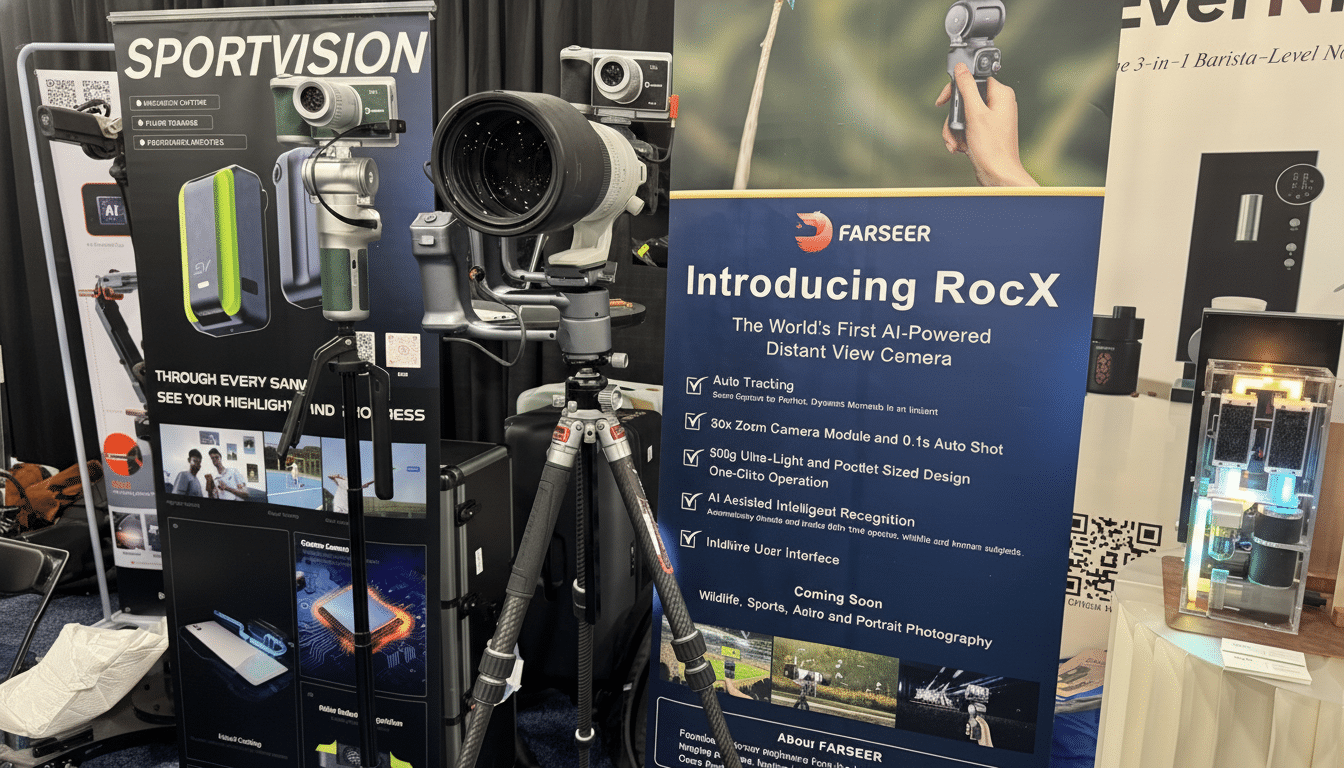
RocX, on the other hand, employs vision-based detection to track a subject’s look and movement, re-identifying them as they move along—an older technique popularized by features like DJI ActiveTrack and Insta360’s Deep Track. Pulling that off at 50x is the reason why it’s striking.
Design notes and first impressions from hands-on demo
As a handheld, RocX shares the profile of a sleek cam with a rotating grip—stressing balance and fast pickup instead of tripod reliance.
The one-piece design simplifies setup; you won’t need to separately juggle a spotter cam, monitor and motorized head—making it appealing for travelers and field naturalists who believe in the virtue of packing light. Floor demo clips looked relatively steady and detailed when zoomed, even though we all know the real test will be in nature, where wind, heat shimmer and jerky motion make high-magnification tracking more challenging.
Competition and context in the long-range tracking space
RocX wades into an area where subject tracking is a checklist feature and long-range tracking isn’t. Major-brand pocket gimbal cams make fine approaches at mild zooms, smartphones tend to lean on computational crops and action cams value stabilization more than reach. Dedicated wildlife and sports shooters sometimes graduate to heavy-duty servo heads and telephoto lenses, which are effective but expensive and unwieldy. RocX sets out to land somewhere in the middle: greater reach and independence than a phone but nowhere near as complex a rig as a long-lens pro setup.
Price, availability, and what to watch before backing RocX
Farseer intends to kickstart the RocX device with a target retail price around $500 in two variations, including a handheld pack and gimbal version that works with DSLR or mirrorless bodies. Like all crowdfunded hardware, timelines and final specs may change, and backers should consider the standard caveats offered by consumer protection agencies. Key performance questions to look at include:
- Tracking reliability at 50x outdoors
- Focus behavior on fast-moving subjects
- Latency when RocX is in control of a third-party gimbal
If Farseer lives up to its demo, RocX could be a go-to tool for birders, sideline videographers and solo creators in need of reach but not a crew. Amid the sea of AI-for-AI’s-sake gimmickry, it is nice to see a system that treats artificial intelligence as a technique for getting the photo rather than simply an end in itself.
