


Users looking to transition from passively storing funds to more active use of cryptocurrency often convert Bitcoin (BTC) to Ethereum (ETH). Bitcoin is traditionally viewed as a store of value, while Ethereum is a full-fledged platform for decentralized services, smart contracts, and digital assets.
Many BTC holders decide to convert some of their funds to ETH to gain access to the capabilities of the Ethereum ecosystem. Electronic exchanges are often the most convenient and straightforward option for this transaction. To ensure a completely secure exchange of BTC for ETH, it’s worth visiting an aggregator that lists reliable exchange services.
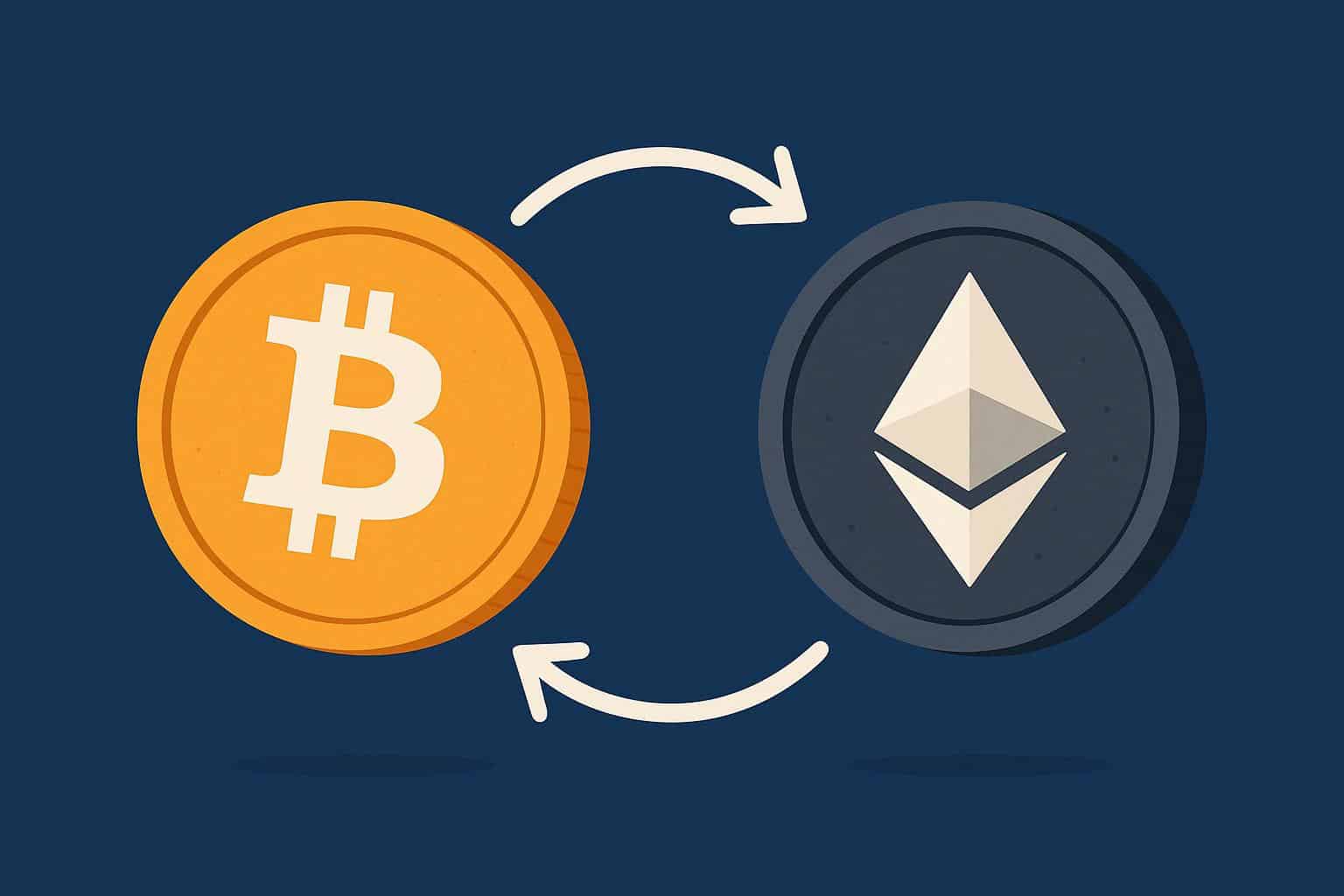
Why exchange Bitcoin for Ethereum
Despite Bitcoin’s status as the leading cryptoasset, its functionality is limited compared to Ethereum. BTC is rarely used for interaction with decentralized applications or digital services. Ethereum, on the other hand, underpins DeFi, NFTs, and numerous blockchain projects.
Exchanging Bit Coin for Ethereum cryptocurrency is usually done when a user plans to actively participate in the cryptocurrency space: participating in decentralized platforms, using tokens, working with smart contracts, or simply diversifying their portfolio. In this case, Ethereum becomes a working tool, and Bitcoin a source of capital. Furthermore, the conversion may be related to a change in market strategy. The user redistributes assets, reducing dependence on one instrument and gaining access to another segment of the crypto market.
How does exchanging BTC for ETH work via electronic exchangers?
The process of exchanging Bitcoin for Ethereum cryptocurrency begins with choosing a direction. After entering the amount of Bitcoin, the user can see the result in advance and make a decision with confidence. Next, they enter their Ethereum wallet address. It’s important to ensure that the wallet supports the Ethereum network and that the address is entered correctly. The exchange service then provides an address for sending Bitcoin.
The user transfers Bitcoin from their wallet and selects the network fee. It’s at this stage that the Bitcoin network load is important to consider, as it determines the transaction confirmation speed. After receiving the required number of confirmations, the request is processed, the service performs the conversion, and creates the transaction on the Ethereum network. The final step is sending ETH to the user’s specified wallet. Unlike transactions with fiat or stablecoins, this is a direct exchange between two major cryptocurrencies, without intermediary assets or additional steps.
Advantages of electronic exchange services
Electronic exchange services are especially convenient for exchanging between different blockchains, as they remove the technical burden from the user. When converting cryptocurrencies, they allow you to:
- Perform a direct exchange without using exchanges;
- See the exchange rate and final ETH amount in advance;
- Avoid trading and placing orders;
- Receive Ethereum directly to your wallet;
- Reduce the number of steps to a minimum.
This format is suitable for both experienced users and those who don’t want to understand the trading mechanisms.
Important Considerations When Exchanging BTC for ETH
When exchanging Bitcoin for Ethereum, it’s important to consider the difference in network speeds. Bitcoin takes longer to confirm transactions, while the Ethereum network is faster. This affects the overall transaction time. It’s also important to consider the exchange rate volatility of both cryptocurrencies, especially for large amounts. For your first exchange through a new service, it’s recommended to use a small amount as a test.
Special attention should be paid to verifying your Ethereum wallet address. An incorrect address can result in the loss of funds, so a final check is essential before sending.
