


After years of watching the injury data get worse, I now recommend a single lithium button battery line for households and workplaces: Energizer Color Alert. The reason is simple and serious. This design layers multiple, tangible safety features on top of reliable performance, addressing the two most critical risks with coin cells—preventing ingestion and quickly detecting when it may have happened.
Button cells are in everything from key fobs and trackers to thermometers and scales. Yet they are dangerous if swallowed. The American Academy of Pediatrics and the National Capital Poison Center estimate roughly 3,500 ingestions occur in the U.S. each year, mostly among children. Lithium coin cells can cause severe esophageal burns in under two hours, and fatalities still occur despite growing awareness.
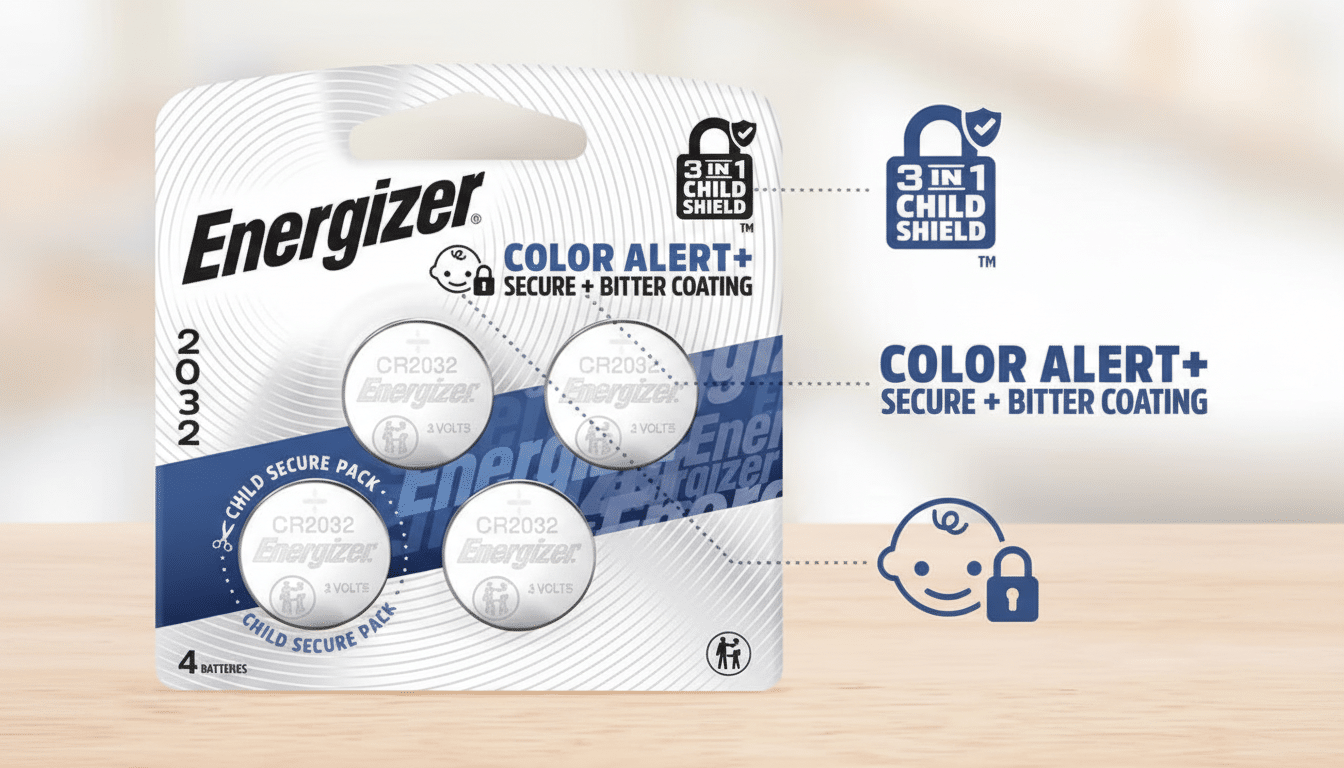
Why This Battery Line Stands Apart on Safety Features
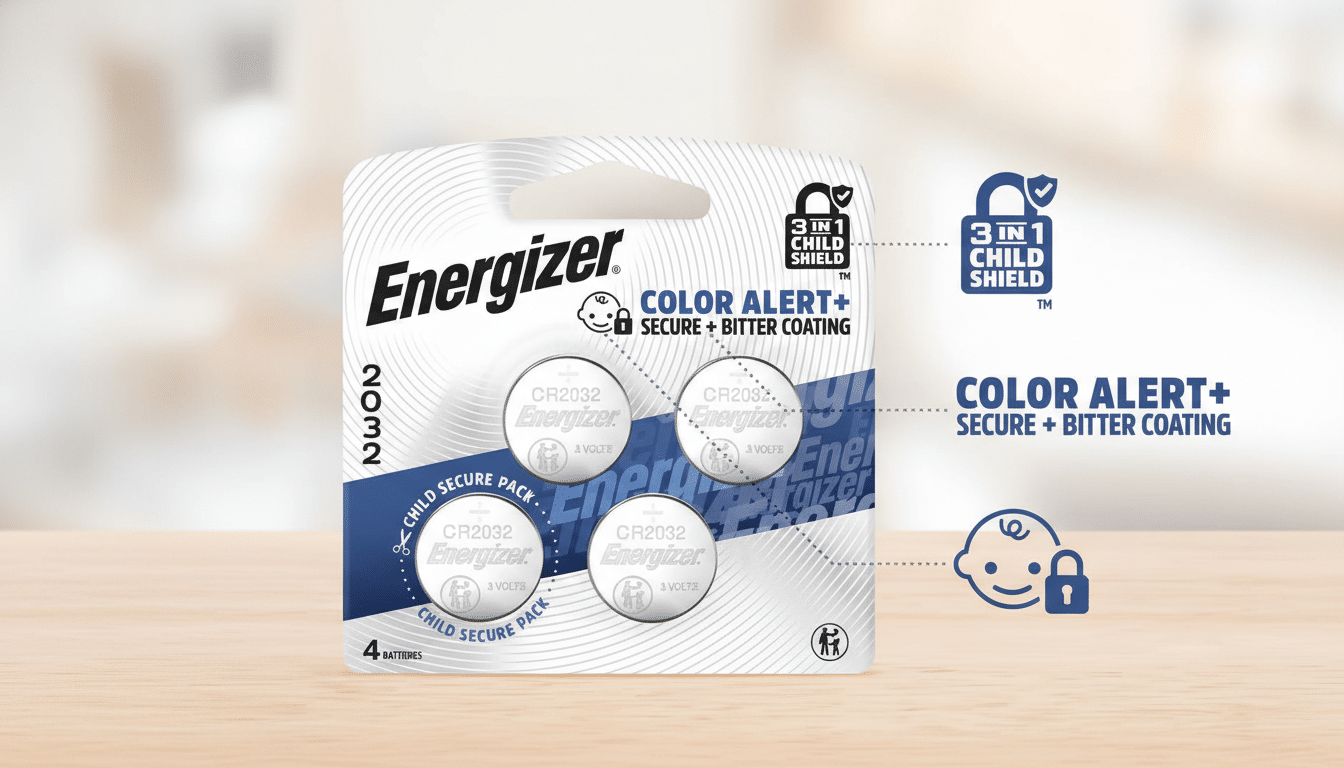
Energizer’s Color Alert line combines three layers of defense. First, the batteries and packaging use a bitterant coating known as Bitrex (denatonium benzoate)—the same deterrent widely added to household chemicals and even game cartridges. The taste is unmistakably awful, and it’s been proven to reduce accidental ingestion across product categories.
Second, the packaging is intentionally hard to open. That may frustrate adults for a moment, but it meaningfully slows curious toddlers. It also aligns with new federal safety mandates under Reese’s Law, which the U.S. Consumer Product Safety Commission is implementing to require child-resistant packaging and clearer warnings for button and coin cells.
Third—and uniquely—Color Alert adds a food-grade dye on the cell itself. If the battery contacts saliva, the dye dissolves and spreads fast, leaving a bright, highly visible stain in the mouth and on the tongue. That visual cue can be the difference between immediate medical action and dangerous uncertainty. Detection matters because every minute counts once a lithium coin cell is lodged in the esophagus.
The line covers common sizes such as CR2032, CR2025, and CR2016. In everyday use, these cells have been broadly compatible across trackers, key fobs, and home sensors. Notably, while some earlier bitterant-coated cells from other brands drew user complaints about unreliable contact in certain devices such as Bluetooth trackers, I have not encountered such issues with Energizer Color Alert.
The Risk Profile for Button Batteries Has Changed
Lithium coin cells are compact but powerful. When a 3V cell becomes stuck in the esophagus, it can generate a local current that produces caustic hydroxide, burning tissue rapidly. Larger 20 mm cells—like CR2032—pose an outsized hazard for small children because their size makes them more likely to lodge. The National Capital Poison Center’s Button Battery Task Force has repeatedly warned that severe injuries can occur in under two hours, even without obvious initial symptoms.
Regulators and pediatric specialists have responded. Following high-profile tragedies, including the death of toddler Reese Hamsmith, Congress passed Reese’s Law to strengthen design, labeling, and packaging requirements across products and replacement cells. Those steps help, but product cycles are long and legacy devices remain in homes. That’s why selecting safer replacement cells now is so important.
What To Do Immediately If Ingestion Is Suspected
Do not wait. Go to an emergency department immediately and call Poison Control at 1-800-222-1222 for guidance. Do not induce vomiting or let the person eat or drink unless advised by medical professionals. The National Capital Poison Center maintains protocols for suspected coin cell ingestion; for children over 1 year, it may advise honey en route within the first hours, but follow their instructions specifically. Time is tissue.
Buying and Using Button Batteries as Safely as Possible
Energizer Color Alert cells typically cost on par with or slightly above standard coin cells, a small premium for meaningful risk reduction. Verify your device’s required size (for example, most popular trackers use CR2032), buy from reputable retailers, and keep spares in their sealed, child-resistant packaging.
At home, store all batteries up high and out of sight. Tape the terminals on spent cells immediately after removal and place them in a secure container for recycling or disposal. Check that remotes, scales, and key fobs have screw-secured compartments. Finally, educate caregivers and family members about the hazards and the Poison Control number.
Bottom Line on Safer Lithium Button Battery Choices
Given today’s risks and the available designs, Energizer Color Alert is the only lithium button battery line I recommend. It delivers prevention, rapid visual detection, and solid compatibility—without asking you to sacrifice performance. Until dye markers and deterrent coatings become universal, this is the most responsible choice for any home with children, vulnerable adults, or pets.
