


Duolingo is leaning into the halftime spotlight, rolling out Bad Bunny 101 to help fans catch the Spanish in the Puerto Rican superstar’s lyrics before he takes the Super Bowl LX stage. The playful crash course pairs lyric-inspired prompts with the app’s famously chaotic owl, now sporting a pava hat, to make sure even casual listeners can follow along.
In ads and social teasers, users are challenged to decode titles such as Tití Me Preguntó and pick up essential vocab and slang they’re likely to hear during the show. Duo the owl has been counting down to kickoff on X and popping up in New York City dressed like Benito—a wink that this isn’t homework, it’s culture.
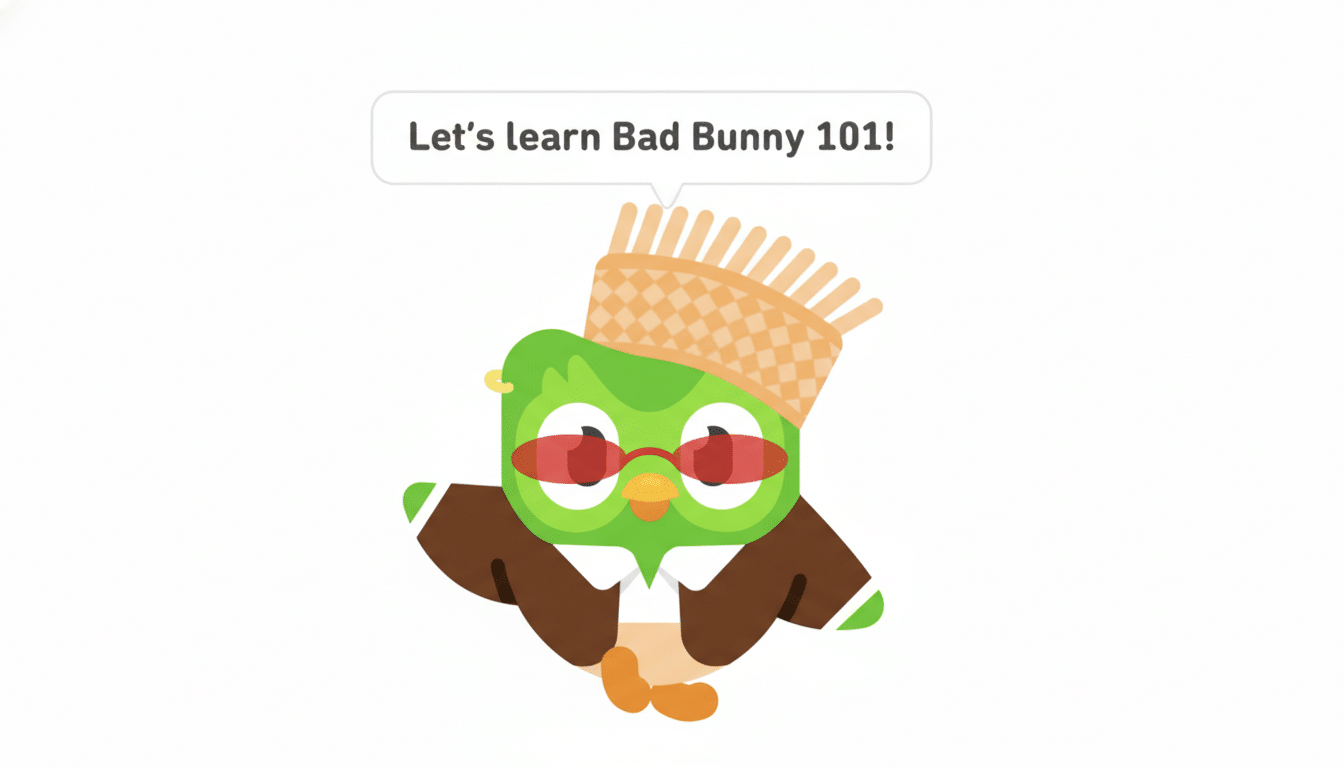
Inside Duolingo’s Bad Bunny 101 Campaign And Lessons
Bad Bunny 101 is a campaign built around bite-size practice with maximum cultural payoff: short, repeatable prompts tied to hooks, catchphrases, and everyday Spanish you’ll hear in reggaetón. The tone is cheeky, but the pedagogy is familiar—quick exposure, immediate feedback, and repetition that turns earworms into memory aids.
Duolingo has primed this moment for years. The company has routinely pointed learners to pop lyrics as language scaffolding, and in 2023 it highlighted “lessons hidden in Bad Bunny’s catalog” on its blog. As chief marketing officer Manu Orssaud told the San Francisco Chronicle, Spanish is the second-most spoken language in the U.S. and baked into everyday culture—so meeting fans where they already listen is the point.
Why This Tie-In Matters For Duolingo And Super Bowl Fans
Spanish remains the country’s second language, with more than 41 million people speaking it at home, according to the U.S. Census Bureau’s American Community Survey. With roughly 19% of the U.S. population identifying as Hispanic, bilingual touchpoints are no longer niche—they’re table stakes for brands trying to feel current and inclusive.
The Super Bowl magnifies that logic. Last year’s broadcast drew a record audience north of 120 million across platforms, per Nielsen, and halftime acts routinely trigger spikes in search, subtitling, and music streams. A lyric-forward mini-course timed to the show essentially converts second-screen behavior into a learning funnel.

Bad Bunny amplifies the effect. He was Spotify’s most-streamed global artist three years running from 2020 to 2022, and his all-Spanish album Un Verano Sin Ti logged 13 weeks at No. 1 on the Billboard 200—both reminders that Spanish-language pop isn’t a niche trend; it’s a mainstream force. If even a fraction of halftime viewers decide they want to understand a chorus, the audience for beginner Spanish grows in minutes.
Language Learning Through Pop Culture And Music
Music is unusually sticky for memory. Research in applied linguistics has long shown that rhythm and repetition improve vocabulary retention, and learners tend to recall colloquial phrases faster when they’re anchored to melodies. Duolingo has seen this dynamic before: the company has cited cultural lightning rods—think hit series or viral songs—as catalysts for short-term surges in study.
Bad Bunny 101 taps that same psychology with low-friction goals. Understand a hook. Recognize a verb tense. Spot a Puerto Rican slang term. These are tiny wins that keep learners motivated far longer than abstract grammar drills, and they sync naturally with the way fans engage with music on social platforms.
What To Watch As Duolingo Rides The Super Bowl Moment
Expect Duolingo to ride the moment through kickoff with countdowns, mascot stunts, and timely prompts keyed to setlist rumors. If past cultural tentpoles are any guide, the company will likely share post-game stats on lesson starts or Spanish study growth.
The bigger takeaway is strategic: by framing Spanish through Bad Bunny’s lyrics, Duolingo turns halftime hype into an on-ramp for long-term learning. Whether you plan to belt Tití Me Preguntó or simply want to follow the gist, the app is betting a little Spanish at the right cultural moment goes a long way.
