


If you’ve ever scrolled through a wall of legal jargon just to add your signature, DocuSign’s latest feature aims to be your translator. The e-signature giant is rolling out an AI assistant designed to summarize agreements and answer natural-language questions about what a document actually says. It’s a genuine timesaver—so long as you verify the AI’s take before you sign.
What the new DocuSign AI assistant actually does
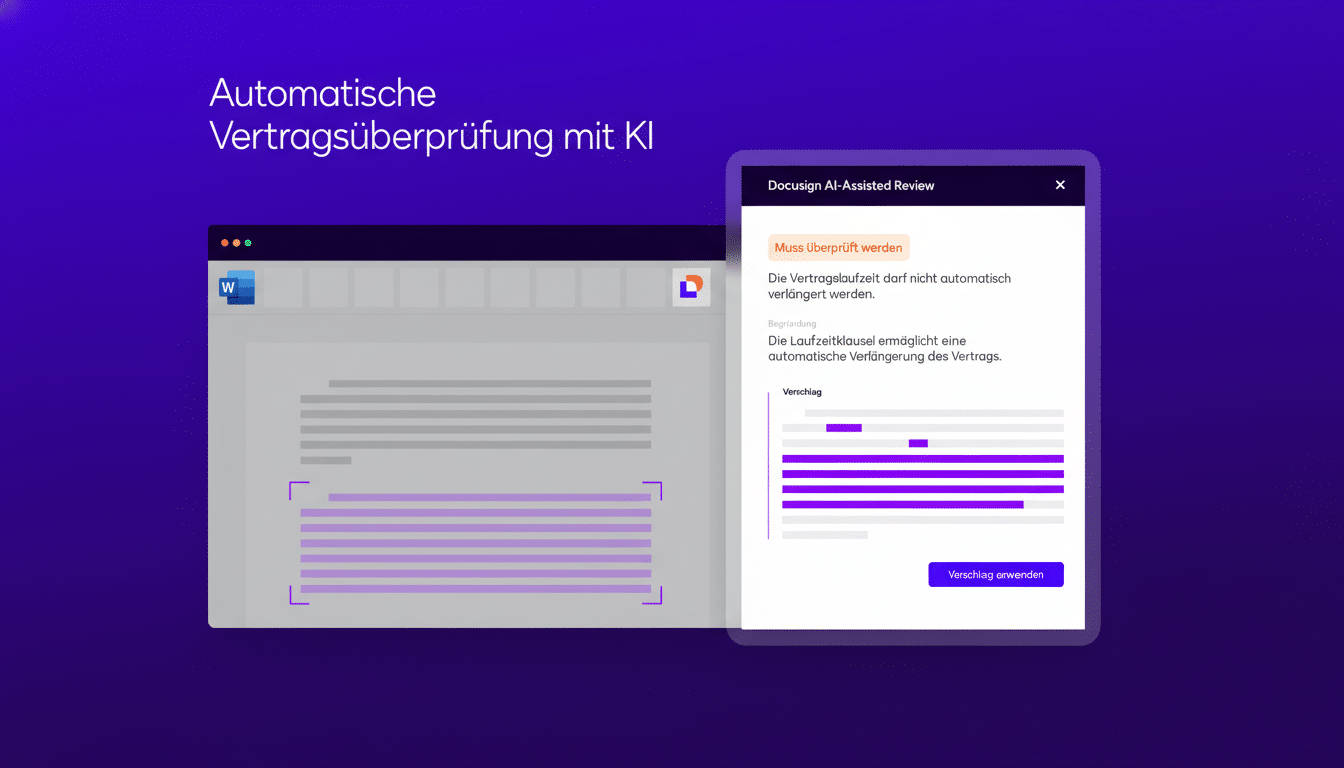
The tool generates a concise, plain-language summary of key terms and surfaces definitions and obligations across the document. You can ask targeted questions—think renewal rules, termination triggers, fees, warranties, or penalties—and get answers that cite the exact clause so you can check the source yourself. That clause-level grounding matters; it gives users a quick way to confirm the AI didn’t overreach.
It’s not just for signers. For preparers, DocuSign’s system auto-detects the type of agreement, places signature and data fields, and validates recipients—work that normally takes manual passes. Under the hood, DocuSign says these capabilities run on its Iris agreement intelligence platform, which is purpose-built for contracts rather than general web text.
Why this matters now for signers and preparers
Contract complexity has been a persistent drag on deal velocity. Research from World Commerce & Contracting estimates that poor contracting practices can cost organizations roughly 9% of annual revenue. On the consumer side, a Deloitte survey found that 91% of people consent to terms and conditions without reading them, underscoring how often critical details go unchecked. An AI layer that highlights obligations and risk could shorten cycles and reduce nasty surprises.
Vendors across legal tech are racing to add similar capabilities. Adobe’s document tools, Ironclad, Evisort, and others now summarize clauses and flag deviations from playbooks. The differentiator is not who can summarize, but who can ground answers in the original text, minimize hallucinations, and fit into existing workflows without creating new risks.
Trust the tool but verify the text in contracts
Even contract-tuned AI can miss nuance. Renewal terms can hinge on a stray definition; indemnity clauses may carve out exceptions buried in another section; governing law or venue can change interpretation entirely. DocuSign says answers point back to the precise clause and invites user feedback to improve accuracy—good practices aligned with guidance from frameworks like the NIST AI Risk Management Framework. But ultimate responsibility sits with the signer or preparer.
There’s also the privacy dimension. Agreements often contain sensitive pricing, personal data, or trade secrets. Enterprises should confirm how models are isolated, how data is retained, and whether content is used for training. Regulators from the FTC to European data protection authorities have warned against overstated AI claims and opaque data handling; procurement and legal teams should treat AI in contracting as a risk-managed capability, not a magic wand.
A quick fact-check playbook for reviewing contracts
- Cross-check every AI answer against the cited clause and any referenced definitions or schedules. If there’s no citation, treat the answer as unverified.
- Scan for “linked” terms: notice periods, liability caps, indemnities, auto-renewal mechanics, termination for convenience, and dispute resolution. These often live in multiple sections.
- Validate numbers and dates: pricing tables, effective dates, renewal windows, and service levels. Small arithmetic or calendar errors can be costly.
- Look for exceptions and carve-outs. If the AI summarizes a broad obligation, ask it to list exclusions and limitations, then verify the text.
- For high-stakes agreements, run the AI summary as a first pass, then consult counsel or your internal playbook. Treat the model as an assistant, not an arbiter.
Bottom line for signers and preparers using DocuSign
DocuSign’s contract-aware AI is a practical upgrade: faster comprehension for signers, less setup work for preparers, and clause-level citations that encourage healthy skepticism. Used well, it can reduce confusion and speed signatures without sacrificing clarity.
But contracts are high-consequence documents. The smartest way to use AI here is as a spotlight—illuminating terms you might otherwise miss—followed by a human fact-check. If the model makes the complex more readable and you make sure the reading is right, you get the best of both worlds.
