


Florida Governor Ron DeSantis hews toward a more nuanced position on artificial intelligence policy than the former baseball cap wearer of the White House, Donald Trump, grinding open his maw to issue that mankind-to-machine loudspeaker fart known as “The American AI Initiative.” Against the pipe dream of AI-generated songs and videos as a harbinger of technological utopia, DeSantis warns that deepfakes and synthetic media “may undermine public trust” and lead to an “existential” crisis for democratic self-government.
DeSantis Breaks With Trump on AI Governance
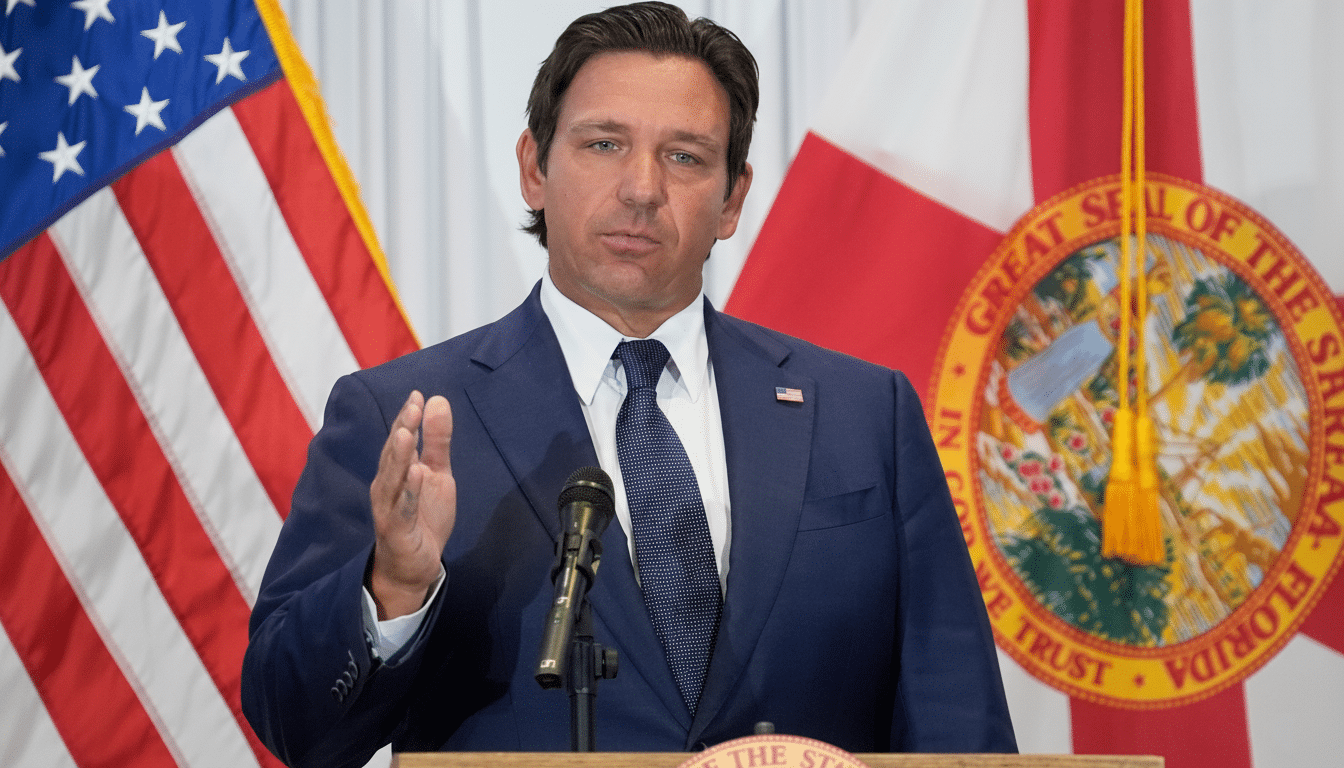
DeSantis’s comments come as Trump, in a new executive order, urges federal review of state AI laws that the president says too often result in “burdensome” regulation. The governor of Florida, meanwhile, is promoting a state-specific “Citizen Bill of Rights for Artificial Intelligence,” suggesting he views states as laboratories for responsible AI protections rather than impediments to progress.
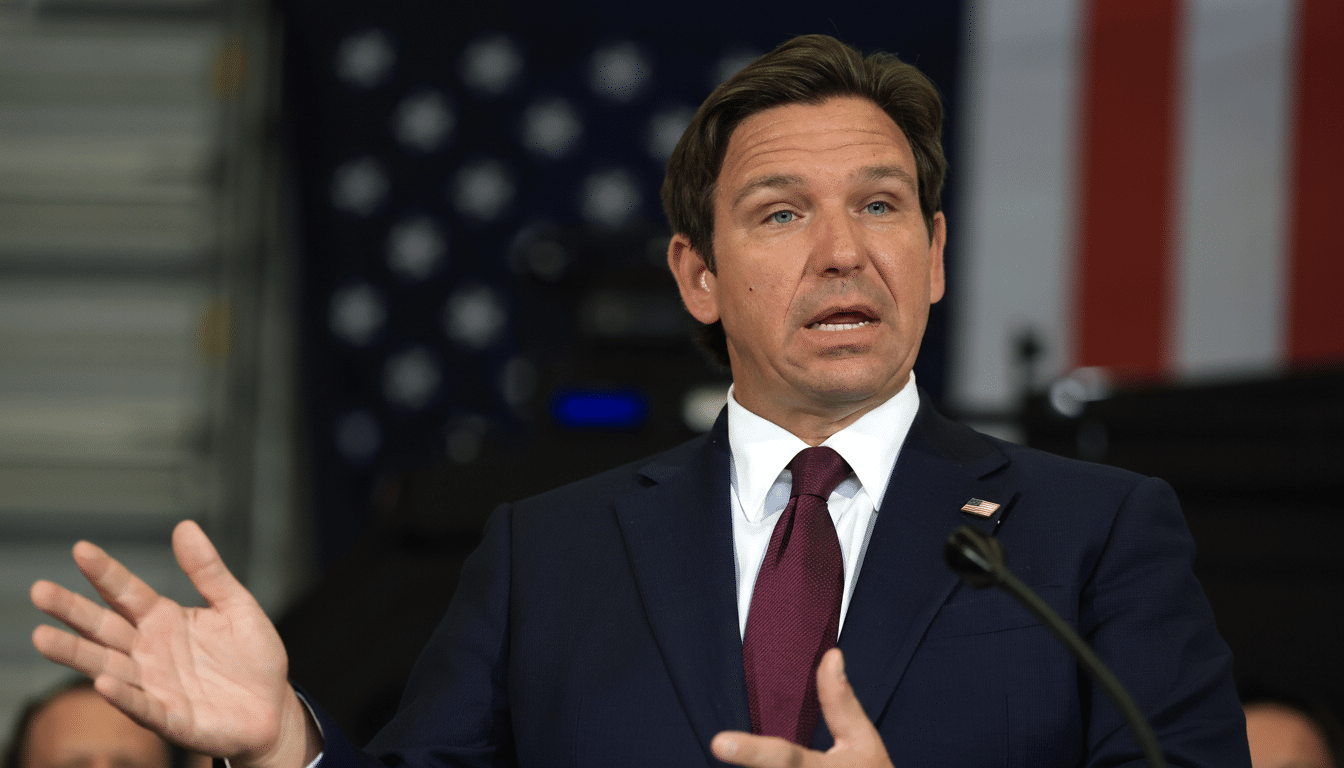
In his public commentary, DeSantis has stressed the supremacy of human agency in the AI era and raised alarms that generative systems can be weaponized to deceive voting citizens, impersonate people, and erode shared facts. The governor’s thinking is a reflection of the broader push that some statehouses are making to mandate provenance labels, ask for consent when your voice or image is being cloned, and even demand disclosure when AI influences political communications.
Deepfakes and Electoral Integrity in U.S. Elections
DeSantis’s alarm echoes fears raised by federal law enforcement and researchers. The F.B.I. has issued warnings about malicious deepfakes in fraud and sextortion schemes, and election-security analysts at the Stanford Internet Observatory as well as elsewhere have identified synthetic audio and video as an increasing tool of political deception. A highly publicized AI-cloned robocall in New Hampshire purported to be from President Biden and encouraged low turnout, demonstrating how easily manufactured fakes can warp civic participation even early in the 2024 election cycle.
It’s not hypothetical anymore: misinformation at scale. NewsGuard has identified hundreds of AI-driven content farms that are putting out low-quality or false articles at industrial scale. Synthetic media detection, meanwhile, tends to be a step behind synthetic media creation: there’s no watermarking standard that works with all forms of synthetic content, and where watermarks are in use, they can often be removed or degraded. In this environment, DeSantis’s emphasis on labeling, authentication, and speedy takedown procedures dovetails with suggestions from election officials and civil society groups that want clearer rules before the next news cycle outpaces the fact-checkers.
Clash Over Federal Preemption and States’ Rights
At the core of the split between DeSantis and Trump is who makes rules. Last legislative pushes from Washington included talk of a decade-long blanket prohibition on state-level AI regulation; Congress ultimately spiked that idea as bipartisan critics — including Missouri Sen. Josh Hawley, Arkansas Gov. Sarah Huckabee Sanders, and Utah Gov. Spencer Cox — claimed the measure would leave communities vulnerable while Washington debates frameworks. DeSantis has sounded a similar note, observing that executive actions don’t override state legislatures and warning of “AI amnesty” that would hand tech firms the keys for another decade of unchallenged growth.
Leah Millis/Reuters. The policy tension is familiar: the federal government wants one thing, and 50 states want another thing. California and Texas have already tried out rules aimed at A.I. election manipulation and deceitful endorsements, and now it looks like Florida could become the next entrant in this game of blueprint one-upmanship.
Beyond Politics: Data Centers and AI’s Footprint
Another fault line is infrastructure. While Trump has boasted about quick data center approvals, DeSantis tapped the brakes in Florida out of concern for local objections to land uses, noise, and resource consumption. Data centers today consume about 1 to 1.5% of global electricity, and that percentage is poised to grow as A.I. inference becomes more widespread in daily services from the lab to the factory floor. Scientists at the University of California, Riverside note that large models use a lot of water, and may add to community backlash in rapidly developing areas.
It’s no longer just “AI good vs. AI bad.” It’s where to build, who pays for grid upgrades, and how much economic gain can be balanced against reliability of the system and environmental cost. Voices on the left, including Bernie Sanders, have even entertained temporary moratoriums on new builds to let policymakers catch up.
What a Florida AI Bill of Rights Could Include
While Florida’s final draft has not yet been filed, DeSantis’s rhetoric hints at provisions that would be familiar to AI policy watchers: clear labeling of AI-generated political content; explicit consent for cloning somebody’s image or voice; and protection for minors from predatory “companions” using AI, as well as transparency around automated decisions involving housing, employment, or credit. Those concepts reflect aspects of the White House Office of Science and Technology Policy’s AI Bill of Rights blueprint, as well as recommendations from organizations like the Brookings Institution and the National Institute of Standards and Technology’s AI Risk Management Framework.
Expect fights over enforcement. Watermarking mandates pose technical questions, and disclosure requirements for political ads will require narrow, court-tested language. Yet Florida’s effort could serve as a powerful blueprint for other states looking to discourage deepfakes without suffocating legitimate use of AI in health care, education, and tools used by small businesses.
The bottom line: DeSantis is gambling voters want AI rooted in accountability, not techno-utopian hype. His departure from the Trump administration’s stance underscores a simmering Republican split over how aggressively to police the risks of the technology — and just how much opening it should leave for states to act while Washington gets its act together elsewhere.
