


The XPS brand that’s the flagship of Dell America is back, and after some hands-on time with other new models in this range—such as the forthcoming XPS 14 and 16—it’s clear the comeback has been highly calculated.
The company disavowed its “Dell Premium” nomenclature and restored XPS in order to reclaim customers — and from what I’ve seen so far, these machines have the design restraint and performance ambition to do it.
- Design returns to form with minimalist XPS aesthetics
- Displays go beyond IPS with bright Tandem OLED options
- Ports, wireless, and everyday practicalities for both models
- Keyboard and mouse updates that fix previous XPS missteps
- Intel Core Ultra ‘Panther Lake’ hardware under the hood
- Where the 16‑inch XPS stands out, and the GPU omission
- Early verdict and price expectations for XPS 14 and XPS 16
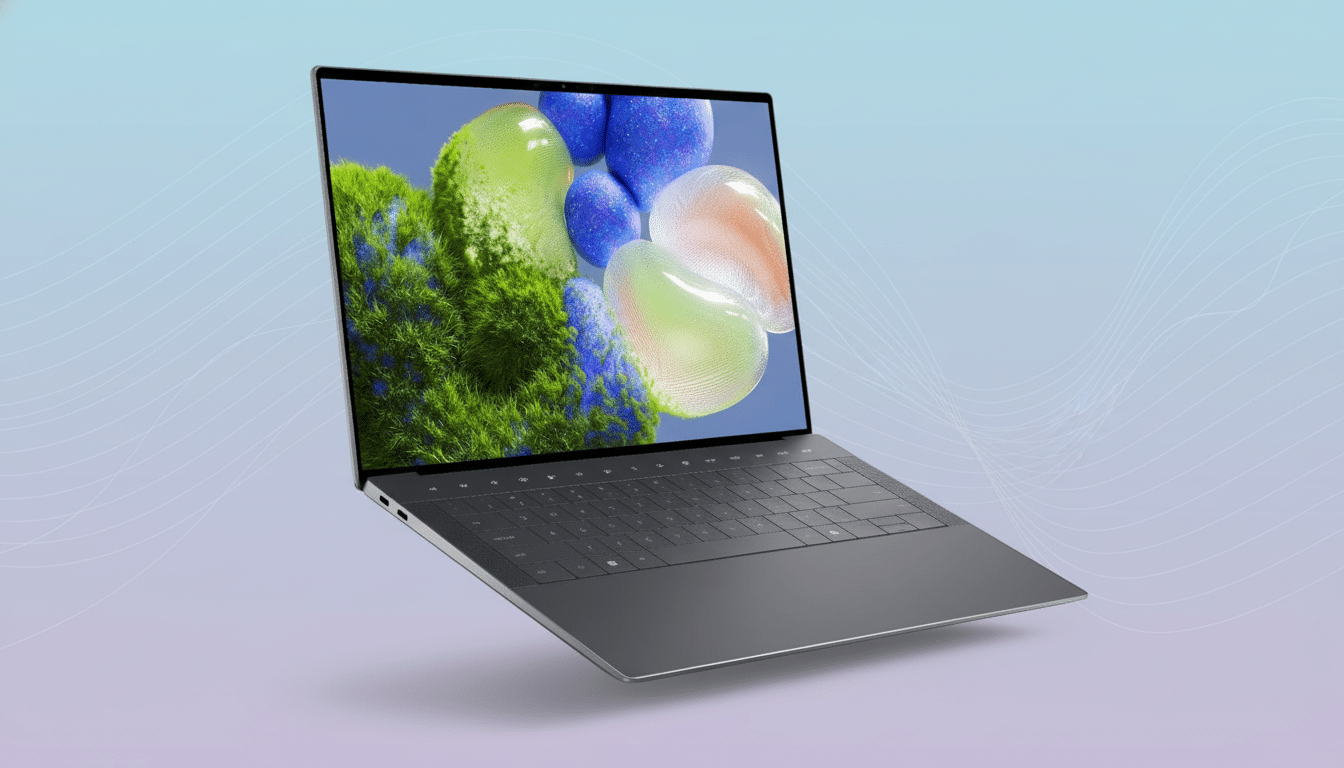
It’s difficult to miss the strategic context. Approximately 44% of its PC shipments are in the consumer sector, according to Dell’s own reckoning; but its share in the US market has weakened year on year, falling from 16.1% to about 14.5%, per recent tracker data (HP ships around 20.1%; Lenovo commands the lead). IDC’s quarterly research has been showing that trend line for months. Relaunching a decades-old brand is the sort of thing you do when you need momentum fast.
Design returns to form with minimalist XPS aesthetics
Minimalism is the story with the XPS 14: aluminum lid and single-piece bottom, a soft-touch magnesium deck, and a steel-reinforced keyboard plate. It’s thinner at 0.58 inch and lighter, about 3 pounds for the OLED model — that’s more than half a pound less compared to its immediate predecessor — without feeling flimsy. It’s a silhouette that intentionally swings close to the clean, slab-like aesthetic that has made rivals successful in the space — but with Dell’s tighter panel gaps and subdued branding.
The XPS 16 scales that formula up, measuring in with similar thinness and a tested weight of around 3.65 pounds for the OLED version. A bigger canvas makes the design language pop, but not evolve; it’s clear Dell wants a unified XPS family again.
Displays go beyond IPS with bright Tandem OLED options
The big chit-chat feature is the Tandem OLED option on both sizes, a 14-inch 1800p touch panel or a 16-inch 3200×2000 touch panel, with each capable of variable refresh from 1Hz to 120Hz. It stacks its light-emitting layers double-high for more brightness and color stability, and it shows: Windows UI elements are nearly etched onto glass, and HDR media pops without crushing shadow detail. But if you skip to the 1200p non-touch LCD, OLED is where it’s at.
Even though there’s an almost impossibly narrow border now, Dell still manages to make room for an 8-megapixel 4K HDR webcam at the top of the display. In my brief trials, skin tones weren’t overly processed and noise was kept in check under normal office lighting — zoom-call ready without having to tinker with ring lights.
Ports, wireless, and everyday practicalities for both models
Both models keep the I/O in line: three Thunderbolt 4 ports with DisplayPort 2.1 and power delivery, as well as a headset jack. One of them will have the unenviable job of charging, but the rest of that bandwidth is more than enough to drive dual 4K displays or a fast external SSD. Wireless is thoroughly up to date with Wi‑Fi 7 and Bluetooth 6.0 support checking boxes for next-gen routers and accessories.
Keyboard and mouse updates that fix previous XPS missteps
Gone is the capacitive touch strip in favor of a physical function row, pleasing to anyone who lives and dies by their F-keys and media shortcuts. Key feel is crisp on a firm, solid plate (though the tops are packed more tightly than I’d like; I would’ve liked just a hair more separation for touch typing at speed).
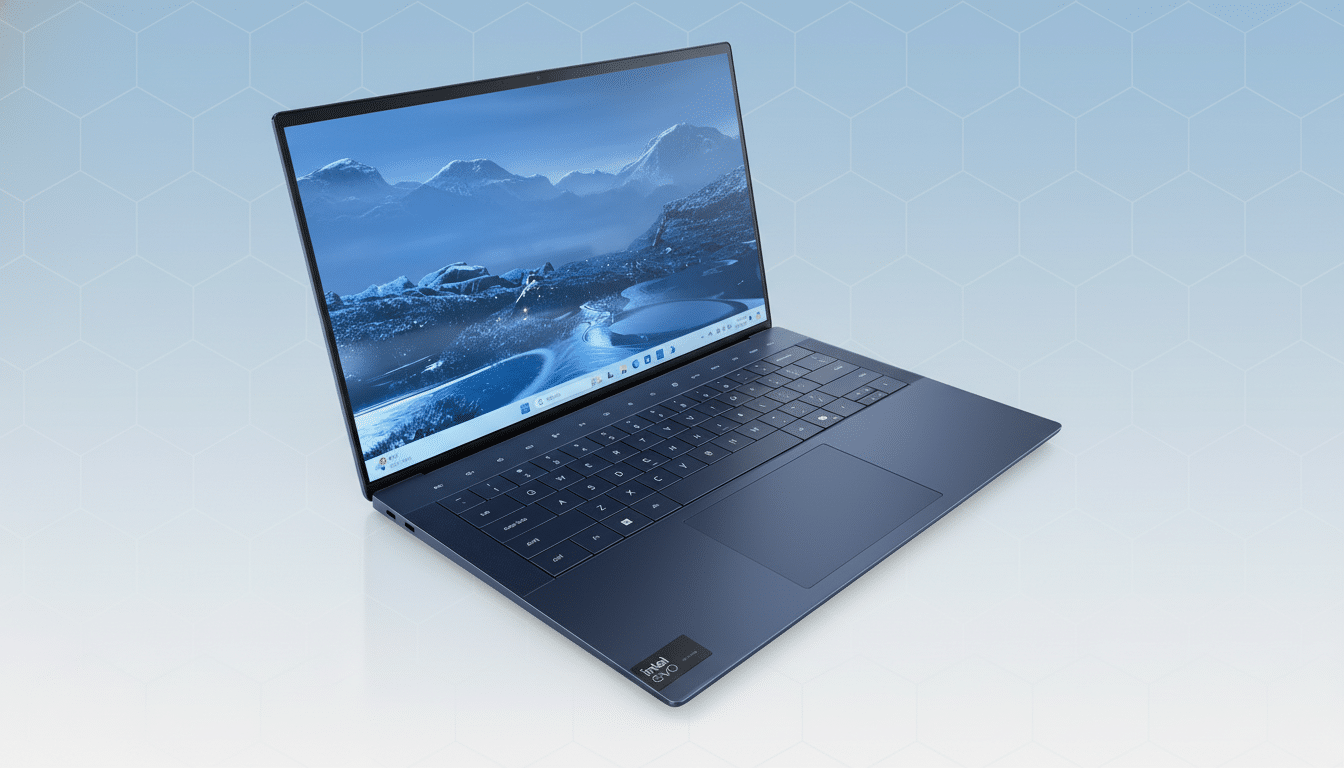
The glass haptic touchpad receives more definite edges, with slim raised lines surrounding the functional area. It’s a small tweak that has a daily impact, particularly for users who previously “dropped off” the edge when editing timelines or photos.
Intel Core Ultra ‘Panther Lake’ hardware under the hood
Inside, both laptops use Intel’s third‑gen Core Ultra “Panther Lake” stack in configurations spanning from the 5-core Core Ultra 325 to the 16-core Core Ultra X9 388. Intel has told press about efficiency gains, a beefier NPU for on-device AI, and bigger integrated Xe graphics in the Ultra T tier. Memory options range from 16GB up to 64GB, and storage goes from as small as 512GB up to 4TB with the larger capacities getting PCIe Gen 5 throughput.
Battery tech is equally notable. The labeling here is straightforward: each chassis houses a 70Wh pack built using Dell’s new 900ED high-density cells, which the company says can store more energy in a given footprint and recharge more quickly. I couldn’t conduct formal tests on preproduction hardware, but during my forays unplugged, quick top-ups and muted fan noise were encouraging.
Where the 16‑inch XPS stands out, and the GPU omission
The top display option for the 16-inch model pushes a crisp 3200×2000 resolution, and the expanded thermal envelope ought to help keep those boost clocks sustained under load. One big omission: no discrete GPU will be offered at launch. We’ll see how far the latest Xe graphics can go for creators and “light gaming,” but when it comes to more serious 3D workflows, I suspect some people will still want that dedicated silicon.
Early verdict and price expectations for XPS 14 and XPS 16
What I took away after spending time with both machines is simple: this is a course correction, deliberate in its intent. The XPS 14, to be clear, is no gaming powerhouse: the “premium thin-and-light” niche is more its forté, with an OLED display that bests many IPS panels and a well-balanced set of ports and polish. The XPS 16 sounds like the larger screen many users were craving, albeit with discrete graphics being the one trade-off.
Starting configurations are $2,049 for the XPS 14 and $2,199.99 for the XPS 16, with broader, more affordable builds promised to be below two grand shortly after launch. If Dell matches that design reset with predictable supply and aggressive promo pricing, it has a good chance of regaining some share. Name aside, the hardware indicates that the XPS’ genealogy — subdued swagger, premium materials and cutting-edge displays — is back for real.
Sources: IDC PC market tracker; Intel architecture briefings on Core Ultra; company disclosures on product specs and battery technology.
