


Customer-facing analytics has quietly become one of the most important differentiators in modern software products. When analytics move from internal dashboards to the product itself, they stop being a reporting tool and start becoming part of the user experience.
This article explains what customer-facing analytics really means, how it differs from traditional BI, what capabilities it requires at the system level, and how teams typically build it in practice.
- Understanding Customer-Facing Analytics
- Why Customer-Facing Analytics Changes Product Dynamics
- Customer-Facing Analytics vs Traditional BI
- What Makes Customer-Facing Analytics Hard to Build
- Build vs Buy: How Teams Implement Customer-Facing Analytics
- The Business Impact of Customer-Facing Analytics
- Final Thoughts
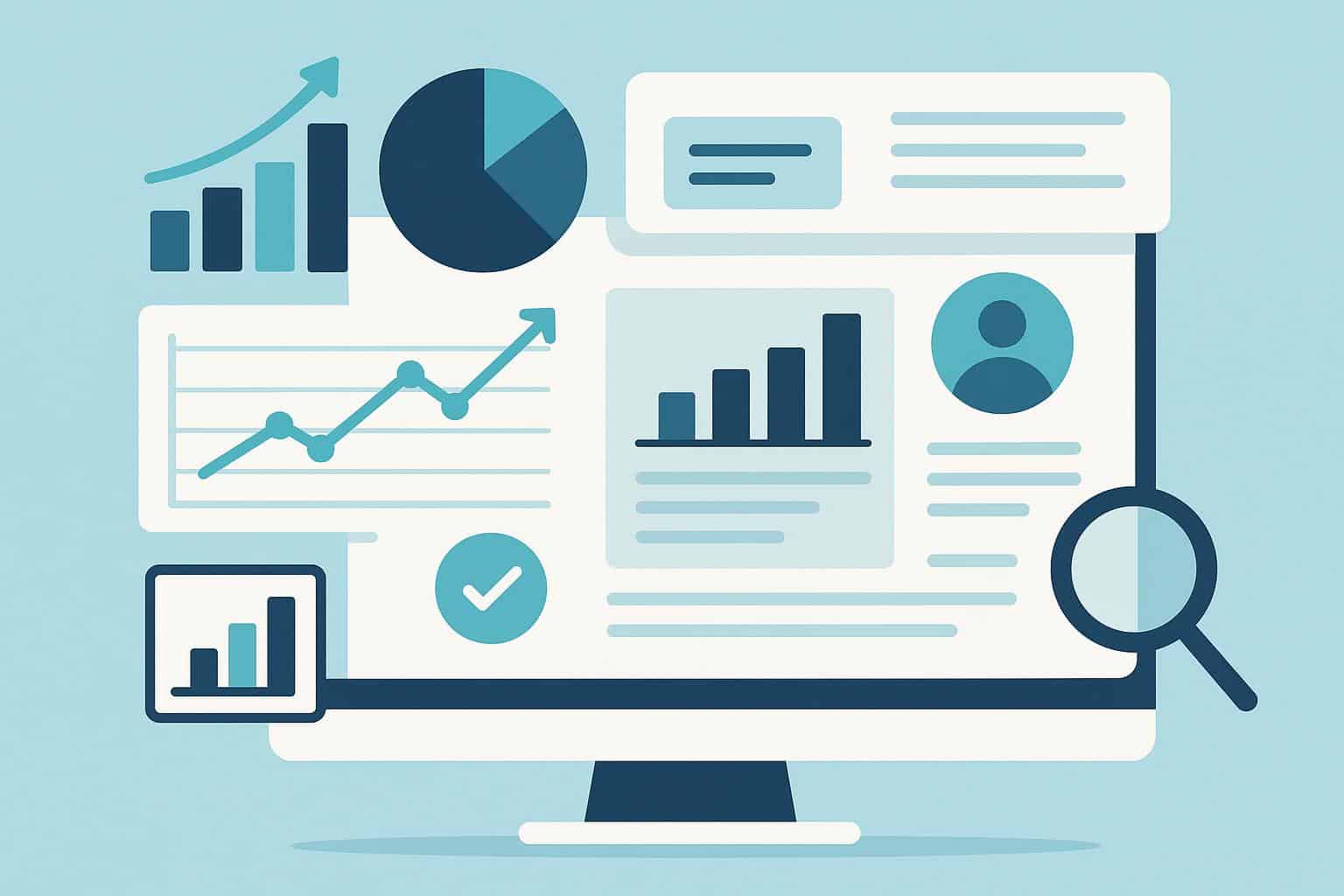
Understanding Customer-Facing Analytics
Customer-facing analytics refers to analytics features that are embedded directly into a product and used by end users, not just internal teams. Instead of answering questions like “How is the business performing?”, these analytics answer questions your customers care about:
- How are my users behaving?
- How did my revenue change today?
- Why did my conversion rate drop this morning?
The key distinction is ownership. In customer-facing analytics, the data is still yours—but the insights belong to your users.
Why Customer-Facing Analytics Changes Product Dynamics
Once analytics become customer-facing, expectations change dramatically.
Users expect:
- Data to be fresh, not updated overnight
- Dashboards to load instantly, even under peak usage
- Filters and drill-downs to feel interactive
- Metrics to reflect changes in near real time
At this point, analytics is no longer a “reporting feature.” It becomes a retention mechanism. Products that expose timely, trustworthy insights give users a reason to return frequently, explore deeper, and rely on the platform as a source of truth.
This is why many SaaS companies discover that analytics adoption correlates directly with engagement and expansion—not because users love charts, but because they love clarity.
Customer-Facing Analytics vs Traditional BI
Traditional BI tools are designed for internal analysis. They assume:
- A small number of trained users
- Long-running analytical queries
- Batch-oriented data pipelines
- Low concurrency and controlled access
Customer-facing analytics operates under almost the opposite assumptions.
You are serving:
- Thousands or millions of concurrent users
- Short, interactive queries
- Constantly changing filters and dimensions
- Live or near-live data
From a systems perspective, this means that what works for internal BI often collapses under customer-facing workloads. The difference is not cosmetic—it’s architectural.
What Makes Customer-Facing Analytics Hard to Build
Most teams underestimate customer-facing analytics because the UI looks simple. The complexity lives underneath.
Key challenges include:
- High concurrency: dashboards are queried by users, not analysts
- Low latency: sub-second responses are expected
- High-cardinality data: user IDs, sessions, accounts, regions
- Frequent updates: metrics change as users act
- Predictable performance: one heavy query cannot slow everyone else down
This is where the database layer becomes the bottleneck far more often than the visualization layer.
Build vs Buy: How Teams Implement Customer-Facing Analytics
Teams typically follow one of two paths.
Some build analytics pipelines using general-purpose data warehouses and caching layers. This can work early on, but complexity grows quickly as concurrency and freshness requirements increase.
Others adopt architectures designed specifically for interactive analytics. In these setups, a real-time or near-real-time analytical database sits behind the application, serving user-driven queries directly.
Platforms like VeloDB, built on Apache Doris, are commonly evaluated at this stage. They are designed to handle:
- High-QPS analytical queries
- Real-time ingestion with immediate queryability
- Standard SQL access
- Efficient filtering across high-cardinality dimensions
In customer-facing analytics, the database is not just a backend—it directly shapes what the product can and cannot offer.
The Business Impact of Customer-Facing Analytics
When implemented well, customer-facing analytics delivers benefits beyond “better dashboards.”
It enables:
- Faster user decision-making
- Greater trust in the product
- Higher engagement and retention
- Clearer value communication
- Stronger product differentiation
From an engineering standpoint, it also simplifies internal workflows. When customers can answer their own questions through embedded analytics, support load drops and feedback loops tighten.
Final Thoughts
Customer-facing analytics sits at the intersection of data, product, and engineering. It is not about exposing raw metrics, but about delivering insight at the moment users need it.
As more products compete on experience rather than features, analytics becomes part of the interface—not an afterthought. Choosing the right architecture early, especially at the database layer, often determines whether customer-facing analytics becomes a growth lever or a long-term liability.
For teams building analytics-driven products at scale, systems like VeloDB exist to remove the hardest infrastructure constraints—so engineers can focus on delivering insight, not fighting performance limits.
