


The first of 18 superconducting magnets has been installed at Commonwealth Fusion Systems’ SPARC reactor, and the company just announced a new collaboration with Nvidia to develop a high-fidelity digital twin of the machine. The dual milestones highlight a quick march to a net-energy demonstration, and an acceptance of AI to accelerate development schedules.
Inside the SPARC milestone: first magnet installation details
The D-shaped magnet now assembled is one of 18 that will encircle SPARC’s superheated plasma in a toroidal, or doughnut-shaped, ring. Each of the magnets weighs about 24 tons and uses high-temperature superconducting tapes to create a 20-tesla field — about 13 times stronger than a hospital MRI magnet. These are crucial for squeezing and stabilizing plasma that is hot enough to fuse hydrogen isotopes.
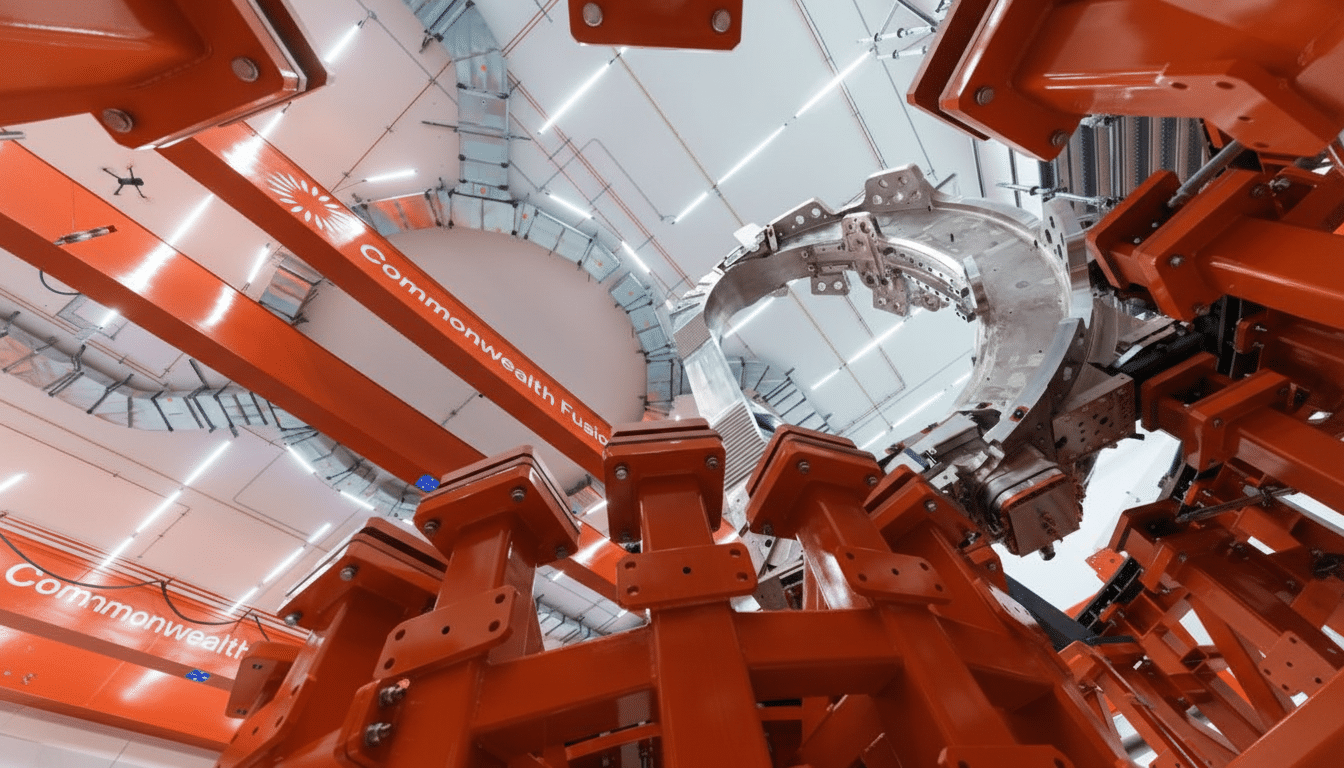
The assembly is perched on a 24-foot-wide, 75-ton stainless steel cryostat that was placed earlier to create the cold heart of the machine. To safely attain the necessary field strength, magnets are cooled to approximately −253 °C (−423 °F) and conduct currents in excess of 30,000 amps. Within the vacuum vessel, plasma temperatures are anticipated to exceed 100 million °C — the temperature at which deuterium-tritium fusion may be performed.
CFS expects to install the remaining 17 magnets about as fast, a factory rhythm that they had been working toward with their suppliers and in-house manufacturing. Closing the ring enables integrated cryogenic testing, power-supply commissioning, and eventually first-plasma operation.
Why high-field magnets are game-changers for SPARC
SPARC owes its small size to high-temperature superconductors, also called REBCO tapes. The stronger the magnetic field, the smaller you can make a tokamak that achieves this power density — a very different argument from before, when larger machines were better. The 20-tesla large-bore magnet was previously demonstrated by MIT’s Plasma Science and Fusion Center, along with CFS, and validated the underlying core materials science for SPARC’s design.
Physics analysis of peer-reviewed studies published as part of the MIT–CFS collaboration suggests that SPARC can readily achieve a fusion gain, Q (the ratio of total power produced by nuclear reactions to input heating power), exceeding 1 under realistic operating conditions. While the experiment is aimed at scientific breakeven, the real reward will be a rapid learning loop — turning insights into hardware and control systems for the company’s first commercial power plant, named ARC.
Nvidia and Siemens partner with CFS to build a digital twin
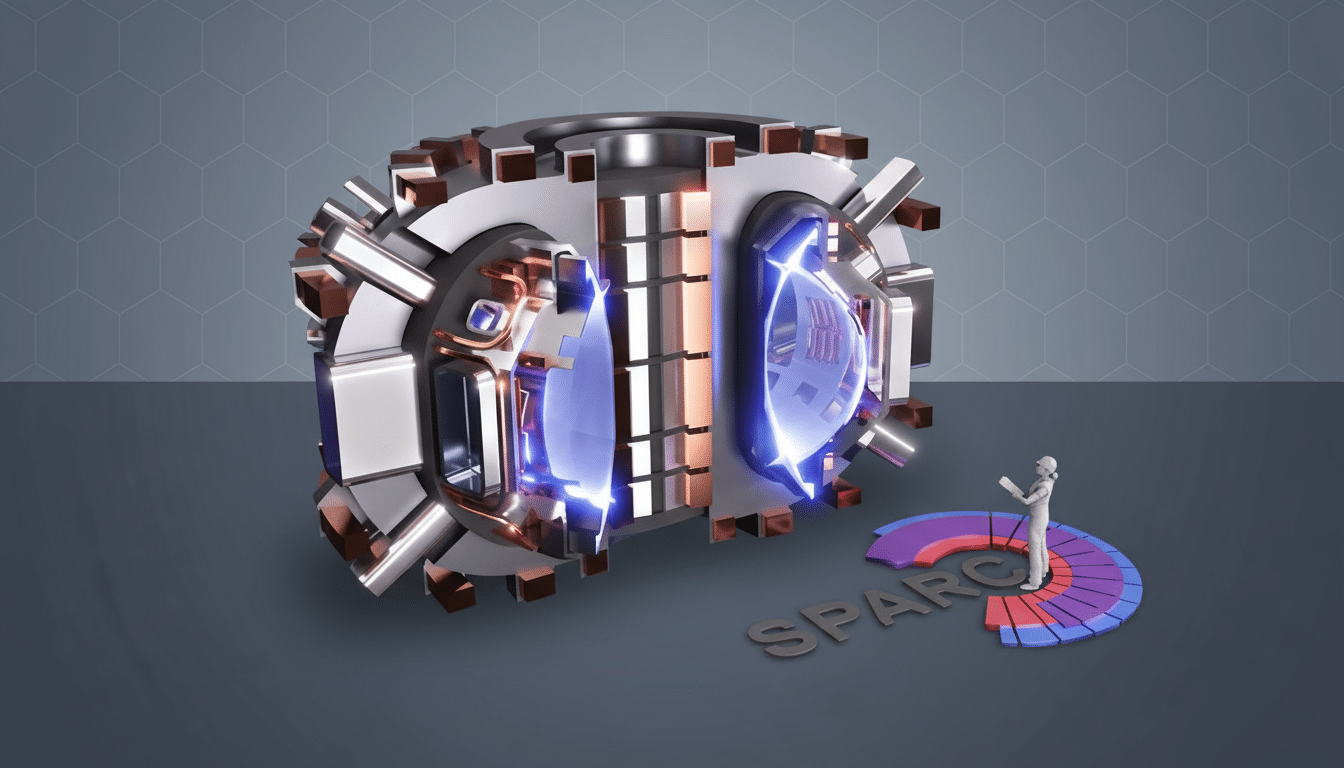
In an effort to lower risk and speed commissioning, CFS is working with Nvidia and Siemens to create a persistent digital twin of SPARC. Siemens will provide design and manufacturing software to organize engineering data for the machine, while Nvidia’s Omniverse platform is being used to combine real-time physics, sensor feeds, and control models within a single simulation.
Instead of being a one sim in isolation that is performed for design, the digital twin is supposed to follow the physical reactor from its birth through assembly, cooldown, and operational phases. That includes testing stress maps for the magnets, cryogenic loads, and plasma-control algorithms virtually, comparing that to live telemetry — and then fine-tuning things before transferring any changes to the machine. In other sectors, digital twins have reduced validation times for jet engines and automotive platforms; in fusion, the return on investment might take the form of faster shots or a safer operating envelope, leading to more productive experimental campaigns.
AI is increasingly becoming a member of that toolkit. EPFL and DeepMind’s work has previously demonstrated reinforcement learning can be used to shape and control plasma configurations on tokamaks. With Omniverse and high-fidelity models, CFS hopes to pretrain and validate advanced controllers and fault-response strategies in advance of operations, turning the twin into a co-pilot for the control room.
Funding raised to date and the commercial path for ARC
CFS has raised almost $3 billion to date, including a nearly $863 million Series B2 round that included Nvidia, Google, and others. The company estimates its first-of-a-kind commercial plant, the ARC, will need several billion more. That might seem like a daunting task, but it’s in line with other megaprojects for energy infrastructure — and the market demand for firm, zero-carbon power will only grow.
Industry context matters here. Funding for private fusion spiked over the last few years, and public agencies have been sketching out a path to demonstration plants and regulatory clarity, according to the Fusion Industry Association. CFS’s high-field tokamak approach is one of a number that the company (and rivals in the field, for example Tokamak Energy, as well as less-publicized efforts by Helion or TAE) is racing to be first with electrons to the grid in the early 2030s.
What to watch next as SPARC assembly and testing advance
Among the key near-term milestones:
- Pace of magnet installations
- Integrated cryogenic tests
- Power-system energy turn-on
The maturity of the Nvidia–Siemens digital twin work will be just as revealing — especially in how directly it reflects hardware response during thermal cycles and initial plasma pulses.
If SPARC shows net energy as they hope it will, CFS will then have the hard graft of scaling to a power plant: tritium fuel management, component lifetimes under neutron bombardment, and balance-of-plant economics. But the magnet installation and Nvidia deal suggest the company is building out both the physical and digital stacks to transition from a novelty experiment to a reproducible energy product.
