


Clicks Technology is betting big on that world of tactile typing, with two new products launching simultaneously: a BlackBerry-style phone designed for focused work, paired with a $79 snap-on keyboard that puts real keys on just about any mobile screen. The move is aimed at professionals who manage tasks driven by messages and are longing for the accuracy of physical QWERTY work input.
A purpose-built second phone focused on productivity tasks
Clicks’ initial device will be the Communicator, a $499 phone that is meant to complement an existing smartphone. Instead of encouraging the usual stream of feeds and games, it emphasizes communication and productivity. In partnership with the developers of Niagara Launcher, Clicks organizes the experience around core utilities, like Gmail and WhatsApp — as opposed to addictive apps.
- A purpose-built second phone focused on productivity tasks
- Hardware that embraces tactility for efficient typing
- Signal Light alerts and Prompt Key for quick input
- Pricing and early access details for early adopters
- $79 snap-on keyboard for any screen offers versatility
- Who this is for: message-first users and typists
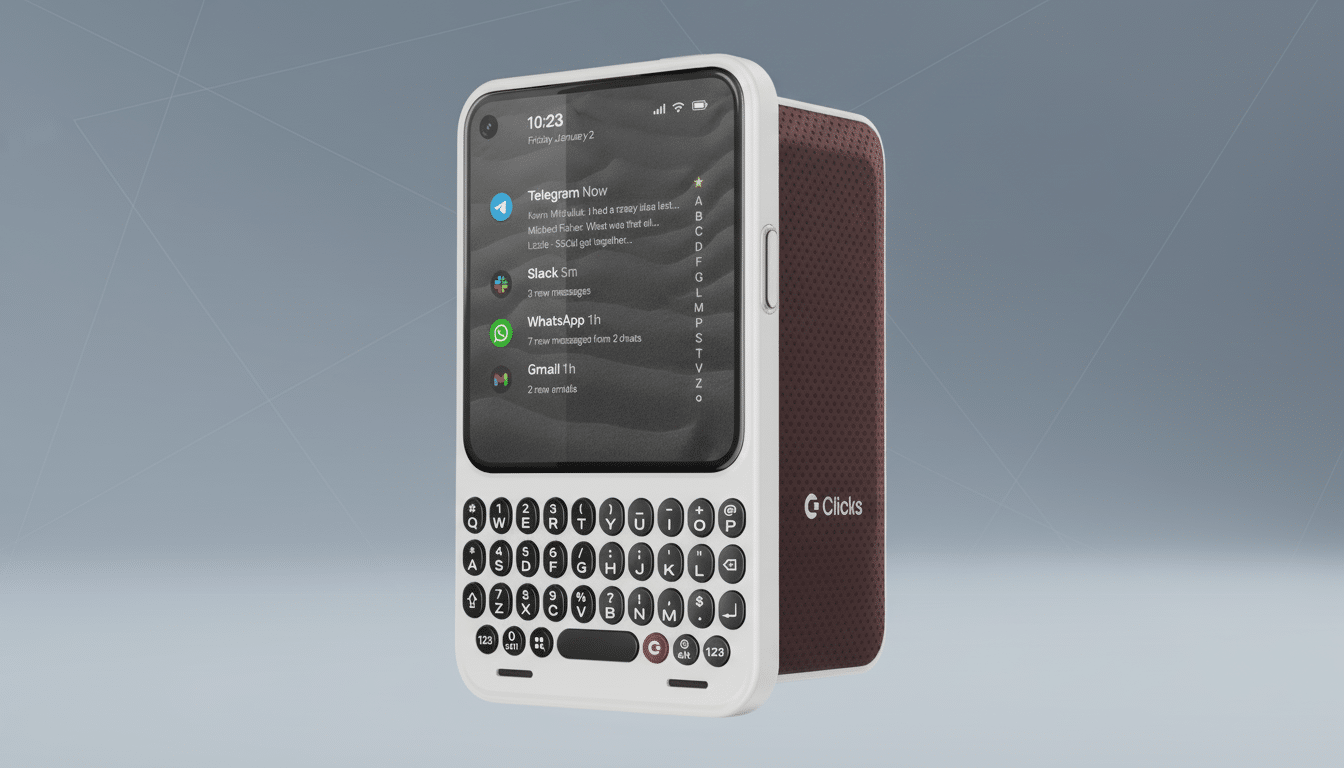
The company is targeting a familiar audience: folks who tote around two phones to keep work and personal life separate or are power users who dig into long-form typing for email, docs and coordination. It’s a nostalgic throwback to what BlackBerry had, once owned: speed typing that lets you look at your eyes-off, words-per-minute screen with those ticks on the top.
Hardware that embraces tactility for efficient typing
The Communicator’s pièce de résistance is of course its ergonomic 35-key QWERTY keyboard, which comes with travel-free keys and enough spacing to minimize typos while hopefully keeping autocorrect arrangements at bay. The keyboard is also touch-sensitive, which means you can scroll through threads and websites without ever removing your thumb from the screen — another throwback to efficiency-first design.
586px / 178.6KB, Clicks Source: Around the chassis, Clicks brings back features that mainline flagships have long since gotten rid of, like a 3.5mm headphone jack, a physical SIM slot alongside eSIM, microSD expandability up to 2TB and a hardware switch that can instantly enter airplane mode. Pop the back cover off to change styles; colors at launch will include Smoke, Clover and Onyx.
Signal Light alerts and Prompt Key for quick input
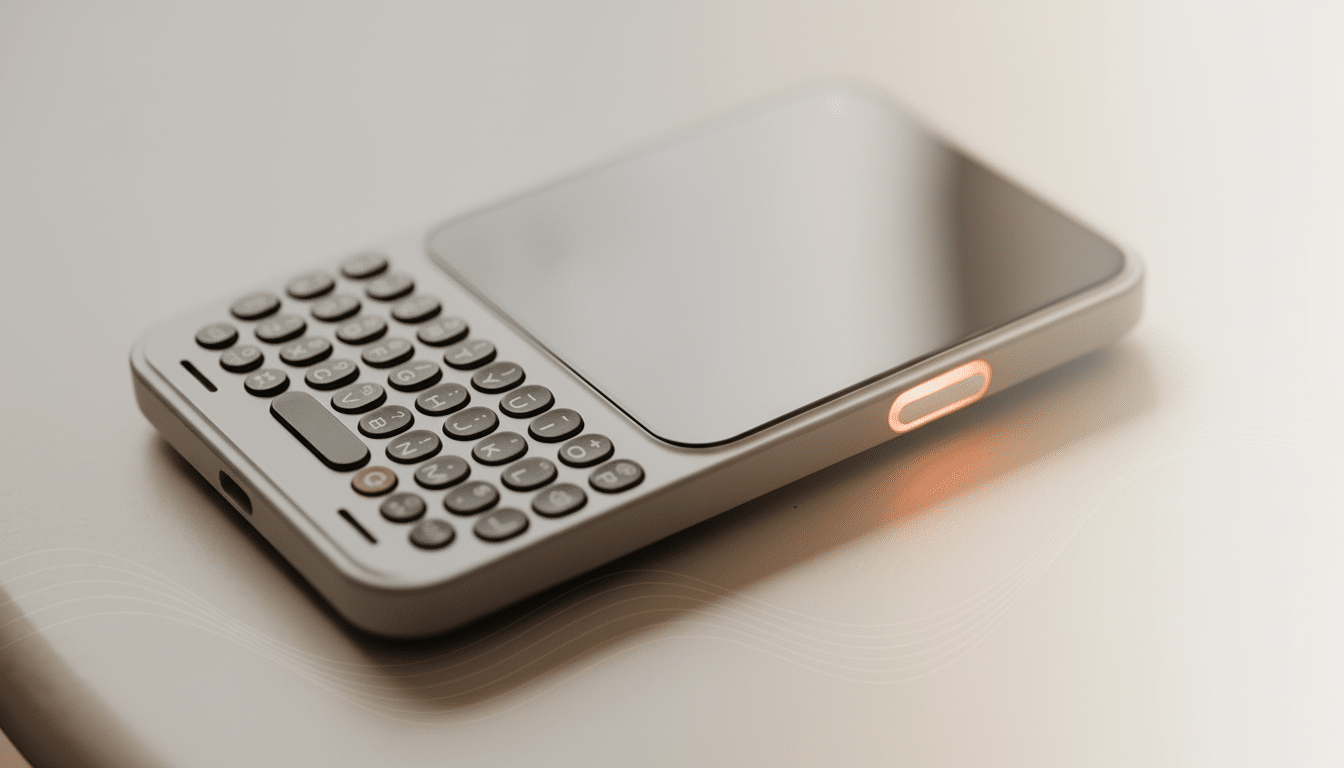
Clicks has its own spin on alert triage with Signal Light, a side-mountable LED light that can be programmed to flash particular colors or patterns for VIP calls or messages and group chats.
Purple for your boss, green for WhatsApp and a discreet pulse for email — helpful when the phone’s face down in one of those meeting-type things.
Underneath it is the Prompt Key, working like a productivity clutch. Tap to dictate into any text field, or when no field is selected a quick voice note. Clicks also says that deeper integrations — like spinning up note takers, transcribers, or AI-driven agents — are on the roadmap, but the button’s main utility is already there.
Pricing and early access details for early adopters
The price of the Communicator is $499, but with an early-bird offer it is $399. Customers can reserve a slot with a $199 deposit, and people who pay the full early-bird price up front get two extra back covers included. Clicks CEO Adrian Li notes that it’s already sold over 100,000 of its existing keyboards in more than 100 countries — a sign that the market for purpose-built typing tools is one where nostalgia plays a role, but does not necessarily rule.
$79 snap-on keyboard for any screen offers versatility
Next to the phone, Clicks is unveiling the Power Keyboard, which slides out and magnetically attaches to a device through MagSafe or Qi2. It draws power from a built-in 2,150 mAh battery and won’t run down your phone or tablet, offering multiple slider positions to handle varying screen sizes in portrait or landscape mode.
Since it pairs as an independent keyboard, the Power Keyboard can also become a TV or AR/VR headset keyboard — useful for providing input on login screen, search field or when messaging in virtual spaces. And it features tactile keys and customization on iOS and Android, as do other Clicks products. Its early-bird pricing is $79 before it jumps up to a regular price of $109, and preorders are open now with shipments slated in the coming short-term.
Who this is for: message-first users and typists
There is a small but steady market for distraction-light, message-first devices. Previous attempts — ranging from QWERTY phones by Unihertz and Planet Computers to minimalist handsets like Light Phone — show that users who live in email and chat highly value tools that make them type rapidly, yet more thoughtfully. Clicks is hoping that by combining modern services with physical keys and smart notifications, it can win some of those users back without making them leave their main phone.
If the Communicator and Power Keyboard provide ergonomic benefits and proven longevity, they could replace smartphones as people’s go-to gear for computing on the go.
The pitch is straightforward: less hitting buttons, fewer spelling mistakes, more concentration — and no thumbs.
