


Clawdbot, a lobster-themed agentic assistant that has exploded across developer circles, has already had to shed its shell. After a request from Anthropic over the name’s similarity to Claude, the project has been rebranded as Moltbot. The rename is the least controversial part: its creator and security researchers are warning that the agent’s power comes with “spicy” risks that everyday users may underestimate.
Open-source agents rarely go viral, but Moltbot’s mix of autonomy and simplicity has struck a nerve. It is free to download, inexpensive to run, and designed to act on your behalf across your digital life—precisely the combination that sparks both excitement and alarm.
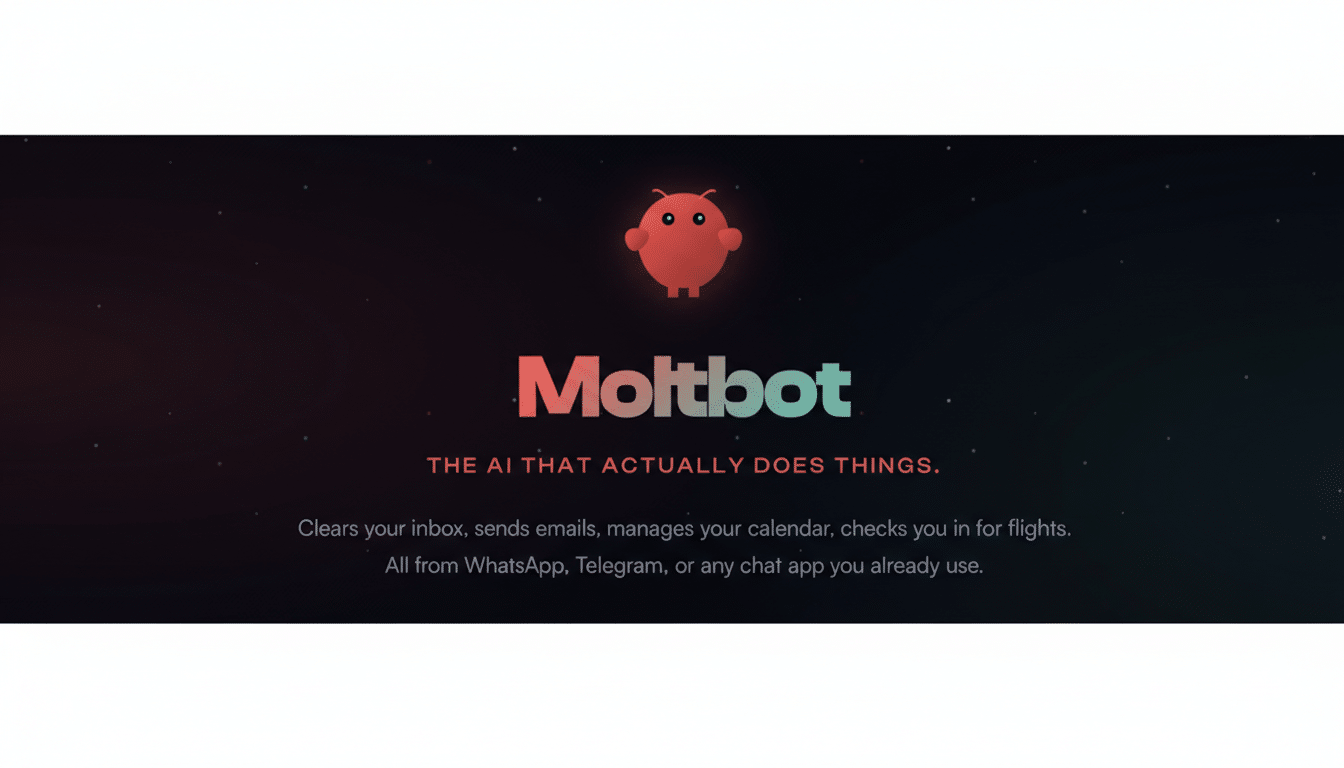
What Moltbot Actually Does Across Your Digital Life
Moltbot’s pitch is aggressive convenience. It can proactively take actions without fresh prompts, sift your files, touch external accounts, and keep working in the background. Think inbox triage before you wake, automatic check-ins for flights, or personalized recaps delivered via WhatsApp, iMessage, or Discord.
Unlike many agent demos, Moltbot is practical to host: users report smooth setups on a basic Virtual Private Server for about $3–$5 per month, and some have squeezed it into a major cloud provider’s free tier. Despite rumors, it does not require specific Apple hardware; an old laptop or a modest VPS can do the job. You can pair it with local or cloud models depending on budget and latency tolerance.
Why The Risks Are Spicy For Powerful AI Agents
To be genuinely useful, an agent needs high-trust permissions: reading private messages, storing credentials, executing commands, and maintaining state. Threat-intelligence firm SOCRadar notes that those very requirements puncture the assumptions traditional endpoint and identity security rely on, effectively turning the agent into a powerful new attack surface.
Moltbot’s own documentation is unusually frank: giving an AI shell access on your machine can never be made perfectly safe. That tracks with broader guidance. The OWASP Top 10 for LLM Applications flags prompt injection and data exfiltration at the top of the risk list, while MITRE ATLAS catalogs tactics adversaries use to steer or exploit model-driven systems. In other words, the danger is not hypothetical; it’s a known class of failure modes.
Some developers assume “local-first” equals safer. Not necessarily. Researchers tracking stealer malware warn that locally stored embeddings, tokens, and caches are attractive loot for commodity threats. Infostealer researchers caution that agents running with broad desktop access can become honeypots: private data is closer at hand, and a single successful compromise yields outsized returns.

Costs And Setup Considerations For Running Moltbot Safely
Running Moltbot cheaply is straightforward, but the architecture decisions matter more than the bill. Local models reduce third-party exposure but raise the stakes for endpoint hardening. Cloud models shift some operational burden out, yet expand the trust boundary to additional vendors. Either way, the biggest risk comes from what the agent can touch: your filesystem, your browser, your APIs, and your communications.
That’s why security teams advise treating Moltbot like privileged infrastructure rather than a hobby script. If it can move money, send messages, or change files, it deserves the same isolation, monitoring, and access discipline you’d apply to an admin workstation or automation runner.
How To Deploy It More Safely With Practical Controls
- Start with least privilege. Limit which folders, calendars, mailboxes, and APIs Moltbot can see. Use per-service accounts with the narrowest scopes, rotate tokens frequently, and avoid granting payment authority until you’ve built confidence.
- Isolate execution. Run the agent in a VM, container, or a dedicated VPS with no direct access to your primary workstation. Segment its network, restrict outbound destinations, and maintain immutable base images so you can “nuke and pave” quickly after an incident.
- Defend identities and secrets. Store credentials in a reputable secrets manager, not flat files. Enforce strong MFA on connected accounts—hardware security keys where possible—and tighten webhook and messaging integrations with allowlists to reduce prompt-injection channels.
- Instrument and audit. Enable verbose logs, set up alerts on sensitive actions, and review conversations the agent has with external content. Red-team the setup with benign prompt-injection tests and file-based lures to see what slips through.
Importantly, Moltbot’s maintainers advise starting with the smallest workable access and expanding gradually. That pacing is essential: most incidents in automation platforms stem from overbroad permissions granted early for convenience and never reeled back.
Agentic Hype Meets Reality As Warnings Temper Enthusiasm
Agentic assistants have cycled through hype before—several high-profile browser agents shipped with caveats about purchasing the wrong item or falling for prompt injections. The lesson is not to abandon the idea, but to treat these systems like interns on your network: capable, fast, and error-prone without supervision.
Moltbot’s surge shows demand for truly useful autonomy. The security warnings show the cost of getting there. If you embrace it, treat it like a privileged colleague with guardrails, not a toy—because once an agent holds your keys, it effectively is your system.
