


Almost three out of 10 American teens are using AI chatbots on a daily basis, and one platform reigns supreme. A new Pew Research Center survey found that 28 percent of teens say they interact with chatbots every day, and that 64 percent have tried them at least once — with ChatGPT the most well-liked brand among teenagers by far.
What the Pew survey shows about teen chatbot use
Pew recently published a post stating that 59% of teens say they use ChatGPT, which dwarfs usage for Google Gemini at 23%, Meta AI at 20%, Microsoft Copilot at 14%, Character.ai at 9%, and Anthropic’s Claude at 3%. The results highlight how fast conversational AI has gone from novel to routine use for a large portion of 13- to 17-year-olds.
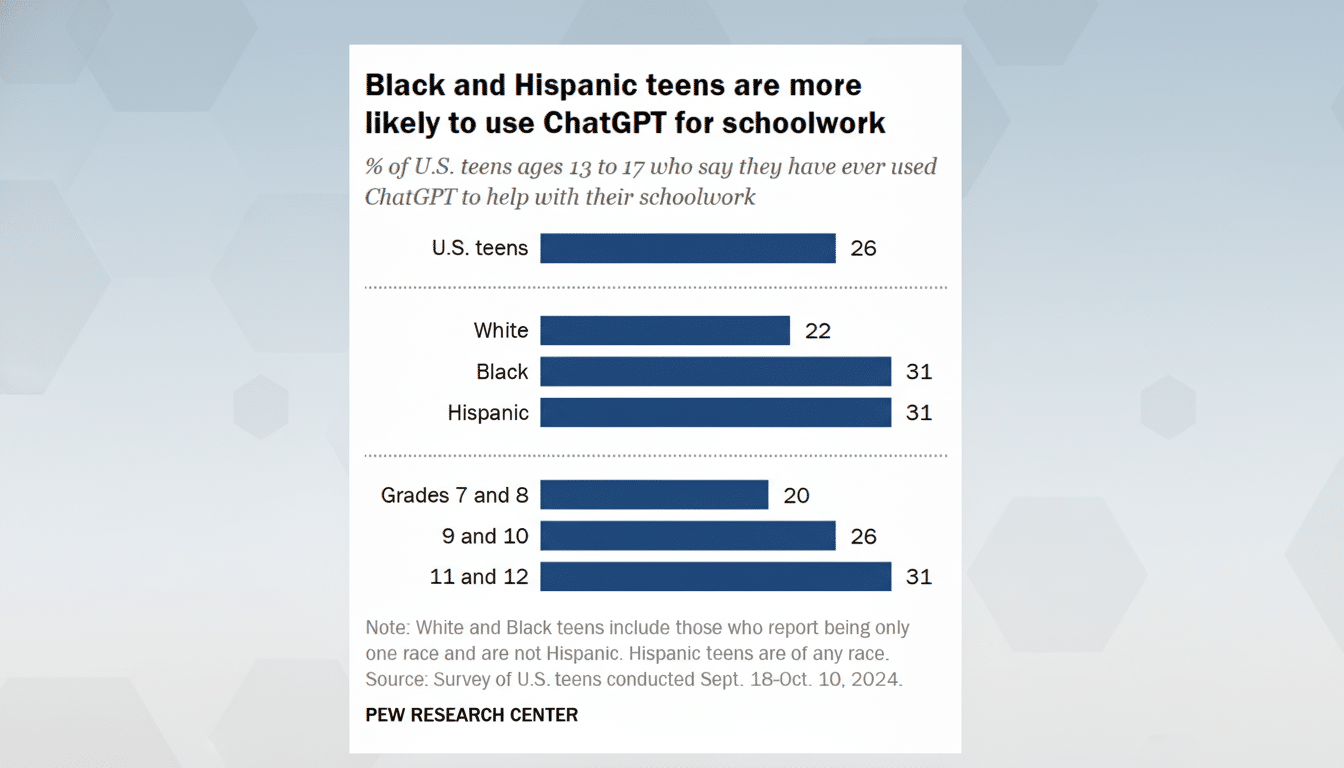
And daily chatbot use increases with age: 31 percent of teens 15 and older report using them every day compared with 24 percent of those who are 13–14. Pew also points to demographic divides: Black and Hispanic teenagers are more likely to be daily users (35 percent and 33 percent) than White teens are (22 percent).
Why ChatGPT is the default choice for many teens
ChatGPT’s early lead, its name recognition and its low-friction access have positioned it as the default starting point for a lot of teens. Educators and parents often mention use cases that align with ChatGPT’s strengths — brainstorming, summarizing readings, checking grammar, or creating practice questions — while teens cite speed and convenience over searching through multiple search results.
It also benefits from the app’s vast ecosystem. Integrations with productivity tools and a rich history of prompts and tutorials have created a feedback loop: The more peers use it, the more they can recommend it to newcomers as the first tool for learning something. Competitors like Gemini, Copilot and Claude, by contrast, might seem more locked into certain brands or workflows — which teens do not care as much about as clear, immediate answers.
Who uses which chatbots across teen demographics
Pew’s data points to a split along income lines in preferences. Teens from wealthier homes say they are more exposed to ChatGPT (62% of those in households making $75,000 or more). Meanwhile, Character.ai — a service based on persistent, personality-inflected conversations — enjoys greater popularity in lower-income households, with some 14% of teens in under-$75,000 homes having used it at all.
It is likely that these differences arise from a combination of access and interest. Adolescents in well-resourced schools might be steered toward general-purpose tools, natural fits for academic-oriented tasks; others may drift to conversational companions and role-play bots that have more intrinsic appeal for entertainment, creativity or exploration.
Safety and policy questions surrounding teen chatbots
The quick acceptance of chatbots by teens comes as the technology is facing increased scrutiny. Providers are feeling pressure to figure out how to detect underage users and apply safeguards, which has been a perennial issue for digital media companies. For decades, platform policies have been driven by U.S. privacy rules for children under 13, but verification has always been imperfect and uneven.
To counter this growing use and potential concern from parents, OpenAI has now added parental controls and limits for users under 18. Character.ai has also put up barriers for minors. The steps come after high-profile lawsuits and public outcry over how such bots can be harmful or inappropriate, especially from “companion” bots built to have long, intimate conversations.
Pew did not ask teens what they actually do with chatbots, but the implications are clear when chatbots become a quotidian feature of life: companies can craft guardrails around these increasingly popular ways for teens to engage — which will matter as much as how accurate these interactions are.
Child-safety organizations, school districts and regulators are pressing for stronger defaults, clearer reporting and independent audits.
The bigger picture for platforms, parents, and schools
Teenagers are already prolific digital users and chatbots are filling in a space that used to belong mostly to search and social feeds. For platforms, the near-term fight is not just about model accuracy; it’s about trust, classroom relevance and public controls that are transparent enough to put parents’ minds at ease but don’t make the apps feel locked down or unusable for teenagers.
Methodology at a glance for the Pew teen survey
The findings are based on a Pew Research Center online survey of 1,458 U.S. teens ages 13–17 conducted March 7 to April 10, using Ipsos’s KnowledgePanel. Findings range from awareness and usage figures across top chatbot brands to demographic breakouts by age, race and ethnicity, and household income.
