


I swore I’d never spend on a purely cosmetic item in a free-to-play game. Then Chappell Roan arrived in Fortnite, and my resolve evaporated faster than a Victory Crown in Storm Circle Five. Her Icon release isn’t just another crossover; it’s the rare drop that nails artistry, identity, and in-game utility so well that even a hardline non-spender like me finally tapped the V-Bucks button.
What the Chappell Roan Fortnite Drop Includes
Epic Games confirmed Roan as the latest Festival Icon, following a run that has featured Sabrina Carpenter, Blackpink’s Lisa, Billie Eilish, Bruno Mars, Lady Gaga, Metallica, Snoop Dogg, and The Weeknd. The spotlight here is split between two distinct looks that mirror her onstage personas and meme-ready moments.
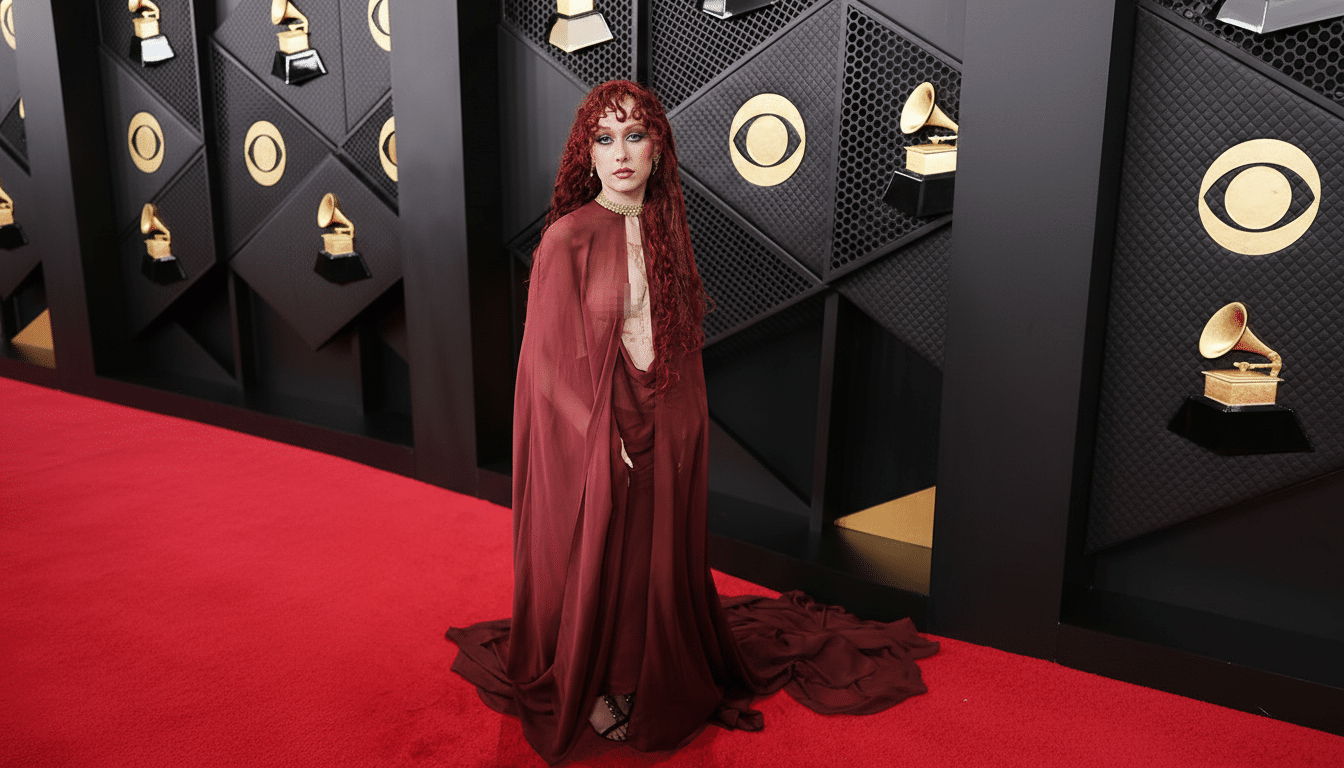
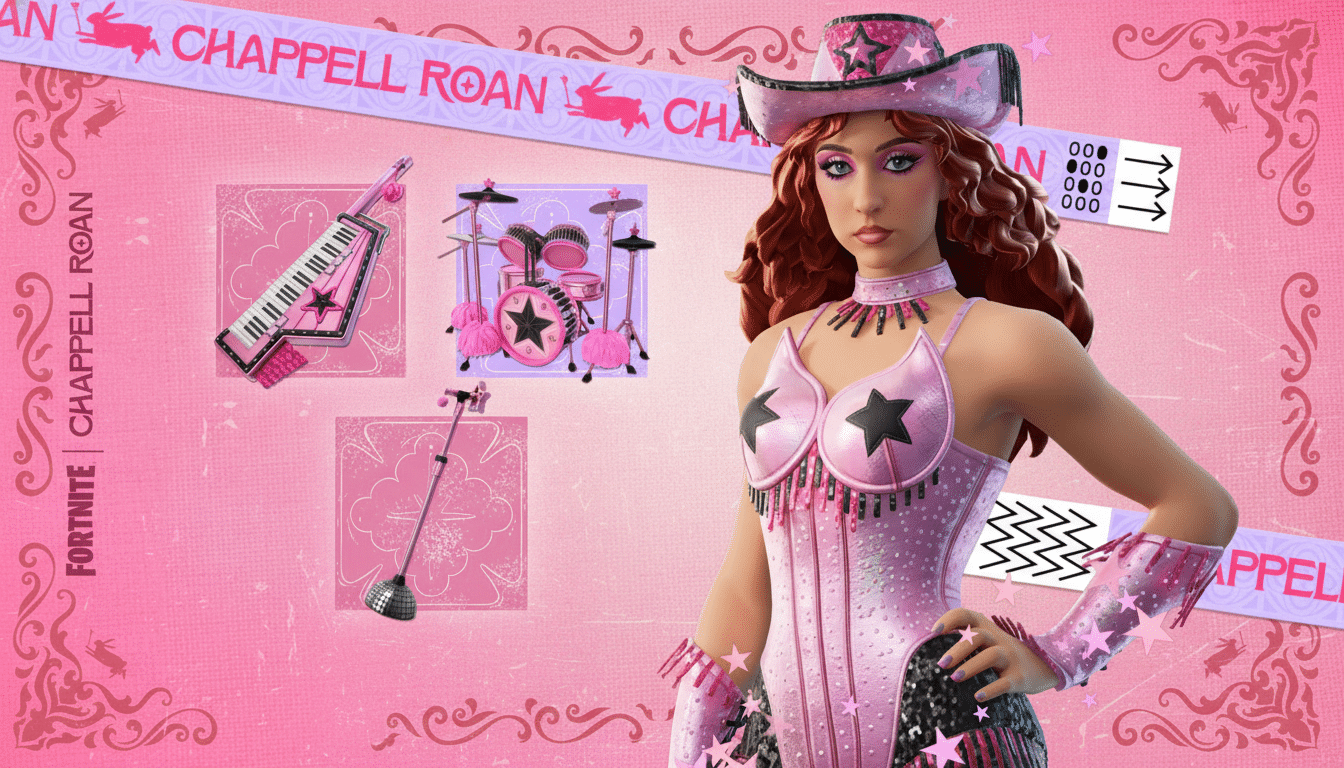
First is the Heartcore Music Pass, which unlocks the Chappell Roan Outfit with a red edit style inspired by her star-spangled, cowboy-hatted tour ensembles. The pass also bundles a Pink Pony Club Jam Track, a reactive Pink Pony Star Back Bling, and a Midwest Princess Keytar—gear that matters in Festival mode where instruments, tracks, and emotes are part of the performance. Fortnite Crew subscribers receive this Music Pass automatically, a classic example of Epic’s bundling strategy that quietly boosts perceived value.
Then there’s the Roan of Arc Outfit, a standalone Item Shop skin channeling her gleaming armor look from “Good Luck, Babe!”—all molten glam and camp bravado. It pairs with a flaming sword pickaxe, a Pink Pony Sidekick, and a traversal Femininomenon Emote. Several Roan tracks, including “Good Luck, Babe!,” “HOT TO GO!,” and “The Giver,” are also cycling back as Jam Tracks for an all-Roan setlist.
Why This Fortnite Skin Finally Made Me Spend Money
Fortnite collaborations live or die by authenticity. Too often, they feel like a licensing handshake pasted onto a default rig. Roan’s drop feels different because it captures the theater of her shows—the heart-on-sleeve pageantry, the wink, the maximalism—then translates it into play. The Keytar isn’t just a prop; it’s a signal that Festival is becoming a stage where artists’ visual worlds actually function.
The cultural read matters, too. Roan’s fandom thrives on community and self-expression, the same values that drive skins-as-identity in Fortnite. A look that lets you be the star-spangled cowgirl or the knight in shimmering armor isn’t just gear; it’s a mood board you can squad up with. In a social sandbox, that’s as close to utility as cosmetics get.
The Microtransaction Math Behind A First Buy
Industry firms like Newzoo and Deloitte have long noted that conversion rates in free-to-play games sit in the low single digits—often around 2–5%. That makes every “first purchase” a big deal, not just psychologically, but economically: once players buy once, they’re more likely to buy again as ownership normalizes spending and sunk-cost feelings kick in.
Fortnite remains a case study in how to convert without pay-to-win. Cosmetics are performance-neutral, which preserves competitive integrity while still fueling the business. Circana’s rankings consistently place Fortnite among top-grossing live-service titles, and crossovers like this tend to create noticeable spending spikes as fans coalesce around limited-time drops.
Artist collaborations add another layer. Nielsen’s research on fan economies shows that affinity dramatically lifts purchase intent for branded items. When the in-game content mirrors an artist’s iconography this precisely—the armor, the cowboy glam, the signature tracks—it turns a cosmetic into a badge of belonging. That’s exactly how you get a non-spender to finally opt in.
Festival Mode’s Evolution And Why It Matters
Festival started as a clever riff on rhythm games, but bundles like Roan’s show Epic positioning it as a full-fledged performance platform. Jam Tracks, reactive back bling, traversal emotes, and instrument slots aren’t merely add-ons—they’re the scaffolding for microconcerts in a space where your audience is your friends list and anyone who wanders by on the island.
That scaffolding also explains the bundling strategy: a Music Pass that includes a skin, an instrument, and a track is a turnkey kit for self-expression. Offer it as a perk to Crew subscribers and you invite trial without friction. Later, the standalone Roan of Arc Outfit becomes an easy second purchase for those wanting the other half of the persona. It’s textbook live-ops, just executed with a pop star whose aesthetic makes the math feel like fun.
The Bottom Line on Fortnite’s Chappell Roan Drop
I didn’t cave because I needed a competitive edge. I caved because this drop captures why we play dress-up in digital spaces: to feel seen, to perform, to belong. If you’ve held the line on microtransactions, I get it. But if any collab can justify a first buy, it’s one that turns the Item Shop into a stage and hands you the spotlight.
